
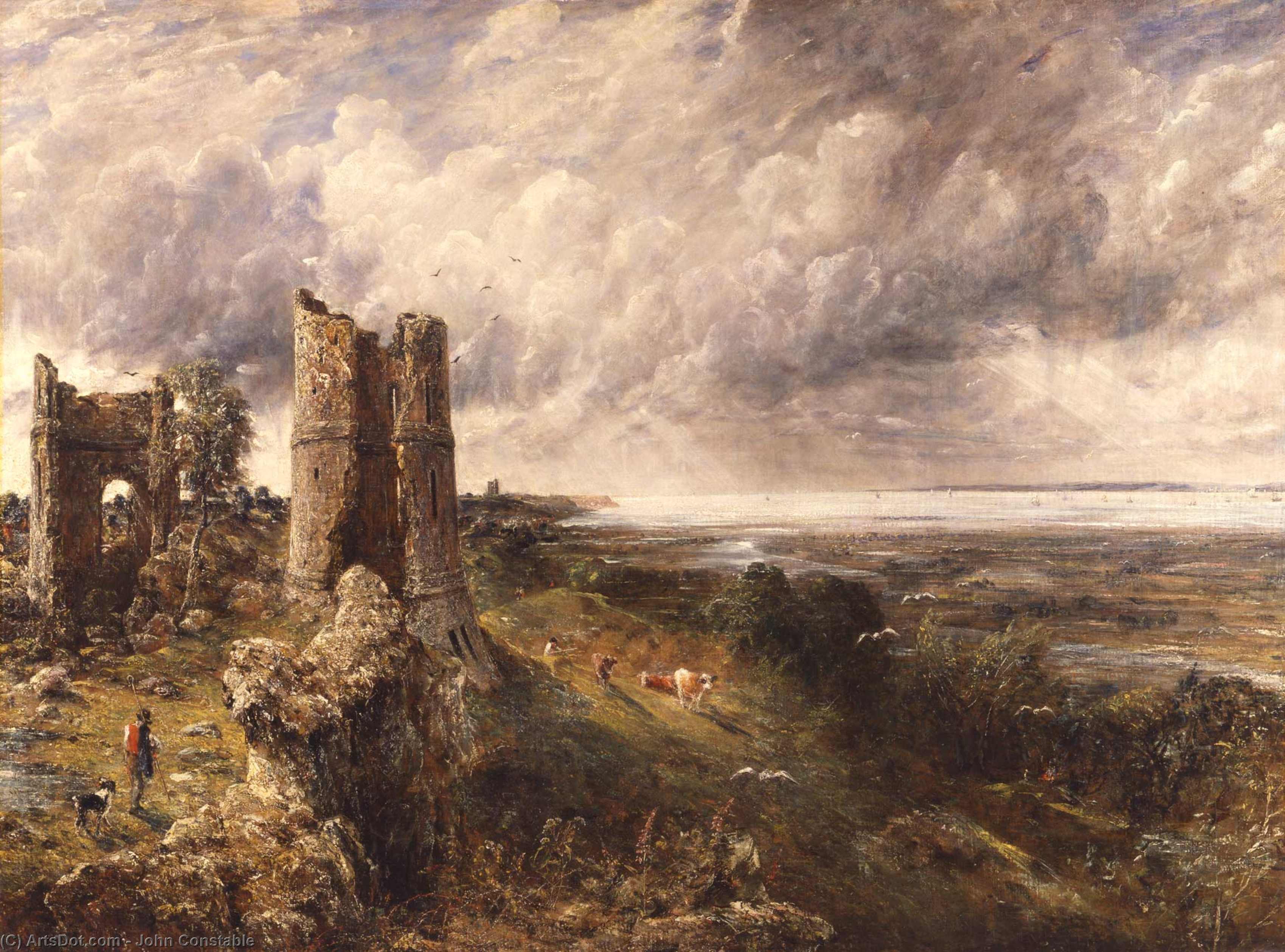
Hadleigh Castle: A Symphony of Light and Landscape
John Constable’s Hadleigh Castle is more than just a depiction of an English hilltop stronghold; it's a cornerstone of Romantic art, embodying the movement’s fascination with sublime beauty and emotional resonance. Painted in 1829 during Constable’s peak creative period, this monumental oil on canvas (122 x 164 cm) resides within Yale Center for British Art and The Metropolitan Museum of Art, testament to its enduring appeal and artistic significance.
Compositional Harmony: Nature Embraces Architecture
Constable skillfully orchestrates a scene that transcends mere topographical representation. Hadleigh Castle dominates the upper portion of the canvas but isn’t isolated; it's seamlessly integrated into the surrounding landscape—specifically, the River Crouch estuary. The artist employs a pyramidal composition, drawing the viewer’s eye upwards towards the castle while simultaneously anchoring it with horizontal bands of water and distant hills. Scattered figures – laborers tending to the castle grounds and travelers enjoying the riverside vista – subtly enrich the scene without disrupting its overarching tranquility. Two dogs add an element of domesticity amidst the grandeur of nature, furthering the painting's sense of peaceful observation.
Romantic Style: Capturing Fleeting Atmospheric Effects
Hadleigh Castle exemplifies Constable’s Romantic aesthetic—a deliberate rejection of Neoclassical formalism in favor of subjective experience and emotional intensity. Like Hudson River School painters before him, Constable meticulously observes and records the subtle shifts in light and color that characterize the English countryside. The hazy atmosphere – characteristic of Constable's technique – softens the contours of the castle and hills alike, creating an ethereal quality that evokes a feeling of awe and contemplation. This masterful manipulation of light contributes significantly to the painting’s emotional impact, inviting viewers to immerse themselves in the sublime beauty of the natural world.
Historical Context: Constable’s Influence on Landscape Painting
Constable's Hadleigh Castle represents a pivotal moment in landscape art history. Prior to his time, artists often idealized landscapes—presenting them as flawless representations of paradise. Constable challenged this convention by portraying nature as it truly is – vulnerable, changeable, and imbued with an inherent drama. His approach profoundly influenced subsequent generations of painters, establishing a new standard for capturing atmospheric perspective and conveying emotion through visual imagery. Artists like Turner would later build upon Constable’s pioneering vision, cementing his legacy as one of the most important figures in British Romanticism.
Symbolic Resonance: Tranquility Amidst Impermanence
Beyond its aesthetic brilliance, Hadleigh Castle carries symbolic weight. The castle itself represents permanence and authority—a bastion against time—contrasting sharply with the fluidity of the river landscape. This juxtaposition underscores the Romantic preoccupation with confronting mortality and appreciating the fleeting beauty of existence. Constable’s depiction encourages contemplation on the relationship between humanity and nature, reminding us that even amidst grand structures and imposing monuments, true solace can be found in the simple grandeur of the natural world.
问答详情
康斯塔勃尔 的《Hadleigh Castle》 的创作日期是哪一年?
康斯塔勃尔 的《Hadleigh Castle》创作于1829年。
康斯塔勃尔 的《Hadleigh Castle》 属于哪种艺术流派?
“Hadleigh Castle”是一件Romantic Landscape Painting时期的作品。该艺术流派指明了作品所属的艺术传统。
康斯塔勃尔 的《Hadleigh Castle》 是油画、素描还是版画?
“Hadleigh Castle”是一件WallArt作品。
建议将“Hadleigh Castle”打印成多大的尺寸?
建议将“Hadleigh Castle”打印为 Large 尺寸。其他尺寸亦可按相同比例进行制作。
"Hadleigh Castle" 的艺术家是谁?
"Hadleigh Castle" 的创作者是 康斯塔勃尔。该作品以 康斯塔勃尔 的名义编入目录。
创作《Hadleigh Castle》时,康斯塔勃尔 的年龄是多少?
康斯塔勃尔 在 1829 年创作《Hadleigh Castle》时,年龄为 53 岁。该年龄是根据艺术家的出生年份 1776 计算得出的。
"Hadleigh Castle" 是否不受版权保护?
关于版权,"Hadleigh Castle" 属于 属于公有领域 —— 其版权已过期。

