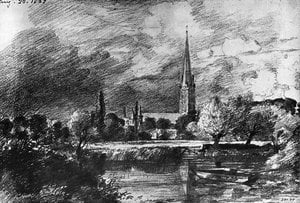
由我们的艺术家按需定制,为您提供您所选尺寸及画框的布面手工油画。 ( 切换至版画销售渠道 切换至数字图像销售渠道)





























您可以从与原作比例一致的预设尺寸中进行选择。

您可以输入自定义尺寸,以适配特定的画框或空间。如果所选尺寸与原图比例不符,我们将通过裁剪作品或添加手绘元素来扩展画面。数字样稿将在制作开始前发送给您确认。
请注意,屏幕预览无法准确反映实际的裁剪或扩展效果,只有样稿才能真实呈现最终的构图。
虽然我们提供定制尺寸服务,但为了保留原作比例,建议您从预设列表中选择尺寸。

Brighton beach
复刻品尺寸说明
John Constable's "Brighton Beach," painted in 1824, isn’t merely a depiction of a coastal scene; it’s a profound meditation on the relationship between humanity and nature, rendered with the characteristic sensitivity and emotional depth that defined the artist’s legacy. This evocative landscape captures a fleeting moment along Brighton's shore, yet within its loose brushstrokes and atmospheric haze resides a wealth of observation and feeling. The painting immediately draws the eye to the partially submerged shipwreck on the left – a poignant reminder of time’s relentless passage and the impermanence of earthly possessions. However, it is not a scene of melancholy, but rather one imbued with a quiet sense of leisure and connection to the natural world.
Constable's approach firmly places “Brighton Beach” within the Romantic tradition, a movement that prioritized subjective experience and emotional response over strict adherence to academic rules. He eschews precise detail in favor of capturing the *feeling* of the scene – the diffused light, the subtle shifts in color, the sense of airiness and openness. The composition is deliberately horizontal, emphasizing the vastness of the sea and sky, creating a feeling of limitless space and inviting the viewer to lose themselves within the panorama. The artist’s use of color is particularly noteworthy; he employs muted tones – ochres, blues, and greens – to create a sense of atmospheric depth and subtly suggest the play of light on water and sand.
Born in East Bergholt, Suffolk, Constable’s artistic vision was inextricably linked to his homeland. His paintings are not simply representations of landscapes; they are intensely personal expressions of his deep connection to the English countryside. The Suffolk landscape – with its rolling hills, meandering rivers, and ever-changing light – provided him with an endless source of inspiration. “Brighton Beach” can be seen as a departure from his usual subjects—the familiar vistas of Dedham Vale—but it retains the same core qualities: a profound appreciation for nature’s beauty, a sensitivity to atmospheric effects, and a willingness to imbue ordinary scenes with emotional resonance.
Constable's technique is characterized by loose, expressive brushstrokes – a hallmark of his style. He builds up layers of paint, allowing the texture of the canvas to become visible, creating a sense of immediacy and spontaneity. The artist’s use of *sfumato*, a technique borrowed from Leonardo da Vinci, further enhances the atmospheric effect, softening edges and blurring details to create a hazy, dreamlike quality. The painting is not about precise accuracy; it's about capturing the essence of a moment in time – the feeling of being present in a beautiful place.
Beyond its purely visual appeal, “Brighton Beach” is rich in symbolic meaning. The shipwreck, partially submerged beneath the waves, represents decay, loss, and the inevitable passage of time. Yet, it’s not presented as a morbid image; rather, it serves as a counterpoint to the lively activity on the beach – the figures enjoying the sun, the sailboats gliding across the water. This juxtaposition suggests a complex relationship between humanity and nature: a recognition of mortality alongside an appreciation for life's simple pleasures.
The scene evokes a sense of nostalgia—a longing for a simpler time, a connection to the past. The hazy atmosphere, the muted colors, and the quiet stillness all contribute to this feeling. “Brighton Beach” is not just a painting; it’s an invitation to pause, reflect, and reconnect with the beauty and wonder of the natural world. It's a testament to Constable's ability to capture not only what he saw but also what he *felt*—a rare and deeply moving achievement.
Painted during a period of significant social and artistic change, “Brighton Beach” reflects the growing interest in landscape painting as a legitimate subject for artists. Prior to this era, landscapes were often relegated to secondary roles in paintings—mere backdrops for portraits or historical scenes. Constable’s work helped to elevate the status of landscape painting, demonstrating its capacity to convey complex emotions and ideas. The burgeoning popularity of seaside resorts like Brighton during this time also influenced artistic trends, as artists sought to capture the changing social landscape.
Constable's influence on subsequent generations of landscape painters is undeniable. His emphasis on subjective experience, his expressive brushwork, and his profound connection to nature paved the way for Impressionism and other modern movements. “Brighton Beach” remains a powerful example of Constable’s genius—a timeless masterpiece that continues to captivate viewers with its beauty, emotion, and enduring relevance.
康斯塔勃尔 的《Brighton beach》 属于 属于公有领域 —— 其版权已过期。此版权状态决定了该作品图像的复制方式。
“Brighton beach”现已推出亚麻画布手工绘制油画复制品。您可以在本页进行订购,并可自由选择多种尺寸。
“Brighton beach”可通过 采用棉质帆布或档案级画布纸制作的艺术版画 进行订购。您可以在 本页 选择心仪的尺寸进行下单。
《Brighton beach》被归为康斯塔勃尔的作品。
康斯塔勃尔 的《Brighton beach》 的 Panoramic 格式推荐用于 Living Room。画幅与空间的结合,将为您提供复制品摆放的指引。
康斯塔勃尔 的《Brighton beach》 的主色调为 Putty (#cccacb)。
康斯塔勃尔 的《Brighton beach》 的亮度记录为 brilliant,亮度值为 Bright Balance。


1776 - 1837 , 英国

Explore the profound legacy of John Constable. Discover how his mastery of light, atmosphere, and the English landscape redefined Romanticism through timeless, museum-quality oil reproductions for discerning collectors.

Explore the profound emotional power of Romantic landscape art. Discover how masters like Friedrich captured the sublime through breathtaking nature, and learn to curate these evocative masterpieces for your luxury interior collection.


 实景预览
实景预览
 发送
发送 分享
分享
 详情
详情 指南
指南

 下载图片
下载图片
 相似作品
相似作品 X射线
X射线 幻灯片播放
幻灯片播放 统计数据
统计数据

 阅读全文
阅读全文









 玻璃选项仅适用于110厘米以下的尺寸。