
 2003
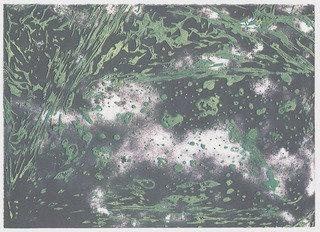
2003 56.0 x 77.0 cm
获取远超网页预览效果的印刷级文件。我们销售的每一张数字图像均源自库存数据库中的高分辨率母版——宽度通常在 5,000 至 15,000 像素之间——因此您可以放心地进行大幅打印、局部裁剪或还原细腻的细节。
每一件作品在离开我们的工作室前都经过了精心的处理。数字影像专家会对照原作核对色彩,并在必要时进行校正,随后利用专业修图工具提升清晰度与细节表现——且始终忠实于艺术家的笔触与风格。最终呈现的图像宛如原作本身,而非仅仅是一张加了滤镜的扫描件。
您可以在最终定稿前进行审核:我们的专家将在 72 小时内通过电子邮件向您发送图像以供审阅。如果不满意?您可以要求改进或修正;若质量未达预期,亦可申请退款。
这也是出版商、设计工作室、画廊及印刷厂所信赖的品质。
选择 WahooArt.com,您获得的不仅仅是一张图像——您收到的是经过专业级增强、精雕细琢的数字艺术作品,并享有满意保证。以下是您的订单中自动包含的所有内容:
您的高分辨率数字图像文件将在下单后 72 小时内通过电子邮件发送给您 —— 即可立即使用。
您的艺术品经过专业优化,结合先进的 AI 技术与人工修饰,确保呈现极致的细节、清晰度与色彩准确度。
不小心删除了文件或找不到了?没关系——我们将随时为您免费重发。
即刻拥有您的艺术作品,无需支付任何关税、税费或运费——数字下载始终免税。
我们通过专业工具与色彩管理技术,确保您的数字图像尽可能真实地还原原作色彩。
如果您对所购数字图像不满意,我们将在100天内为您进行修改或提供100%的全额退款——无需任何理由。
不满意?在收到数字文件后的100天内,您可以申请全额退款——无需任何理由。
购买 3 张享 10% 折扣 - 购买 5 张享 15% 折扣 - 购买 10 张以上享 20% 折扣。非常适合创意项目、画廊及机构使用。

Born in Geneva, Switzerland, in 1948, John Armleder’s artistic journey is a fascinating exploration of influence, experimentation, and the very nature of exhibition. The son of a hotelier – owners of the prestigious Le Richemond – his upbringing provided a certain detachment from traditional art circles, fostering an independent spirit that would profoundly shape his career. His early studies at the École Supérieure des Beaux-Arts in Geneva and the Barry Summer School in Wales laid the groundwork for a diverse practice encompassing performance art, painting, sculpture, installation, and even furniture design. However, Armleder’s defining characteristic isn't a singular style but rather a consistent interrogation of the context surrounding art – viewing the exhibition space itself as an integral part of the artwork.
Armleder’s artistic development was inextricably linked to the Fluxus movement of the 1960s and 70s. This international network of artists, united by a desire to blur the boundaries between art and life, profoundly influenced his early work. He co-founded the Groupe Ecart in Geneva in 1969 with Patrick Lucchini and Claude Rychner – an initiative that quickly became a vital hub for experimental art in Europe. The Groupe Ecart wasn’t merely a group of artists; it functioned as an independent publishing house, disseminating ideas and fostering collaboration. Crucially, it introduced a wealth of significant figures to the Swiss scene, including Joseph Beuys and Andy Warhol, demonstrating Armleder's role as a catalyst for artistic exchange.
Unlike many artists who adhere to rigid manifestos, Armleder consistently resisted categorization. His work is characterized by an embrace of chance – a deliberate disruption of traditional notions of control and authorship. This approach echoes the influence of John Cage, whose concept of indeterminacy deeply resonated with Armleder’s practice. He frequently employs dense scenographic arrangements, placing individual works in close proximity to create immersive installations that challenge the viewer's perception. In the 1980s, he became associated with the Neo-Geo movement, a period marked by a return to geometric abstraction and a critical engagement with consumer culture – themes that continue to inform his work today.
A defining element of Armleder’s mature oeuvre is his series of “Furniture Sculptures.” These works, often involving the juxtaposition of monochrome paintings or abstract forms on furniture pieces – tables, chairs, cabinets – represent a radical expansion of the definition of sculpture. They aren't simply decorative additions; they actively engage with the functional and aesthetic qualities of the objects themselves. This practice reflects Armleder’s broader concern with blurring boundaries and challenging conventional relationships between art and everyday life. He frequently uses a layered approach, incorporating wall paintings or patterned wallpapers alongside his sculptural furniture, creating complex, multi-sensory environments.
Throughout his career, John Armleder has consistently demonstrated an astute awareness of the exhibitionary context. He doesn’t simply create individual artworks; he designs entire experiences – carefully orchestrated spaces that invite contemplation and reinterpretation. His retrospective exhibitions have been lauded for their innovative approaches to presentation, highlighting the importance of spatial arrangement and viewer interaction. His work remains a significant contribution to contemporary art, offering a compelling meditation on the relationship between art, context, and perception. Armleder’s legacy lies not in adhering to a single style or movement, but in his persistent questioning of artistic conventions and his unwavering commitment to exploring the possibilities of the exhibition as an active medium.

1948 -

 实景预览
实景预览
 切换至版画销售渠道
 分享
分享 分享
分享
 详情
详情 指南
指南

 下载作品
下载作品
 相似作品
相似作品 X射线
X射线 幻灯片播放
幻灯片播放 Q&A
Q&A 统计数据
统计数据 展开全文
展开全文


