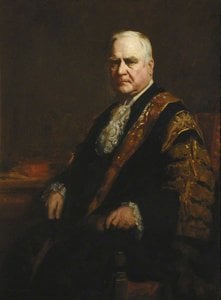
1929
1929 90.0 x 69.0 cm
 Westminster College
购买高分辨率增强版数字图像,其品质远超在线预览。
每一份文件都由我们的内部专家使用先进工具与专业的后期润色技术精心打造。我们确保每一张图像都具备卓越的清晰度、精准的色彩还原度以及细腻的细节表现。
最终文件将在 72 小时内通过电子邮件交付,并针对专业、编辑及印刷用途进行了优化。其品质与顶级设计工作室、出版社和画廊所信赖的标准完全一致。
选择 WahooArt.com,您获得的不仅仅是一张图像——您收到的是经过专业级增强、精雕细琢的数字艺术作品,并享有满意保证。以下是您的订单中自动包含的所有内容:

您的高分辨率数字图像文件将在下单后 72 小时内通过电子邮件发送给您 —— 即可立即使用。

您的艺术品经过专业优化,结合先进的 AI 技术与人工修饰,确保呈现极致的细节、清晰度与色彩准确度。

不小心删除了文件或找不到了?没关系——我们将随时为您免费重发。

即刻拥有您的艺术作品,无需支付任何关税、税费或运费——数字下载始终免税。

我们通过专业工具与色彩管理技术,确保您的数字图像尽可能真实地还原原作色彩。

如果您对所购数字图像不满意,我们将在100天内为您进行修改或提供100%的全额退款——无需任何理由。

不满意?在收到数字文件后的100天内,您可以申请全额退款——无需任何理由。

购买 3 张图片可享 10% 折扣 - 购买 5 张可享 15% 折扣 - 购买 10+ 张可享 20% 折扣。非常适合创意项目、画廊和机构使用。

John Archibald Alexander Berrie (1887-1962) was a quietly influential British sculptor whose work, often overlooked in the grand narratives of 20th-century art, offers a fascinating window into the evolving identity of Britain during its imperial heyday and subsequent transformation. Born in London, Berrie’s artistic journey began with a formal training at the Royal College of Art, where he studied under Bertram Mackinder and William Orpen – artists whose diverse styles undoubtedly shaped his own approach. However, it was his time spent as an artist-in-residence at St John's College, Cambridge, from 1928 to 1937, that proved to be the defining period of his career, establishing him as a chronicler of academic life and a subtle observer of British society.
Berrie’s early work demonstrated a strong classical influence, evident in his meticulously rendered portraits and studies of architectural detail. He possessed an exceptional eye for capturing form and texture, utilizing a smooth, polished technique that lent a remarkable sense of realism to his sculptures. Initially, he produced numerous commissions – portraits of prominent figures like Margaret Beavan, George Audley, and even Prime Ministers Michael Joseph Savage and Peter Fraser – showcasing his technical skill and ability to convey personality through sculpted likenesses. These works, often executed in bronze or marble, were commissioned by institutions and private clients alike, reflecting the esteem held for his artistic abilities.
It was during his tenure at St John's College that Berrie’s style underwent a significant shift. The collegiate environment – with its ancient buildings, scholarly traditions, and vibrant student life – became the primary subject of his artistic focus. He began to create a series of evocative sculptures depicting the college’s architecture, its members, and the rituals of academic life. These weren't merely faithful reproductions; Berrie imbued them with a sense of atmosphere and emotion, capturing the spirit of the place through subtle gestures and carefully considered compositions.
His most celebrated works from this period include “The Founder’s Statue,” a poignant depiction of St John Nepomuk, the college's patron saint, and numerous studies of the Fellows and students. Notably, his portrait of Margaret Beavan, commissioned in 1928, is a testament to his ability to capture both formal dignity and inner character. However, it was his broader engagement with the College’s setting – its chapel, gardens, and historic buildings – that truly defined his Cambridge output. He meticulously documented these spaces through drawings and sculptures, creating a visual record of a unique microcosm of British culture.
Berrie's sculptural style is characterized by a remarkable restraint and subtlety. Unlike the more overtly expressive works of some contemporaries, his figures possess a quiet dignity and understated elegance. He favored a smooth, polished surface finish, achieved through meticulous hand-modeling and burnishing – techniques that enhanced the tactile quality of his sculptures. His use of bronze was particularly noteworthy; he skillfully manipulated the material to create subtle gradations of tone and texture, lending depth and realism to his figures.
He frequently employed a technique known as “lost wax casting,” which allowed for intricate detail and a remarkable level of precision. This method also enabled him to experiment with different surface treatments, including patination – the application of colored chemicals to bronze to achieve specific effects. Berrie’s sculptures are not flamboyant or dramatic; rather, they possess a quiet intensity that invites careful observation and contemplation.
While Berrie's name may not be as widely recognized as some of his contemporaries, his work holds significant historical value. His depictions of St John’s College offer a valuable insight into the social and cultural life of Britain during the interwar period. They reveal a nuanced understanding of academic traditions, student culture, and the enduring appeal of classical ideals.
Furthermore, Berrie's meticulous documentation of architectural detail – his drawings and sculptures of Cambridge’s historic buildings – contribute to our understanding of British heritage and urban landscape. His work serves as a reminder that art can be both aesthetically pleasing and historically informative. His legacy lies not in grand gestures or revolutionary innovations, but in the quiet observation and skillful execution that characterized his unique artistic vision. He remains an important figure in British sculpture, deserving greater recognition for his subtle yet profound contributions to our understanding of the nation’s identity.

1887 - 1962


 效果预览
效果预览
 切换至版画销售渠道
 分享
分享 分享
分享
 详情
详情

 下载
下载
 相似作品
相似作品 X射线
X射线 幻灯片播放
幻灯片播放 统计数据
统计数据 展开详情
展开详情