
 布面丙烯墙面艺术品Dutch Golden Age Painting
 1669中世纪盛期
 24.0 x 21.0 cm
 Grand Palais
博物馆级艺术微喷或帆布版画,制作高效,并提供多种饰面选择。 ( 购买手绘画作 Switch to Digital Image)





























从与原作比例一致的预设尺寸中进行选择。

您可以输入自定义尺寸,以适配特定的画框或空间。如果您选择的尺寸与原图比例不符,我们将对作品进行裁剪,或通过镜像填充/纯色填充边缘的方式来扩展图像。在开始制作之前,我们会向您发送一份数字效果图供您确认。
请注意,屏幕上的预览并不能反映实际的裁剪或扩展效果。只有效果图才能准确展示最终的构图。
虽然我们提供定制尺寸,但为了保持原图比例,我们建议您从预设列表中选择尺寸。

The Lacemaker
复制品尺寸
Within the hallowed halls of the Louvre resides a painting that transcends mere representation—it is an immersion into the quiet, contemplative heart of 17th-century Dutch life: Johannes Vermeer's *The Lacemaker*, completed around 1669-1670. More than just a portrait of a woman at her craft, it’s a profound meditation on domesticity, diligence, and the subtle poetry of everyday existence. This diminutive canvas—measuring a modest 24.5 x 21 centimeters—holds within its carefully rendered details an astonishing depth of observation and emotional resonance, solidifying Vermeer's place as one of art history’s most enduring masters.
Vermeer, born in Delft in 1632, navigated a world where artistry was inextricably linked to commerce. His father, a silk weaver and art dealer, instilled in him an acute awareness of materials, composition, and the delicate balance between creation and marketability. This early exposure shaped his artistic sensibility, fostering a meticulous approach to detail and a keen eye for capturing the nuances of light and shadow—qualities that are strikingly evident in *The Lacemaker*. Unlike many of his contemporaries who favored grand historical or mythological scenes, Vermeer consistently focused on intimate domestic settings, populated by ordinary people engaged in their daily routines. This deliberate choice allowed him to explore universal themes of human experience with remarkable subtlety and grace.
The painting’s power lies not only in its subject matter but also in Vermeer's masterful technique. He employed a revolutionary approach to light, meticulously layering translucent glazes—thin washes of paint applied over multiple sessions—to create an ethereal luminosity that seems to emanate from within the canvas. This “tenebrism,” as it was later termed, casts a soft glow upon the woman’s face and hands, highlighting her focused expression and the delicate texture of the lace she is creating. Notice how Vermeer captures the subtle variations in color—the rich yellows of the bodice, the pristine white of the lace, the muted blues and reds of the cushion—each hue rendered with astonishing precision.
Furthermore, Vermeer’s use of texture is equally compelling. The rough weave of the linen fabric, the smooth sheen of the polished wood table, and the delicate folds of the lace are all depicted with remarkable realism. He doesn't simply paint these objects; he invites us to *feel* their surfaces—to appreciate the tactile qualities of the materials themselves. This meticulous attention to detail is a hallmark of Vermeer’s style and contributes significantly to the painting’s immersive quality.
Beyond its technical brilliance, *The Lacemaker* is rich in symbolic meaning. The woman at her work represents the ideal of domestic virtue—a cornerstone of Dutch society during the 17th century. Needlework was considered a noble pursuit, embodying qualities such as patience, diligence, and industry. The presence of the Bible or prayer book on the table reinforces this association with piety and moral rectitude. The blue sewing cushion, a common object in Delft households, is not merely functional; it’s a potent symbol of female labor and domesticity.
Interestingly, Vermeer's choice to depict a young woman engaged in lace-making was somewhat unconventional at the time. While women were expected to perform household duties, including sewing, the act of creating intricate lace—a skill requiring considerable dexterity and concentration—was often associated with higher social status. The painting subtly challenges conventional notions of female roles while simultaneously celebrating the virtues of diligence and industry.
*The Lacemaker* is a testament to Vermeer’s extraordinary ability to capture the essence of human experience within a small, intimate space. Its quiet beauty, technical mastery, and profound symbolism continue to captivate viewers centuries after its creation. Reproductions by WahooArt offer an unparalleled opportunity to bring this iconic masterpiece into your home or office, allowing you to appreciate its subtle nuances and timeless appeal. Consider how the soft light, the meticulous detail, and the evocative atmosphere of *The Lacemaker* can transform any room—creating a space that is both serene and inspiring.
To explore this remarkable artwork in greater depth, we invite you to visit our website: The Lacemaker (detail)

1632 - 1675 , 荷兰
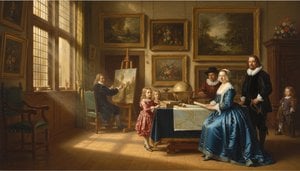
Embark on a journey through the Dutch Golden Age. Discover how masters like Rembrandt and Vermeer used chiaroscuro to manipulate light and shadow, creating timeless depth and spiritual resonance in art history's most captivating masterpieces.


 效果预览
效果预览
 分享
分享 分享
分享
 详情
详情

 下载
下载
 相似作品
相似作品 X射线
X射线 幻灯片播放
幻灯片播放 Stats
Stats 展开详情
展开详情









 玻璃选项仅适用于110厘米以下的尺寸。


