
 OilWallArtDüsseldorf School
 183619th Century
 880.0 x 720.0 cm
 Kunstpalast
博物馆级艺术微喷或帆布版画,制作高效,并提供多种饰面选择。 ( 订购此收藏品的纯手工复刻画作 切换至数字图像销售渠道)





























您可以从与原作比例一致的预设尺寸中进行选择。

请输入您所需的宽度和高度,以适配您的画框或墙面。由于印刷品只能进行裁剪,无法超出原图尺寸,因此若比例不一致,画面的一部分将会被裁切。在正式印刷之前,我们会为您发送一份数字效果图供您确认。本页面显示的图片并非最终裁剪后的效果——只有效果图才能展示真实的裁剪情况。
Studio Scene
复刻品尺寸说明
In the vibrant heart of the Düsseldorf School of Painting, Johann Peter Hasenclever captures a moment that transcends mere studio documentation to become a profound manifesto of artistic identity. His 1836 masterpiece, Studio Scene, presents us with a meticulously orchestrated tableau vivant, where a group of genre painters—including A. Greven, J. P. Hasenclever, J. Wilms, O. Grashof, W. Heine, and C. Engel von der Rabenau—assemble as if upon a theatrical stage. This is not a scene drawn from the lofty, often detached realms of classical literature, but one rooted deeply in the textures and truths of real life. The atmosphere is electric with the energy of a creative collective, a lively gathering where the boundaries between work, camaraderie, and social interaction blur into a single, spirited event.
The composition invites the viewer to wander through a workshop teeming with life and movement. At least twelve individuals populate this expansive space, some caught in quiet moments of reading or contemplation, others engaged in animated dialogue or focused on their artistic endeavors. The room is a rich tapestry of objects: chairs are scattered with an organic randomness that suggests a lived-in space, while dining tables, books, and vases add layers of domesticity to the professional setting. There is a palpable sense of a workshop where ideas are not just conceived but shared, making the painting feel less like a static portrait and more like a breathing, pulse-filled environment.
Beneath the surface humor of this gathering lies a sophisticated layer of symbolic rebellion. Hasenclever uses the studio setting to signal a definitive break from the outdated pedagogical traditions of the past. We see the discarded remnants of an era defined by poetic-idealist history painting: ancient plaster models of fencers, manikins, and even a knight’s helmet are cast aside, treated as relics of a bygone way of seeing. By depicting these items as mere clutter or even refuse, the artist asserts that the new generation of painters is no longer interested in the artificiality of academic tropes.
Instead, the true focus shifts to the gritty, authentic details of contemporary existence. The presence of mouse traps and a map of Düsseldorf serves as a poignant reminder that the true subject of art lies in the tangible world—the space between the pawn shop and the brothel. Even the use of a large history painting as a mere wind trap or a rag to wipe brushes is a daring statement of intent. It suggests that the grand, sweeping narratives of the past are being repurposed to serve the practical, immediate needs of a new, realistic art form. This programmatic approach transforms the studio into a site of revolution, where the "true image" of life is being painstakingly constructed.
For the discerning collector or interior designer, Studio Scene offers much more than visual splendor; it provides a window into a pivotal moment of art history. The painting’s technique, characterized by its ability to render both the grand scale of the gathering and the minute, humorous details of the studio, makes it a captivating centerpiece for any sophisticated collection. It evokes an emotional response of warmth, intellectual curiosity, and a sense of belonging to a community of creators.
Integrating a high-quality reproduction of this work into a space brings with it an aura of cultured vitality. It is a piece that rewards prolonged study, revealing new layers of meaning—from the camaraderie of the "drinking companions" to the profound shift in art theory—each time it is viewed. Whether placed in a library, a creative studio, or a grand living area, Studio Scene serves as a timeless tribute to the enduring power of realism and the beautiful chaos of the creative process.
建议将“Studio Scene”用于Conversation,推荐摆放空间为Living Room。
在“Studio Scene”中,Earthy 色调伴随着Playful 的情感。
Johann Peter Hasenclever 的《Studio Scene》 推荐陈列于 Living Room。此建议是基于作品的主题、色彩与意境而定。


1810 - 1853 , Germany
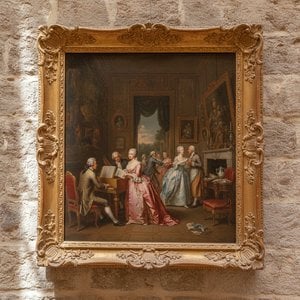
Explore the profound beauty of genre painting. From Dutch Golden Age masters to global traditions, discover how artists capture the essence of everyday life through masterful realism and timeless storytelling.
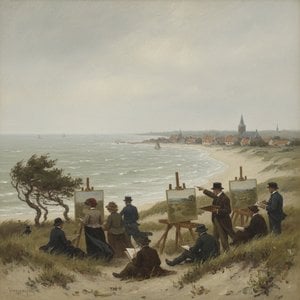
Explore the ethereal beauty of the Hague School art movement. Discover how masters like Jan Weissenbruch captured the atmospheric grey light of the Dutch landscape through unparalleled technique and emotive, misty compositions.


 实景预览
实景预览
 发送
发送 分享
分享
 详情
详情 指南
指南

 下载图片
下载图片
 相似作品
相似作品 X射线
X射线 幻灯片播放
幻灯片播放 统计数据
统计数据 阅读全文
阅读全文









 玻璃选项仅适用于110厘米以下的尺寸。


![Stanze Vaticane - The School Of Athens (detail) [05] — 拉斐尔, Renaissance](/media/artworks/images-thumb/ca/a9/caa9f9be8f76fbc617e906bfcb543fad.jpg)


