x


从与原作比例一致的预设尺寸中进行选择。

您可以输入自定义尺寸,以适配特定的画框或空间。如果所选尺寸与原图比例不符,我们将通过裁剪作品或添加手绘元素来扩展画面。数字样稿将在制作开始前发送给您确认。
请注意,屏幕预览无法准确反映实际的裁剪或扩展效果,只有样稿才能真实呈现最终的构图。
虽然我们提供定制尺寸服务,但为了保留原作比例,建议您从预设列表中选择尺寸。

Return to Plato
复制品尺寸

Born in Exeter, Devon, in 1701 – though the exact date of his baptism remains uncertain – Thomas Hudson’s life and career unfolded within the bustling artistic landscape of London. He wasn't a revolutionary figure, nor did he produce grand historical or mythological scenes; instead, Hudson carved out an extraordinary niche for himself as the foremost portraitist of domestic life in 18th-century England. His paintings offer intimate glimpses into the lives of wealthy families, showcasing their homes, furnishings, and daily routines with remarkable detail and a subtle, almost understated charm.
Hudson’s artistic journey began under the tutelage of Jonathan Richardson the Elder, a prominent painter known for his satirical portraits. However, Hudson's relationship with his mentor was complex; he married Richardson’s daughter, a union that reportedly caused considerable friction within the artist’s household. Despite this familial entanglement, Hudson quickly established himself as an independent practitioner, developing a distinctive style characterized by meticulous observation and a remarkable ability to render fabrics, furniture, and architectural details with astonishing accuracy. He wasn't simply painting *of* people; he was painting *in* their world.
Hudson’s workshop operated on a scale that was truly impressive for its time. He employed numerous assistants, including the highly skilled drapery painter Joseph Van Aken, and his studio produced an astonishing volume of work – estimates suggest over 300 paintings. This prolific output wasn't achieved through individual genius alone; Hudson meticulously oversaw every stage of the process, from initial sketches to final touches, ensuring a consistent level of quality across his entire oeuvre. The drapery painters played a crucial role in this system, creating elaborate and convincing fabrics that formed the backdrop for his portraits, adding layers of realism and visual interest.
Between 1740 and 1760, Hudson enjoyed an unprecedented period of success as London’s most sought-after portraitist. He catered to the tastes of the aristocracy and gentry, capturing their likenesses with a remarkable degree of naturalism. His subjects included prominent figures such as Joshua Reynolds, Joseph Wright, Peter Toms, and even the esteemed poet Alexander Pope. Hudson's ability to portray his patrons in comfortable, familiar settings – often within their own homes – contributed significantly to his popularity. He wasn’t interested in grand gestures or dramatic poses; he aimed for a sense of everyday life, subtly elevating the mundane into something aesthetically pleasing.
Hudson’s artistic development was influenced by several key figures. Jonathan Richardson's emphasis on observation and detail undoubtedly shaped his approach to painting. However, Hudson also drew inspiration from the Dutch masters, particularly their meticulous rendering of fabrics and interiors. His travels to the Low Countries in 1748 and Italy in 1752 further broadened his artistic horizons, exposing him to new techniques and styles.
Hudson’s technique was characterized by a remarkable level of detail and precision. He employed a layered approach, beginning with careful sketches and studies of his subjects and their surroundings. His drapery painters were instrumental in creating convincing fabrics that added depth and realism to his compositions. Hudson's use of light and shadow was subtle but effective, enhancing the three-dimensional quality of his paintings. He avoided dramatic lighting effects, preferring a soft, diffused illumination that created a sense of intimacy and tranquility.
A key element of Hudson’s style is his ability to capture the texture and sheen of fabrics. He meticulously rendered the folds, wrinkles, and patterns of clothing, furniture upholstery, and carpets with astonishing accuracy. This attention to detail was not merely decorative; it served to convey a sense of wealth, status, and refinement. His portraits weren't just likenesses; they were statements about his subjects’ social standing.
Despite his immense popularity during his lifetime, Hudson’s contributions to art history were initially overlooked. His focus on domestic scenes and his reliance on assistants led some critics to dismiss him as a mere craftsman rather than an artist of genuine originality. However, in recent decades, Hudson has been increasingly recognized for his unique artistic vision and his remarkable technical skill. His paintings offer invaluable insights into the material culture and social customs of 18th-century England.
Today, Hudson’s works are displayed in major museums throughout the United Kingdom, including the National Portrait Gallery, the National Maritime Museum, Tate, Barnstaple Guildhall, and the Bristol City Museum and Art Gallery. His legacy as a master of domestic detail endures, reminding us of the beauty and significance that can be found in the everyday moments of life.

1701 - 1763 , Germany

Discover the profound power of Expressionist art. From the raw intensity of Edvard Munch to the visceral textures of Neo-Expressionism, explore how subjective emotion and distorted reality define this movement. An expert guide for discerning collectors seeking depth and soul in fine art.

Delve into the visceral world of German Expressionism. Explore the history, key artists like Kirchner and Kandinsky, and the movement's profound emotional impact through an expert art-history lens. Discover how bold colors and distortion redefined modern aesthetics.
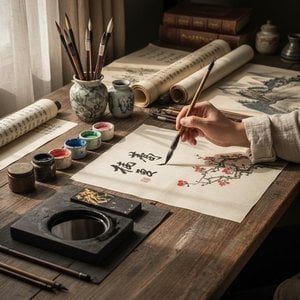
Embark on a sophisticated exploration of ink wash painting and Sumi-e. Uncover the profound historical lineages, Zen philosophies, and technical mastery behind this timeless medium in our authoritative guide for fine art enthusiasts.

Explore the raw emotion of German Expressionism through a definitive guide to Ernst Ludwig Kirchner. Discover how his bold colors and distorted forms redefined modern art history, from Berlin street scenes to iconic masterpieces.


第一时间获取最新的艺术新闻、独家优惠及装饰灵感。
向我们介绍您的项目需求,我们的艺术专家将为您提供 3 个个性化的艺术品推荐。
由我们的专家为您精选 3 款心仪之作 —— 完全免费!


 效果预览
效果预览
 购买印刷品
购买印刷品 分享
分享 分享
分享
 详情
详情

 下载
下载
 相似作品
相似作品 X射线
X射线 幻灯片播放
幻灯片播放


 展开详情
展开详情






































 玻璃选项仅适用于110厘米以下的尺寸。


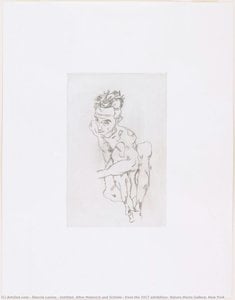
![[untitled] — 大久保 米内](/media/artworks/images-thumb/d4/b8/d4b8b95eba4b69ec5ae86f95a9db30b5.jpg)