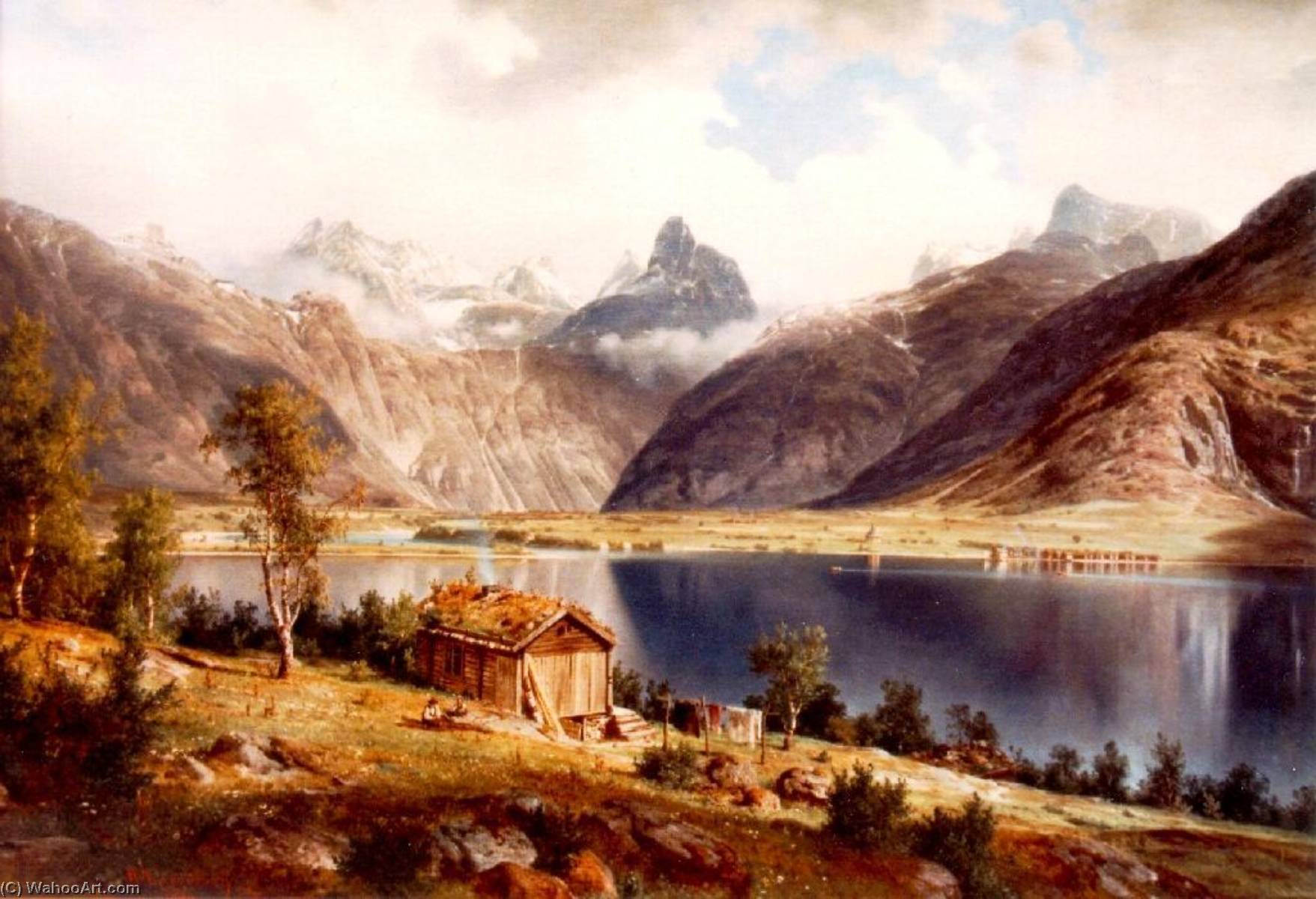
Explore the works of Johan Fredrik Eckersberg, a Norwegian Romantic landscape painter known for his vibrant fjord scenes & national costumes. Discover his art today!
This elegant plaque features the artist's name and the title of the artwork, finely engraved for a timeless presentation.
It is made from bronze with a refined, elegant finish. The text is precisely laser-engraved for a sharp and permanent result. Measuring 9x2 cm, the plaque is compact yet easy to read. It's built to be durable and scratch-resistant, offering a professional, museum-quality look. Mounting is simple thanks to the included adhesive backing.
透明亚克力铭牌详情
The plaque includes essential engraved details such as the artist's name, the title of the artwork, the date it was created, the type of media used-like oil on canvas or watercolor-a brief description of the piece, and a QR code that links to the complete artwork information.
It is crafted from clear acrylic, offering a sleek, modern appearance. The text is UV-engraved in black to ensure strong visual contrast. With a size of 10x15 cm, it ensures optimal readability. It comes equipped with two metal hooks for secure wall mounting. The plaque is designed to be weather-resistant, making it suitable for various environments, and it includes interactive features that work seamlessly with smartphone scanning.
黑色亚克力铭牌详情
This elegant plaque includes engraved information such as the artist's name, the title of the artwork, the date it was created, the type of media used (like oil on canvas or watercolor), a short description of the artwork, and a QR code for quick access to more information.
The plaque itself is made from refined black acrylic with a premium finish. The text is laser-engraved in white for high contrast and readability. Its size is 10x15 cm, designed to be easy to read. It comes with two metal hooks for professional mounting. The design is sleek and fits any interior style. It is also weather-resistant and durable, with built-in digital integration for mobile compatibility.
Johan Fredrik Eckersberg: Painter of Norwegian Romanticism
Johan Fredrik Eckersberg (1803 – 1876) stands as a pivotal figure in the history of Norwegian art, embodying the spirit of Romanticism and establishing himself as one of Norway’s foremost landscape painters. Born in Bergen, Eckersberg's artistic journey began with formal training in Düsseldorf under Anton Graff, immersing him in the German Romantic tradition – a movement characterized by an intense fascination for emotion, imagination, and the sublime beauty of nature. This formative experience profoundly shaped his stylistic sensibilities and cemented his dedication to capturing the grandeur of the Norwegian fjord landscape.
Early Life & Training:
Eckersberg’s upbringing instilled in him a deep appreciation for craftsmanship and artistic rigor. His father, a shipbuilder, fostered an early interest in precision and observation—skills that would prove invaluable as he honed his painting technique. Düsseldorf's academy provided him with access to the latest artistic innovations, exposing him to artists like Caspar David Friedrich and influencing his approach to portraying dramatic landscapes.
Return to Norway & National Identity:
Upon returning to Bergen in 1830, Eckersberg actively championed Norwegian national identity through his art. He embraced the burgeoning nationalist fervor of the era, depicting iconic Norwegian scenes—particularly fjord vistas adorned with traditional costumes—to celebrate the country’s heritage and foster a sense of collective pride. This commitment extended beyond mere visual representation; he served as professor at Bergen Kunstakademi, nurturing the talents of younger artists and shaping the artistic landscape of Norway.
The Fjord Landscape: Eckersberg's Signature Style
Eckersberg’s artistic legacy rests primarily on his masterful depictions of Norwegian fjords. Unlike earlier Romantic painters who often idealized landscapes, Eckersberg achieved remarkable realism—capturing the subtle nuances of light and atmosphere with unparalleled accuracy. His canvases pulsate with vibrant color palettes—deep blues and greens reflecting the crystalline waters of the fjords—and meticulously rendered details conveying the rugged textures of mountainsides and rocky shores. He skillfully employed atmospheric perspective, creating a sense of depth and grandeur that transported viewers into the heart of Norwegian wilderness.
Technique & Composition:
Eckersberg’s technique involved painstaking layering of glazes—thin translucent washes of paint—to build up tonal gradations and achieve luminous effects. He meticulously studied geological formations and utilized scientific observation to inform his artistic renderings, demonstrating a commitment to both aesthetic beauty and intellectual rigor. His compositions often featured dramatic viewpoints, emphasizing the immensity of the landscape and conveying a feeling of awe.
Notable Paintings:
Among Eckersberg’s most celebrated works are “Devotions at Porta Santa,” showcasing his ability to convey emotion through architectural grandeur; “Norwegian Nydalen fabrikker malt av Johan Fredrik Eckersberg i 1851”, which powerfully juxtaposes industrial progress with the unspoiled beauty of Norwegian nature; and "Figures in a mountainous river landscape," demonstrating Eckersberg's masterful command of tonal harmony and spatial illusion.
Influences & Legacy
Eckersberg’s artistic vision drew inspiration from German Romanticism, particularly Friedrich’s exploration of sublime landscapes and his preoccupation with spiritual contemplation. However, he also absorbed elements of Dutch Realism—influenced by artists like Rembrandt—resulting in a distinctive blend of stylistic approaches. Eckersberg's unwavering dedication to portraying Norwegian scenery solidified his position as the foremost landscape painter of his time and profoundly impacted subsequent generations of Norwegian artists.
His influence extended beyond mere visual style; Eckersberg championed artistic integrity and intellectual curiosity, establishing Bergen Kunstakademi as a beacon of Norwegian art education. Today, Eckersberg’s paintings continue to inspire admiration for their beauty and technical brilliance—serving as enduring symbols of Norwegian Romanticism and testament to the transformative power of art.