
博物馆级艺术微喷或帆布版画,制作高效,并提供多种饰面选择。 ( 购买手绘画作 切换至数字图像销售渠道)





























从与原作比例一致的预设尺寸中进行选择。

您可以输入自定义尺寸,以适配特定的画框或空间。如果您选择的尺寸与原图比例不符,我们将对作品进行裁剪,或通过镜像填充/纯色填充边缘的方式来扩展图像。在开始制作之前,我们会向您发送一份数字效果图供您确认。
请注意,屏幕上的预览并不能反映实际的裁剪或扩展效果。只有效果图才能准确展示最终的构图。
虽然我们提供定制尺寸,但为了保持原图比例,我们建议您从预设列表中选择尺寸。

White Slave Trade
复制品尺寸
In the vast tapestry of Spanish Impressionism, few works possess the haunting, quiet gravity found in Joaquín Sorolla y Bastida’s 1895 masterpiece, “White Slave Trade.” While many remember Sorolla as the "Master of Light," a painter of sun-drenched Mediterranean beaches and vibrant Valencian landscapes, this particular canvas reveals a much more profound and unsettling dimension of his genius. Here, the artist pivots away from the celebratory glow of the Spanish coast to confront the gritty, often overlooked realities of the late 19th century. The painting serves as a poignant window into the era's social struggles, capturing a moment of profound vulnerability that transcends mere documentation to become a timeless study of human fatigue and lost innocence.
The scene unfolds within the cramped, dim confines of a third-class railway carriage, a setting that inherently suggests movement, transition, and the displacement of the marginalized. Within this enclosed space, Sorolla depicts four young women, their bodies slumped in various states of exhausted repose. There is no grand drama or violent upheaval depicted; instead, the power of the work lies in its stillness. The subjects are caught in a heavy, dreamless sleep, their faces stripped of artifice, revealing a raw, unvarnable exhaustion. Through this composition, Sorolla invites the viewer to witness not just a moment in time, but the weight of a systemic hardship that lingers long after the train has passed.
Technically, “White Slave Trade” is a triumph of controlled observation and Impressionistic brilliance. Sorolla utilizes the diffused, pale light filtering through the carriage window to sculpt the forms of the sleeping figures, creating a delicate interplay between shadow and illumination. This light does not merely illuminate; it breathes life into the textures of the fabric, the weary skin, and the metallic atmosphere of the train car. His brushwork, though possessing the rapid, energetic quality characteristic of Impressionism, is applied with a meticulous attention to spatial illusion. He employs subtle glazes and a sophisticated tonal palette to create a sense of depth that pulls the viewer into the very heart of the carriage.
For the discerning collector or interior designer, this piece offers a unique opportunity to introduce a work of immense emotional depth and technical sophistication into a curated space. The painting’s ability to balance somber subject matter with exquisite formal beauty makes it a captivating focal point. It does not merely decorate a wall; it commands attention through its atmospheric complexity. A high-quality reproduction of this work allows the subtle nuances of Sorolla's light—the way it catches the edge of a sleeve or softens a cheekbone—to be appreciated, bringing a sense of historical weight and artistic prestige to any sophisticated interior.
Beyond its aesthetic merits, “White Slave Trade” stands as a testament to Sorolla’s commitment to social realism. During the decade spanning 1890 to 1899, Sorolla explored themes that challenged the idealized narratives of his contemporaries. By choosing to focus on the plight of these young women, he utilized his mastery of light to shine a spotlight on the shadows of society. The painting functions as a silent protest, using the beauty of the medium to demand empathy for the subject. It is this rare combination of technical virtuosity and profound social conscience that ensures Sorolla’s place in the pantheon of great masters, offering timeless inspiration to those who find beauty in the truth of the human condition.


1863 - 1923 , 西班牙

Explore the profound drama of Spanish Baroque art. Delve into the mastery of light, shadow, and realism through the legendary works of Diego Velázquez and the Spanish Golden Age.
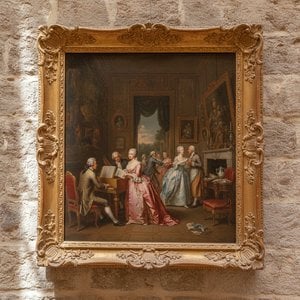
Explore the profound beauty of genre painting. From Dutch Golden Age masters to global traditions, discover how artists capture the essence of everyday life through masterful realism and timeless storytelling.

Embark on a sophisticated exploration of Spanish art history, from the chiaroscuro mastery of Velázquez to the profound shadows of Goya. Discover how the dramatic light and emotional depth of Spain's greatest masters continue to inspire collectors and connoisseurs today.

Embark on a visual journey through the radiant sunlight of Joaquín Sorolla's masterpieces. Discover the brilliance of Spanish Impressionism and learn how to bring this luminous legacy into your home with museum-quality, hand-painted oil reproductions from WahooArt.


 效果预览
效果预览
 分享
分享 分享
分享
 详情
详情

 下载
下载
 相似作品
相似作品 X射线
X射线 幻灯片播放
幻灯片播放 统计数据
统计数据


 展开详情
展开详情









 玻璃选项仅适用于110厘米以下的尺寸。


