
由我们的艺术家按需定制,为您提供您所选尺寸及画框的布面手工油画。 ( 切换至版画销售渠道 切换至数字图像销售渠道)





























您可以从与原作比例一致的预设尺寸中进行选择。

您可以输入自定义尺寸,以适配特定的画框或空间。如果所选尺寸与原图比例不符,我们将通过裁剪作品或添加手绘元素来扩展画面。数字样稿将在制作开始前发送给您确认。
请注意,屏幕预览无法准确反映实际的裁剪或扩展效果,只有样稿才能真实呈现最终的构图。
虽然我们提供定制尺寸服务,但为了保留原作比例,建议您从预设列表中选择尺寸。

The Circus House
复刻品尺寸说明
In the vibrant tapestry of twentieth-century modernism, few works capture the whimsical tension between reality and the subconscious as poignantly as Joan Miró’s 1927 masterpiece, The Circus House. This painting serves as a profound gateway into the Surrealist movement, inviting viewers to step away from the rational world and enter a realm where gravity is optional and logic dissolves into pure emotion. At its heart, the composition centers on the breathtaking spectacle of a tightrope walker, arms outstretched in a delicate balance between falling and flying. This central figure acts as an anchor for a swirling universe of movement, surrounded by performers engaged in acrobatic feats and playful interactions that suggest a carnival of the mind.
Miró’s technique in this period marks a departure from traditional representation, moving toward a visual language defined by biomorphic forms and rhythmic energy. The canvas is alive with organic shapes—amorphous, fluid silhouettes that seem to pulse with a life of their own. These shapes are not merely decorative; they are the vocabulary of the dream state. By utilizing a palette rich in earthy oranges, sun-drenched yellows, and deep, grounding tones, Miró evokes the rugged beauty of his native Catalonia while simultaneously creating an atmosphere of warmth and nostalgic wonder. The scattered presence of sports balls throughout the scene adds a layer of kinetic playfulness, breaking the tension of the tightrope walk with elements of childhood joy and spontaneous movement.
To understand The Circus House is to understand the deep-seated connection Joan Miró maintained with his heritage. While the painting is a cornerstone of the international Surrealist movement, it is deeply rooted in the textures of Barcelona and the Catalan landscape. One can sense the architectural influence of Antoni Gaudí in the undulating, organic lines that flow across the composition, mirroring the sinuous structures of the Sagrada Familia. The painting functions as a dance between these external cultural identities and an internal psychological landscape. The circus itself serves as a powerful metaphor for the human condition: a precarious balancing act performed amidst a chaotic, colorful, and often unpredictable universe.
For the discerning collector or interior designer, this artwork offers more than just visual splendor; it provides a focal point of intellectual and emotional depth. The piece possesses a unique ability to transform a space, bringing an air of sophisticated whimsy and avant-garde prestige to any gallery or private residence. Whether viewed as a study in Surrealist abstraction or a tribute to the vibrant spirit of Catalan identity, The Circus House remains a timeless invitation to explore the boundless possibilities of the imagination. It is a work that does not merely hang on a wall but breathes within a room, constantly reawakening the sense of wonder in all who behold it.

1893 - 1983 , 西班牙

Master the nuances of Giclée printing with our expert guide. Discover how pigment-based inks and museum-grade substrates create fade-resistant, high-fidelity art reproductions designed for discerning collectors seeking unparalleled quality and longevity.
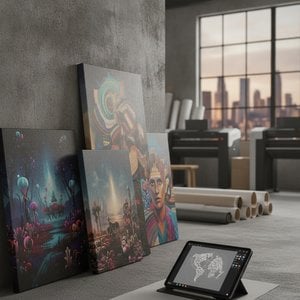
Transform your digital artistry into a prestigious global brand with WahooArt’s premium Giclée prints. Experience museum-quality archival excellence and seamless on-demand fulfillment designed for the modern creative entrepreneur seeking to build a lasting artistic legacy.


 实景预览
实景预览
 发送
发送 分享
分享
 详情
详情 指南
指南

 下载图片
下载图片
 相似作品
相似作品 X射线
X射线 幻灯片播放
幻灯片播放 统计数据
统计数据

 阅读全文
阅读全文









 玻璃选项仅适用于110厘米以下的尺寸。


