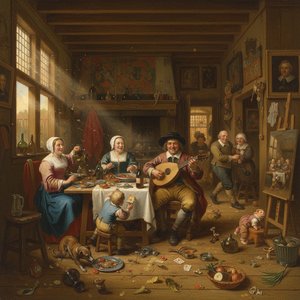
Dutch Interior II: A Surrealist Echo of Seventeenth Century Mastery
Joan Miró’s Dutch Interior II is more than just a painting; it's an invitation into a dreamscape born from meticulous observation and infused with the rebellious spirit of surrealism. Created in 1928, this oil on canvas masterpiece—measuring 92 x 73 cm—currently resides within The Solomon R. Guggenheim Museum’s collection, offering visitors a glimpse into Miró's singular artistic vision. Its genesis lies in a profound fascination with the art of Jan Steen and Hendrik Martenszoon Sorgh, artists whose depictions of domestic life captivated Miró during his formative years in Paris.
- Composition & Imagery: The painting presents a complex tableau populated by animals—a dog adorned with a bird perched upon its back—and objects arranged within a room bathed in muted hues. Cows, chickens, and numerous birds contribute to the dynamic atmosphere, punctuated by musical instruments like a piano and violin. A chair and a cup serve as grounding elements amidst this swirling panorama.
- Stylistic Influences: Miró’s approach transcends simple imitation; he employs techniques reminiscent of fauvism and expressionism while firmly anchoring his work within the surrealist movement. This stylistic blend reflects his preoccupation with accessing the subconscious mind, mirroring the ethos championed by artists like Dalí and Magritte.
- Historical Context: Miró’s artistic journey unfolded against the backdrop of a burgeoning art scene characterized by experimentation—cubism, futurism, abstract art—all vying to redefine visual representation. Surrealism, in particular, sought to liberate art from rational constraints, prioritizing emotion and imagination over literal depiction.
- Symbolic Resonance: The painting’s imagery is laden with symbolic significance. The bird on the dog's back represents freedom and aspiration, mirroring Miró’s own artistic ambition. Similarly, the musical instruments symbolize harmony and creativity—themes central to Miró’s oeuvre.
Technique & Material Considerations
Miró’s masterful execution demonstrates a remarkable command of color and form. He utilizes bold pigments—primarily blues, greens, and browns—to create textured surfaces that convey both visual richness and emotional depth. The artist's meticulous brushstrokes contribute to the painting's palpable energy, capturing the fleeting impressions of observation and transforming them into enduring artistic statements. The preparatory drawings reveal Miró’s painstaking process of translating Steen’s original scene into his own surrealist interpretation—a testament to his dedication to craft and conceptual exploration.
Emotional Impact & Legacy
Dutch Interior II transcends mere visual representation, inviting viewers into a realm of dreamlike contemplation. Its unsettling juxtaposition of familiar elements—domestic animals and instruments—challenges conventional perceptions of reality while simultaneously celebrating the transformative power of imagination. Miró’s contribution to modern art is undeniable; he helped establish surrealism as a dominant artistic force and continues to inspire contemporary designers and artists alike. Reproductions of this iconic artwork offer collectors and enthusiasts an opportunity to experience Miró's visionary aesthetic firsthand, preserving its enduring beauty and intellectual provocation for generations to come.
常见问题与解答
"Dutch Interior II" 会为空间营造怎样的氛围?
米罗 的《Dutch Interior II》 营造出一种 Serene 的氛围,推荐用于 Living Room。作品的情绪感即是其为周围空间带来的意境。
“Dutch Interior II”的创作者是谁,属于什么风格?
米罗 在 Surrealist 运动时期创作了《Dutch Interior II》。
"Dutch Interior II" 与 米罗 的其他作品有何共通之处?
"Dutch Interior II" 与 米罗 的其他作品一样,都体现了 Surrealist 风格以及其一贯的主题:dutch masters, dreamlike imagery, catalan identity, surrealist vision, artistic transformation。