
博物馆级艺术微喷或帆布版画,制作高效,并提供多种饰面选择。 ( 购买手绘画作 切换至数字图像销售渠道)





























从与原作比例一致的预设尺寸中进行选择。

您可以输入自定义尺寸,以适配特定的画框或空间。如果您选择的尺寸与原图比例不符,我们将对作品进行裁剪,或通过镜像填充/纯色填充边缘的方式来扩展图像。在开始制作之前,我们会向您发送一份数字效果图供您确认。
请注意,屏幕上的预览并不能反映实际的裁剪或扩展效果。只有效果图才能准确展示最终的构图。
虽然我们提供定制尺寸,但为了保持原图比例,我们建议您从预设列表中选择尺寸。

Del libre Ruban de Michel Leiris
复制品尺寸
Joan Miró (1893–1983) stands as a monumental figure in the annals of 20th-century art, an artist whose singular vision irrevocably altered the landscape of modern expression. Born in Barcelona during a period of profound artistic ferment—marked by the burgeoning Surrealist movement and the echoes of Cubism—Miró embarked on a journey characterized not merely by stylistic evolution but by an unwavering pursuit of inner realms, translating dreams, memories, and Catalan identity onto canvas with a visual language imbued with poetic nuance.
The Surrealist impulse, championed by André Breton and fellow artists, sought to liberate creativity from the constraints of rational thought, tapping into the subconscious mind as a source of inspiration. Miró embraced this ethos wholeheartedly, employing techniques like automatism—chance operations designed to bypass conscious control—to generate imagery rooted in spontaneous association. This approach yielded works that defy easy categorization, blending organic forms with geometric abstractions and conveying emotions that transcend literal representation.
His distinctive style is instantly recognizable: bold colors juxtaposed against simplified shapes, reminiscent of Matisse’s Fauvist paintings, yet infused with a uniquely Miróesque spirit. Recurring motifs—birds, insects, fantastical creatures—appear throughout his oeuvre, symbolizing freedom, metamorphosis, and the primal forces of nature. These images are not merely decorative; they embody complex psychological states and convey profound philosophical ideas.
Miró’s artistic vocabulary is remarkably consistent across his prolific output. He favored a palette dominated by vibrant hues—yellows, reds, blues—creating canvases that pulsate with energy and luminosity. His brushstrokes are loose and expressive, conveying movement and texture without striving for photorealistic detail. This deliberate rejection of conventional realism reflects Miró’s belief in the primacy of feeling over observation.
Consider Tirador in the Arc—a captivating piece that exemplifies Miró’s signature style. The central horse figure dominates the composition, its mane rendered in swirling brushstrokes of brilliant yellow and orange, capturing a sense of restless dynamism. Around its neck encircles a ribbon of crimson, adding a touch of theatrical color and hinting at themes of confinement and liberation.
The overall effect is one of dreamlike beauty—a visual meditation on the interplay between order and chaos, rationality and imagination. Miró’s art invites contemplation, prompting viewers to confront their own subconscious desires and anxieties while simultaneously appreciating the sublime grandeur of nature.
Miró's work emerged during a period of intense artistic experimentation—the aftermath of World War I and the rise of Surrealism—a time when artists sought to challenge established conventions and explore new frontiers of creative expression. Influenced by Cubist fragmentation and Dada nihilism, Miró nevertheless forged his own path, developing a distinctive visual language that resonated with audiences worldwide.
His paintings are housed in prestigious institutions such as the Fundació Joan Miró in Barcelona—a testament to his enduring legacy and a beacon for contemporary art—and the Rugby Art Gallery and Museum in the United Kingdom. These venues offer visitors the opportunity to immerse themselves in Miró’s artistic universe and appreciate the profound impact of his work on subsequent generations of artists.
To delve deeper into Miró's life and oeuvre, visit WahooArt.com for comprehensive information and stunning reproductions of his celebrated paintings.

1893 - 1983 , 西班牙

探索抽象表现主义的十幅经典杰作!波洛克、罗斯科等大师作品,揭秘艺术史上的重要瞬间。WahooArt.com为您呈现高品质艺术品复制和精选家居装饰方案,感受现代艺术的力量与魅力。立即浏览全系列!

探索几何抽象艺术的十大杰作!康定斯基、蒙德里安等大师作品,色彩构成与非具象之美。WahooArt.com提供博物馆级艺术复制品,为您的家居带来现代艺术灵感。立即在线探索完整系列!
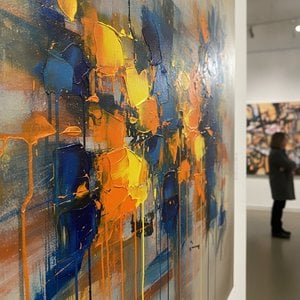
Master the high-impact world of contemporary abstraction. Discover how bold colors, textures, and modern movements like Abstract Expressionism can transform your space with premium, high-energy art curated for the design-conscious professional.

Embark on a cultural journey through Lyrical Abstraction. Explore how masters like Kandinsky used color and motion to translate emotion into visual poetry. Discover the profound beauty of abstract expressionism and learn to curate emotional resonance in your own art collection.

探索米罗大师25幅经典画作,领略超现实主义的色彩与诗意。深入了解每件作品背后的故事、艺术技巧和文化意义。WahooArt.com提供高品质米罗油画复制品,为您的家居增添艺术灵感!立即在线探索完整系列。


 效果预览
效果预览
 分享
分享 分享
分享
 详情
详情

 下载
下载
 相似作品
相似作品 X射线
X射线 幻灯片播放
幻灯片播放 统计数据
统计数据

 展开详情
展开详情









 玻璃选项仅适用于110厘米以下的尺寸。


