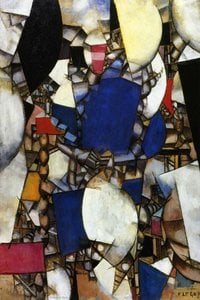
Oil On CanvasWallArtContemporary Realism
 1997Contemporary
 61.0 x 51.0 cm
 University of South Wales Art Collection Museum
由我们的艺术家按需定制,为您提供您所选尺寸及画框的布面手工油画。 ( 切换至版画销售渠道 切换至数字图像销售渠道)





























您可以从与原作比例一致的预设尺寸中进行选择。

请输入您需要的宽度和高度,以适配您的画框或墙面。由于作品为手工绘制,若选择不同比例的尺寸,艺术家可能会在画面边缘多画一些或稍作裁剪 —— 由您决定。在开始绘画之前,我们会为您发送一份数字效果图供您确认。本页面上展示的图片并非最终实物 —— 只有效果图才能反映真实结果。
The Last Rose
复刻品尺寸
In the quietude of Joan Baker’s 1997 masterpiece, The Last Rose, viewers are invited into a sanctuary of contemplation where the boundaries between reality and reflection blur. This evocative oil-on-canvas work serves as a profound meditation on the passage of time and the delicate nature of human experience. At its heart, the painting presents an intimate domestic scene: an elderly woman seated at her desk, her presence captured not just in her physical form but through a subtle, haunting reflection in the mirror behind her. This dual perspective creates a dreamlike atmosphere, suggesting that while the body may age, the essence of the soul remains caught in a continuous loop of memory and thought.
The composition is masterfully orchestrated to guide the eye through a narrative of beauty and decay. A vibrant blue armchair, adorned with a yellow floral pillow, anchors the foreground, offering a striking contrast to the soft peach hues of the surrounding walls. Resting upon the seat of this chair is a single white rose—the titular subject that lends the piece its melancholic weight. This solitary bloom, paired with a potted plant that breathes life into the left side of the frame, acts as a powerful symbol of vitality amidst the inevitable approach of finality. The interplay of light and shadow across the green carpet and the textured fabrics creates a sense of depth that makes the room feel both tangible and ethereal.
Joan Baker, a formidable figure in Welsh art education, brings her meticulous technical skill to the forefront of this work. Her use of oil on canvas allows for a rich, tactile quality, where every brushstroke is deliberate, contributing to the painting's layered emotional resonance. The artist achieves a remarkable balance between realism and a soft abstraction, particularly in how she renders the light reflecting off the mirror’s surface and the subtle textures of the domestic setting. This technique does more than just replicate a scene; it elevates a simple moment of study or work into a universal allegory for the fleeting nature of youth and the enduring strength of memory.
For the discerning collector or interior designer, The Last Rose offers much more than mere decoration. It is a piece that commands attention through its emotional depth and sophisticated color palette. The bold contrast between the cool blues and warm peaches provides a dynamic energy suitable for a variety of high-end interiors, while the painting's underlying themes of nostalgia and grace offer a conversational centerpiece. To possess a reproduction of this work is to bring a sense of historical significance and quiet, contemplative beauty into a living space, making it an ideal acquisition for those who value art that speaks to the profound complexities of the human condition.
您可以在 高分辨率数字图像 页面直接购买 “The Last Rose” 的 高分辨率数字图像下载。
Joan Baker 的《The Last Rose》 的色彩饱和度为 Clear Color Presence。
在Contemporary Realism运动中,"The Last Rose"以Reflective的基调被记录下来。

Joan Elizabeth Baker (1922–2017) was a painter whose brushstrokes whispered of the profound beauty found in the overlooked corners of the world. Born in Cardiff, Wales, her artistic soul was deeply rooted in the textures of her homeland—from the bustling energy of the Cardiff docks to the serene, verdant expanses of the Welsh countryside. While she remained a remarkably private figure, choosing to let her prolific body of work—exceeding 3,000 paintings—serve as her true autobiography, her influence on the Welsh art scene was nothing short of monumental. Her life was a delicate balance between the disciplined rigor of a master educator and the sensitive observation of a poet, capturing both the grand scale of nature and the intimate stillness of domesticity.
Her artistic journey began in earnest at the Cardiff School of Art during the pivotal years of 1939 to 1944. Under the mentorship of luminaries such as Evan Charlton and Ceri Richards, Baker was introduced to the burgeoning currents of modernism. This education provided her with more than just technical proficiency; it instilled a lifelong fascination with the interplay of light, color, and form. These early influences allowed her to develop a style that could oscillate between a faithful representation of reality and a dreamlike, impressionistic abstraction. Whether she was working on large-scale mural commissions for institutions like the Cardiff Overseas Club or painting a solitary flower, her work always maintained a signature sense of atmospheric depth.
Baker’s oeuvre is characterized by an extraordinary ability to transform the familiar into the extraordinary. Her landscapes, particularly those focusing on gardens and woodlands, are not merely topographical records but emotional sanctuaries. In works such as her Wenallt Woods triptych, she invites the viewer into a realm where reality and memory blur. Through an unconventional use of color—such as ethereal blue tones woven into foliage—she imbant her landscapes with a mythic, almost supernatural quality. Her mastery of the oil medium allowed her to create tactile surfaces where light seems to filter through a canopy or rest upon a damp forest floor, making the viewer feel the very humidity and stillness of the Welsh wilderness.
Parallel to her explorations of the wild, Baker possessed a tender eye for the domestic sphere. Her paintings of interior scenes often serve as meditations on time, memory, and the passage of life. In her 1997 masterpiece, The Last Rose, she utilizes a dual perspective—incorporating reflections in mirrors—to explore the ephemeral nature of existence. By placing a single white rose against a backdrop of vibrant blues and soft peaches, she creates a poignant dialogue between vitality and decay. These intimate portraits of everyday life are imbued with a sense of quietude, turning a simple room or a seated figure into a profound stage for human reflection.
Beyond the canvas, Joan Baker’s historical significance is inextricably linked to her role as a pioneer in art education. For nearly four decades, from 1945 until 1983, she taught at the Cardiff College of Art, eventually becoming the first woman to lead a major art department in Wales. Her pedagogical philosophy was revolutionary in its simplicity: she championed individual expression over rigid imitation. Baker did not seek to create clones of herself; rather, she nurtured the unique voices of her students, famously supporting the early ambitions of artists like Peter Prendergast. This commitment to fostering autonomy ensured that her influence would ripple through generations of British painters.
The true measure of Baker’s contribution to art lies in this duality of achievement:

1922 - 2017

Immerse yourself in the captivating world of slate blue! Explore 10 iconic paintings by Monet, Van Gogh & Renoir. Discover their stories, techniques & find museum-quality art reproductions for your home at .
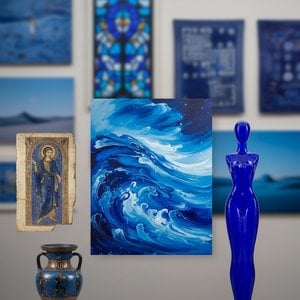
Explore the rich history of blue in art! Discover its symbolism, from ancient pigments to modern masterpieces by Kandinsky & Seurat. Uncover the psychological impact and cultural meanings behind this captivating hue.
Explore the profound symbolism & history of white in art! From ancient purity to modern abstraction, discover how artists have used absence & light. Expert insights from WahooArt.
Explore 10 iconic white paintings by Monet, Whistler & Rothko! Discover the stories behind these serene masterpieces and their impact on art history. Find museum-quality reproductions for your home decor at .

Explore the rich history of the blue dress in Western art! Discover its symbolism, from Renaissance masterpieces to modern interpretations by artists like Martin & Schiele. Uncover cultural meanings and artistic techniques.


 实景预览
实景预览
 分享
分享 分享
分享
 详情
详情 指南
指南

 下载作品
下载作品
 相似作品
相似作品 X射线
X射线 幻灯片播放
幻灯片播放 Q&A
Q&A 统计数据
统计数据 展开全文
展开全文









 玻璃选项仅适用于110厘米以下的尺寸。