x
效果预览效果预览 AR 预览AR 预览 购买手绘画作 购买手绘画作购买图片 购买图片 分享分享
详情详情 加入收藏 加入收藏 下载下载 相似作品相似作品 X射线X射线 幻灯片播放幻灯片播放

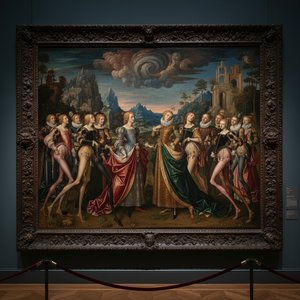
Persée secourant Andromède

Experience Joachim Wtewael's dramatic 'Persée secourant Andromède'! This Mannerist masterpiece depicts a heroic rescue, showcasing rich colors & dynamic figures – a stunning work of art.

Joachim Anthonisz Wtewael (1566-1638) was a Dutch Mannerist painter known for his highly polished figures, mythological & religious scenes, and unique style resisting naturalism. Explore his captivating art!

艺术微喷/版画

博物馆级艺术微喷或帆布版画,制作高效,并提供多种饰面选择。 (购买手绘画作 购买手绘画作购买图片 购买图片)

P118B $10
P118H $10
P118W $10
P438Z $10
P508JH $12
P508YH $12
P805H $10
P805Z $10
P919BZ $10
P919G $10
P919XJ $10
P959ZH $10
P968JZ $12
W106C $8
W218G $10
W218JH $8
W218Y $10
W307PJ $10
W316G $10
W316PJ $8
W316Y $10
W398PJ $8
W4111J $10
W500HY $15
W500JH $15
W692G $12
W849H $8
W940BG $15
W953PJ $8

标准尺寸
定制
CM
INCH

从与原作比例一致的预设尺寸中进行选择。

宽度
高度

您可以输入自定义尺寸,以适配特定的画框或空间。如果您选择的尺寸与原图比例不符,我们将对作品进行裁剪,或通过镜像填充/纯色填充边缘的方式来扩展图像。在开始制作之前,我们会向您发送一份数字效果图供您确认。
请注意,屏幕上的预览并不能反映实际的裁剪或扩展效果。只有效果图才能准确展示最终的构图。
虽然我们提供定制尺寸,但为了保持原图比例,我们建议您从预设列表中选择尺寸。

全球配送(),仅需 2 周即可送达,无需等待标准流程的 4/5 周。(5 September)

why_choose_icon
全球免费特快专递服务
why_choose_icon
优质亚麻画布
why_choose_icon
全程运输保险
why_choose_icon
关税退款保证
why_choose_icon
色彩还原度保证
why_choose_icon
60天退货政策(仅限制造缺陷)
why_choose_icon
100%退款保证
why_choose_icon
多件购买优惠

总计金额

$ 68

reproduction

Persée secourant Andromède

艺术微喷/版画

复制品尺寸

-

最终总价

$ 68

作品概览

  • Notable elements: Dynamic composition
  • Influences: Northern Mannerism
  • Movement: Mannerism
  • Medium: Oil on canvas
  • Subject or theme: Mythological scene
  • Artistic style: Highly polished figures
  • Title: Persée secourant Andromède

艺术知识测试

每道题只有一个正确答案。

题目 1:
What mythological scene does Joachim Anthonisz Wtewael depict in ‘Persée secourant Andromède’?
题目 2:
Which artistic movement is most closely associated with Joachim Anthonisz Wtewael’s style?
题目 3:
The painting features a turbulent seascape. What does this likely symbolize in the context of the myth?
题目 4:
What is a key characteristic of Wtewael's style, evident in this painting?
题目 5:
What material was most commonly used by Wtewael for his smaller, cabinet-sized paintings?

A Dramatic Rescue: Joachim Wtewael’s “Persée secourant Andromède”

Joachim Anthonisz Wtewael's "Persée secourant Andromède," painted around 1611, is not merely a depiction of a classical myth; it’s a meticulously crafted tableau brimming with psychological depth and Mannerist drama. This arresting scene, currently residing within the Louvre’s collection, transcends its mythological subject matter to become a profound meditation on courage, vulnerability, and the transformative power of rescue. Wtewael, a prominent figure in the Dutch artistic landscape of the 16th and 17th centuries, masterfully employed his signature style – characterized by elongated figures, dynamic poses, and an almost theatrical lighting – to create an image that continues to captivate viewers centuries later. His background as a flax merchant and town councillor likely informed a meticulous approach to detail and a keen eye for composition, elements powerfully evident in this remarkable work.

A Symphony of Mannerism: Style and Technique

Wtewael’s artistic vision firmly resides within the realm of Mannerism, a style that deliberately rejected the naturalistic ideals of the High Renaissance in favor of heightened emotion, stylized forms, and complex spatial arrangements. Observe how Perseus, poised dramatically on horseback, is rendered with elongated limbs and an almost sculpted quality – a deliberate exaggeration designed to convey his heroic stature and unwavering resolve. Similarly, Andromeda’s form is subtly distorted, her drapery flowing in a way that suggests both vulnerability and a quiet dignity. The artist's brushwork is remarkably smooth, creating a polished surface that reflects the meticulous attention to detail characteristic of Wtewael’s oeuvre. Glazes are skillfully applied to build up layers of color, lending depth and luminosity to the figures and the turbulent seascape. Notably, the use of gold leaf accents – particularly highlighting Perseus' armor and Andromeda’s hair – adds a touch of opulence and draws the eye to these central elements. The composition itself is carefully constructed, utilizing a pyramidal arrangement that directs the viewer’s gaze from the grounded Andromeda towards the soaring figure of Perseus.

Mythological Narrative and Symbolic Resonance

The painting vividly portrays the pivotal moment in Ovid's *Metamorphoses* when Perseus rescues Andromeda from her fate as a sacrifice to a monstrous sea creature. The debris scattered at Andromeda’s feet – skulls, shells, and fragments of what was once a magnificent garment – powerfully evoke the horror of her captivity and the precariousness of her situation. The sea monster itself is rendered with terrifying detail—a serpentine amalgamation of scales, claws, and gaping jaws—representing chaos and the primal forces threatening to consume Andromeda. Yet, within this scene of peril, there’s an undeniable sense of hope: Perseus' outstretched arm signifies his intervention, a promise of deliverance. The distant cityscape on the cliff face adds another layer of symbolism, representing both the world from which Perseus originates and the future he is offering Andromeda. The inclusion of the sea – a recurring motif in Wtewael’s work – speaks to themes of transformation, danger, and the cyclical nature of life and death.

Emotional Impact and Lasting Legacy

“Persée secourant Andromède” isn't simply a historical illustration; it’s an emotionally resonant portrayal of human drama. The painting’s dramatic lighting, with its stark contrasts between light and shadow, heightens the sense of urgency and heroism. Andromeda’s expression – a mixture of relief, gratitude, and perhaps lingering fear – is remarkably poignant. Wtewael masterfully captures the psychological complexities of the narrative, conveying not only the physical act of rescue but also the emotional impact on both figures involved. The painting's enduring appeal lies in its ability to evoke a sense of timeless drama and universal themes—courage, vulnerability, and the transformative power of compassion. It remains a testament to Wtewael’s artistic skill and his profound understanding of human nature, solidifying his place as one of the most significant figures in Dutch Mannerist painting.

艺术家简介

The Enduring Polish of a Mannerist Master

Joachim Anthonisz Wtewael, a name whispered among connoisseurs of the Dutch Golden Age, remains a captivating figure whose art defies easy categorization. Born in 1566 and passing away in 1638, his life was as multifaceted as his canvases. While his artistic genius shone brightly, it is equally notable that he was also a successful flax merchant and an active town councillor of Utrecht. This dual existence—the meticulous artisan alongside the pillar of civic society—suggests a man whose life demanded both worldly acumen and profound creative focus. Wtewael’s signature style, however, possessed a remarkable consistency; it remained largely untouched by the sweeping naturalistic currents that were reshaping art across Europe during his lifetime.

A Journey Through Style and Influence

Wtewael's early training rooted him deeply in the sophisticated vocabulary of late 16th-century Haarlem Mannerism. His initial professional life saw him working as a glassmaker and engraver within his father’s workshop, an apprenticeship that undoubtedly honed his hand for intricate detail. A pivotal period arrived when he embarked on travels through Italy and France starting in 1586. These sojourns were crucial, exposing him to the rich artistic currents of the Second School of Fontainebleau. Yet, despite these influences, Wtewael possessed a unique internal compass. His work is characterized by figures that are masterfully drawn, possessing an almost porcelain-like polish, often arranged in poses that feel wonderfully capricious and dramatically charged.

Thematic Depth: Myth Meets Devotion

The body of his surviving work—comprising around one hundred paintings, alongside numerous drawings and stained glass designs—reveals a fascinating thematic duality. He was equally at home depicting profound religious narratives as he was celebrating the lush drama of classical mythology. Consider works such as Adoration of the Shepherds juxtaposed with Venus and Mars Surprised by Vulcan. These pieces showcase his remarkable ability to weave together conventional sacred subjects with pagan lore, often imbuing both realms with a palpable, sometimes strong erotic undercurrent that draws the viewer into its narrative embrace. His attention to detail is breathtaking; in works like Perseus and Andromeda, housed notably at the Mauritshuis museum in Utrecht, one can trace his unparalleled skill.

Historical Significance and Legacy

What makes Wtewael’s contribution so significant is precisely that resistance to change. While naturalism beckoned artists toward greater realism, Wtewael held fast to a polished, idealized aesthetic, creating a body of work that feels both historically situated and eternally vibrant. His cabinet paintings, executed on copper plates, are particularly distinctive and numerous, offering intimate glimpses into his artistic process. Though the final decade of his life saw him retreat from painting—a period possibly marked by personal sorrow following the passing of his wife—the impact of his vision endures. He gifted art history a style that remains both highly polished and wonderfully unpredictable.

艺术家简介

  • Artistic Movement Or Style: Mannerism
  • Artists Who Influenced This Artist: ['Second school of Fontainebleau']
  • Date Of Birth: 1566
  • Date Of Death: 1638
  • Full Name: Joachim Anthonisz Wtewael
  • Nationality: Dutch
  • Notable Artworks:
    • Adoration of the Shepherds
    • Venus and Mars surprised by Vulcan