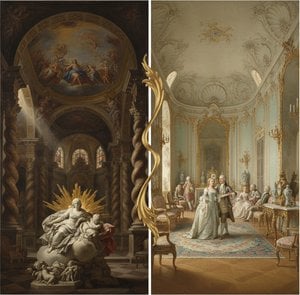
由我们的艺术家按需定制,为您提供您所选尺寸及画框的布面手工油画。 ( 切换至版画销售渠道 切换至数字图像销售渠道)
您可以从与原作比例一致的预设尺寸中进行选择。

请输入您需要的宽度和高度,以适配您的画框或墙面。由于作品为手工绘制,若您选择不同的尺寸比例,艺术家可能会在画面边缘多画一些或稍作裁剪 —— 由您决定。在开始绘画之前,我们会为您发送一份数字效果图供您确认。本页面上展示的图片并非最终实物 —— 只有效果图才能反映真实结果。
Molière
复刻品尺寸说明
The year is 1787. Paris pulses with artistic fervor, the Rococo style dominating the courts and salons of the aristocracy. Within the hallowed halls of the Louvre, a sculptor named Jean-Jacques Caffiéri meticulously captures the essence of one of France's most celebrated playwrights: Molière. This isn’t merely a likeness; it’s an embodiment of wit, intellect, and theatrical genius, rendered in exquisite detail with a masterful understanding of light, shadow, and human expression. Caffieri’s portrait bust is more than just a work of art—it's a window into the world of 18th-century French culture, offering a glimpse into the life and legacy of a man who continues to entertain and provoke audiences centuries later.
Caffiéri, a pivotal figure in the Rococo movement, was renowned for his ability to imbue his sculptures with a vibrant sense of realism and dramatic flair. Trained within a family steeped in metalworking tradition—his father, Philippe Caffiéri, was a prominent foundryman—Jean-Jacques inherited not only technical skill but also an appreciation for opulent detail and the expressive potential of bronze. His early years were spent honing his craft under his father’s guidance, mastering the intricacies of casting and finishing techniques that would become hallmarks of his distinctive style. This foundation allowed him to flourish as a court sculptor, securing commissions from influential figures like Louis XV and contributing significantly to the lavish decoration of royal palaces.
What immediately draws the eye is Caffiéri’s masterful manipulation of chiaroscuro – the dramatic contrast between light and dark. The sculpture is bathed in a warm, golden glow that highlights Molière's features, emphasizing his thoughtful gaze and the subtle lines etched around his eyes. This technique isn’t simply decorative; it serves to create a sense of depth and volume, lending the portrait an almost three-dimensional quality. Notice how the light catches the folds of his coat, revealing the intricate texture of the fabric, and how it subtly obscures certain areas of his face, adding an element of mystery and intrigue.
The artist’s attention to detail is truly remarkable. From the meticulously rendered wig – a symbol of status and fashion in the 18th century – to the carefully sculpted folds of his clothing, every element contributes to the overall sense of realism. The rich fabrics, the elaborate embroidery, and the subtle sheen of the bronze all speak to the wealth and sophistication of Molière’s world. Caffiéri doesn't just depict a man; he captures an entire era.
Beyond its aesthetic beauty, the portrait is laden with symbolic meaning. Molière, holding a book in his hand, represents not only his profession as a playwright but also his dedication to knowledge and intellectual pursuits. The gesture of his hand – a subtle inclination towards the viewer – suggests both invitation and contemplation, inviting us to engage with his work and ponder its profound themes. The bust was commissioned for the ‘grands hommes’ series, a collection intended to celebrate prominent figures of French history and culture, reflecting the Enlightenment ideals of reason and humanism that were gaining momentum at the time.
Furthermore, the choice of bronze as the medium is significant. Bronze was considered a noble material, associated with strength, durability, and permanence – qualities that mirrored Molière’s enduring legacy as one of France's greatest playwrights. The fact that this particular bust was created for the Louvre, one of the world’s most prestigious museums, underscores its importance and elevates it to an iconic representation of French artistic achievement.
Caffiéri’s portrait of Molière is a testament to his exceptional skill as a sculptor and his deep understanding of human nature. It's a captivating work that transcends its historical context, continuing to resonate with viewers today through its beauty, elegance, and profound symbolism. Whether admired for its technical brilliance or appreciated for its evocative portrayal of a literary giant, this sculpture remains a cornerstone of Rococo art—a vibrant reminder of the power of art to capture both the outward appearance and the inner spirit of a remarkable individual.
"Molière"创作于1787年,属于Baroque运动时期的作品。其创作年代与艺术流派确立了该作品在艺术史上的地位。
通过作品的 AR 预览 页面,您可以在兼容设备上使用增强现实技术,在自己的墙面上预览 让-雅克·卡菲埃里 的《Molière》。
针对 让-雅克·卡菲埃里 的《Molière》,我们为您提供以下两项建议:用途为 (Statement),适宜空间为 (Living Room)。


1678 - 1755 , 法国

Explore 10 iconic paintings dominated by black tones, from Rembrandt’s chiaroscuro to Goya's dark expressions. Discover the stories behind these masterpieces & find museum-quality art reproductions for your home at .

探索巴洛克艺术的辉煌!本文精选十部巨作,带您领略卡拉瓦乔、伦勃朗等大师的光影魔法与戏剧张力。从黄金时代到宗教绘画,感受奢华与精致。WahooArt.com为您提供博物馆品质的艺术复制品和家居装饰灵感。尽在WahooArt.com!

深入探索巴洛克艺术的辉煌历史、独特风格与持久影响。了解卡拉瓦乔、贝尼尼等大师的作品,洞悉反宗教改革运动下的艺术变革。WahooArt.com为您提供专业的艺术解读与高清画作欣赏。

探索巴洛克艺术的辉煌与奢华!WahooArt提供精湛的手工油画复制、定制服务和专业艺术咨询,助您将经典作品融入当代室内设计,提升家居品味。投资艺术,传承价值。


 发送
发送 分享
分享
 详情
详情 指南
指南

 下载图片
下载图片
 相似作品
相似作品 幻灯片播放
幻灯片播放 统计数据
统计数据


 阅读全文
阅读全文






































 玻璃选项仅适用于110厘米以下的尺寸。


![Maquette For Ugolino And His Sons — 让-巴蒂斯特·卡波”, "artist_names_other": [ "让-巴蒂斯特-卡波", "让-巴蒂斯特·卡波" ], Neoclassicism](/media/artworks/images-thumb/60/4a/604a09407082c1d07a5f45aa0d579571.jpg)