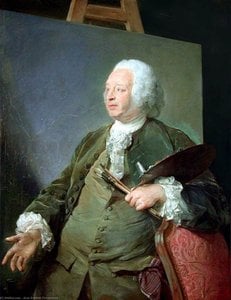
购买高分辨率增强版数字图像,其品质远超在线预览。
每一份文件都由我们的内部专家使用先进工具与专业的后期润色技术精心打造。我们确保每一张图像都具备卓越的清晰度、精准的色彩还原度以及细腻的细节表现。
最终文件将在 72 小时内通过电子邮件交付,并针对专业、编辑及印刷用途进行了优化。其品质与顶级设计工作室、出版社和画廊所信赖的标准完全一致。
选择 WahooArt.com,您获得的不仅仅是一张图像——您收到的是经过专业级增强、精雕细琢的数字艺术作品,并享有满意保证。以下是您的订单中自动包含的所有内容:

您的高分辨率数字图像文件将在下单后 72 小时内通过电子邮件发送给您 —— 即可立即使用。

您的艺术品经过专业优化,结合先进的 AI 技术与人工修饰,确保呈现极致的细节、清晰度与色彩准确度。

不小心删除了文件或找不到了?没关系——我们将随时为您免费重发。

即刻拥有您的艺术作品,无需支付任何关税、税费或运费——数字下载始终免税。

我们通过专业工具与色彩管理技术,确保您的数字图像尽可能真实地还原原作色彩。

如果您对所购数字图像不满意,我们将在100天内为您进行修改或提供100%的全额退款——无需任何理由。

不满意?在收到数字文件后的100天内,您可以申请全额退款——无需任何理由。

购买 3 张图片可享 10% 折扣 - 购买 5 张可享 15% 折扣 - 购买 10+ 张可享 20% 折扣。非常适合创意项目、画廊和机构使用。

Born in 1633 and passing away in 1686, Frederik de Moucheron was a prominent figure within the Dutch Baroque art scene. While not as widely celebrated as some of his contemporaries, his contributions to still life painting are significant, offering a unique blend of meticulous detail, religious devotion, and a subtle, almost melancholic beauty. De Moucheron’s work reflects the prevailing trends of his time – a fascination with light, shadow, and the textures of everyday objects – but also possesses a distinct personality that sets him apart.
De Moucheron's early life remains somewhat shrouded in mystery, lacking extensive biographical details. He was trained as a landscape painter, a common path for aspiring artists during his era. However, he quickly gravitated towards still life, finding within this genre the opportunity to explore themes of faith and mortality with remarkable sensitivity. His paintings frequently depict arrangements of fruits, flowers, and other objects – often accompanied by religious symbols – creating layered narratives that invite contemplation. The influence of Carlo Dolci, a Florentine painter known for his devotional still lifes, is readily apparent in de Moucheron’s style; both artists shared a penchant for luminous color palettes and a focus on the spiritual significance of their subjects.
As noted in research from Art UK, Carlo Dolci’s work served as a significant influence on de Moucheron's artistic development. Dolci, who painted during the same period, was renowned for his intensely devotional still lifes, often depicting scenes of religious contemplation within intimate domestic settings. De Moucheron adopted many of Dolci’s techniques – particularly his masterful use of light and shadow to create a sense of atmosphere—but he developed a more refined and polished style.
The Florentine tradition, with its emphasis on naturalism and the depiction of everyday objects imbued with spiritual meaning, provided a crucial foundation for de Moucheron’s artistic vision. Sir John Finch, a British physician who collected Dolci's works, recognized the value of this connection, highlighting the appeal of these paintings to contemporary European audiences. De Moucheron’s work can be seen as a continuation and evolution of this rich artistic heritage.
De Moucheron was known for his meticulous approach to painting, employing a technique characterized by smooth brushwork and an almost photographic level of detail. He utilized oil paints on panel, carefully layering glazes to achieve the desired luminosity and depth. His dedication to realism is evident in every aspect of his work – from the precise rendering of textures to the subtle variations in color.
He was a master of capturing the fleeting effects of light, creating an illusion of three-dimensionality that draws the viewer into the scene. His paintings are not merely representations of objects; they are carefully constructed visual narratives designed to evoke contemplation and spiritual reflection. The influence of Jean-Baptiste Oudry, who focused on animal still lifes and experimented with various media, is also noticeable in de Moucheron’s attention to detail and his ability to capture the essence of natural forms.
Despite not achieving widespread fame during his lifetime, Frederik de Moucheron's work has gained renewed appreciation in recent decades. His paintings are now recognized as important examples of Dutch Baroque still life painting, offering a unique perspective on themes of faith, mortality, and the beauty of the natural world. His meticulous technique and subtle symbolism continue to resonate with viewers today.
De Moucheron’s legacy lies not only in his individual paintings but also in his contribution to the broader artistic landscape of 17th-century Holland. His work serves as a reminder that even within established traditions, artists can develop distinctive voices and create works of enduring beauty and significance.

1686 - 1755 , France


 效果预览
效果预览
 切换至版画销售渠道
 分享
分享 分享
分享
 详情
详情

 下载
下载
 相似作品
相似作品 X射线
X射线 幻灯片播放
幻灯片播放 统计数据
统计数据
 展开详情
展开详情