
获取远超网页预览效果的印刷级文件。我们销售的每一张数字图像均源自库存数据库中的高分辨率母版——宽度通常在 5,000 至 15,000 像素之间——因此您可以放心地进行大幅打印、局部裁剪或还原细腻的细节。
每一件作品在离开我们的工作室前都经过了精心的处理。数字影像专家会对照原作核对色彩,并在必要时进行校正,随后利用专业修图工具提升清晰度与细节表现——且始终忠实于艺术家的笔触与风格。最终呈现的图像宛如原作本身,而非仅仅是一张加了滤镜的扫描件。
您可以在最终定稿前进行审核:我们的专家将在 72 小时内通过电子邮件向您发送图像以供审阅。如果不满意?您可以要求改进或修正;若质量未达预期,亦可申请退款。
这也是出版商、设计工作室、画廊及印刷厂所信赖的品质。
选择 WahooArt.com,您获得的不仅仅是一张图像——您收到的是经过专业级增强、精雕细琢的数字艺术作品,并享有满意保证。以下是您的订单中自动包含的所有内容:
您的高分辨率数字图像文件将在下单后 72 小时内通过电子邮件发送给您 —— 即可立即使用。
您的艺术品经过专业优化,结合先进的 AI 技术与人工修饰,确保呈现极致的细节、清晰度与色彩准确度。
不小心删除了文件或找不到了?没关系——我们将随时为您免费重发。
即刻拥有您的艺术作品,无需支付任何关税、税费或运费——数字下载始终免税。
我们通过专业工具与色彩管理技术,确保您的数字图像尽可能真实地还原原作色彩。
如果您对所购数字图像不满意,我们将在100天内为您进行修改或提供100%的全额退款——无需任何理由。
不满意?在收到数字文件后的100天内,您可以申请全额退款——无需任何理由。
购买 3 张享 10% 折扣 - 购买 5 张享 15% 折扣 - 购买 10 张以上享 20% 折扣。非常适合创意项目、画廊及机构使用。
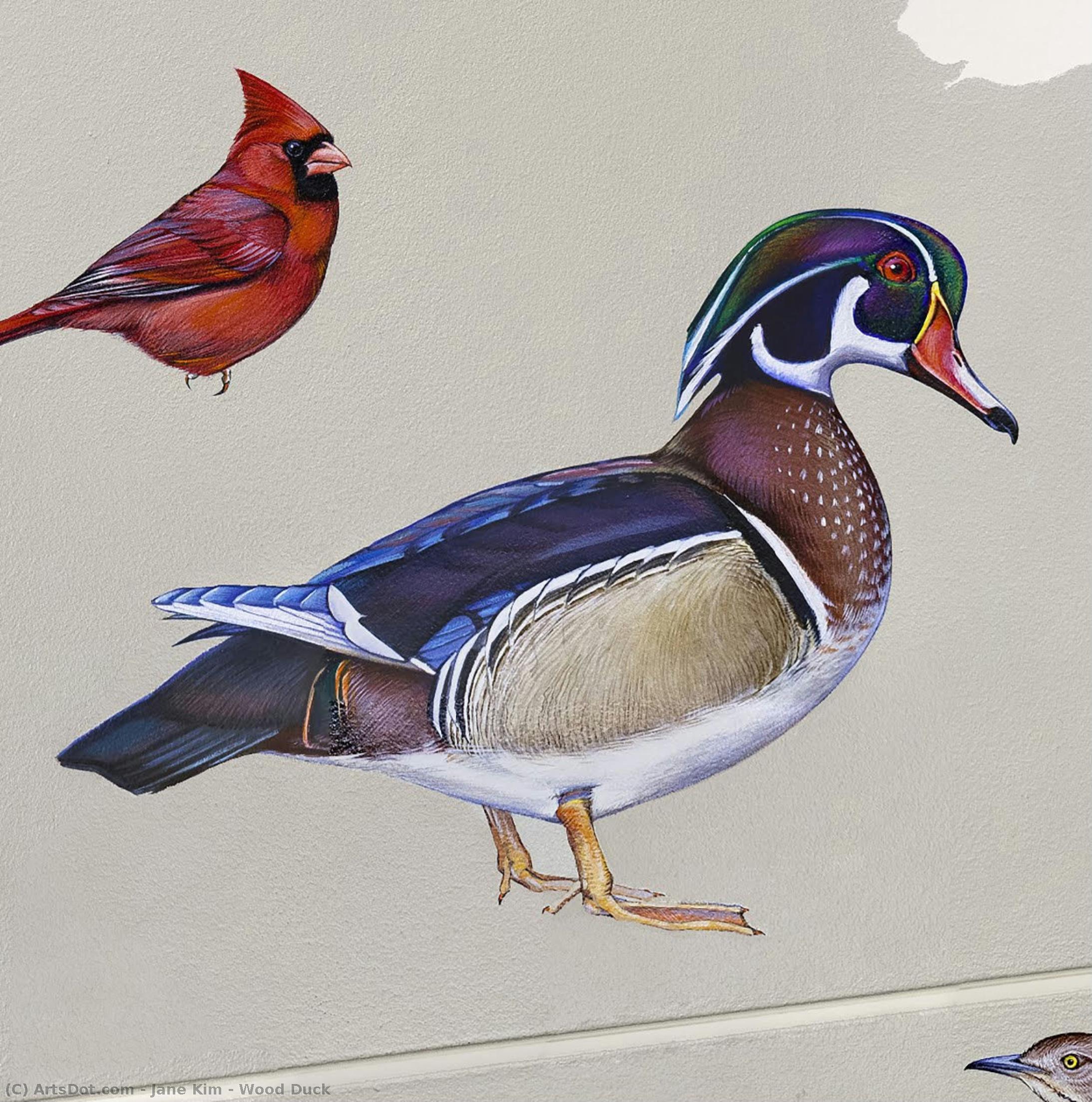
Jane Kim's "Wood Duck," a breathtaking watercolor illustration rendered with the meticulous detail of scientific precision, isn’t merely a depiction of two birds; it’s an immersion into the vibrant heart of North American wildlife. Completed in 2015 as part of a monumental mural commissioned by the Cornell Lab of Ornithology, this piece stands as a testament to Kim's extraordinary talent and her deep-seated passion for celebrating the natural world through art. The painting captures a male wood duck and a cardinal, positioned against a subtly textured beige backdrop that allows their plumage—a riot of blues, greens, browns, creams, and fiery reds—to command immediate attention. It’s an artwork that speaks to both the scientific rigor of observation and the pure joy of witnessing beauty in its most intricate form.
Kim's technique is a captivating blend of realism and illustrative artistry. The piece appears to be executed primarily with colored pencils, or perhaps a similar fine art medium known for layering and blending—a deliberate choice that lends an incredible sense of texture and depth. Each feather is rendered with painstaking detail, capturing the subtle variations in color and tone that define their unique structure. Soft blending creates smooth transitions between hues, avoiding harsh edges and fostering a feeling of softness and fluffiness, as if you could reach out and gently touch the birds’ feathers. The artist's use of line work is equally precise, defining the contours of the bodies with confident strokes while maintaining an overall sense of fluidity. The composition itself—a deliberate placement of the wood duck on the right and the cardinal to its left—creates a dynamic visual dialogue, inviting the viewer to contemplate their relationship within the broader ecosystem.
“Wood Duck” resonates deeply with the legacy of John James Audubon, one of the most celebrated ornithologists and artists of the 19th century. Like Audubon’s meticulous studies, Kim's work is rooted in a profound understanding of avian anatomy and behavior. The painting draws inspiration from Audubon’s own detailed illustrations of wood ducks, capturing their characteristic coloration and posture with remarkable accuracy. However, Kim transcends mere replication; she imbues the piece with her own artistic sensibility, adding a layer of contemporary beauty and emotional resonance. The influence of scientific illustration is also evident—a commitment to documenting nature with precision and clarity, while simultaneously elevating it to an object of aesthetic appreciation. The painting’s almost photographic quality speaks to this dedication.
Beyond its technical brilliance, “Wood Duck” carries a subtle yet powerful symbolic weight. The wood duck itself is often associated with resilience, adaptability, and the quiet beauty of the wilderness. Its vibrant plumage—a complex tapestry of blues, greens, and browns—represents the richness and diversity of the natural world. The cardinal, with its striking red coloration, symbolizes passion, energy, and a connection to the heart. Together, these two birds embody the interconnectedness of life within an ecosystem. The choice to depict them in this specific pose – the wood duck stepping forward, the cardinal partially turned away—suggests movement, interaction, and a fleeting moment captured in time. The painting serves as a gentle reminder of the importance of conservation efforts and our responsibility to protect these remarkable creatures and their habitats.
This stunning reproduction captures the essence of Kim’s original artwork, offering a timeless tribute to the beauty and wonder of North American wildlife.
Jane Kim 的《Wood Duck》 的 X射线透视 页面是一个交互式查看器,您可以逐层滑动浏览作品图像的十一层光学图层,其中还包含 X 光风格的视图。
Jane Kim 的《Wood Duck》 的色彩构成将 Balanced 的对比与 Discordant Palette 的和谐融为一体。
Jane Kim 的《Wood Duck》 的艺术氛围被描述为 Serene。这种分类有助于将作品与特定的空间环境相匹配。
Jane Kim stands at the intersection of fine art and scientific precision, a painter and science illustrator whose work serves as a vibrant bridge between humanity and the natural world. Born in 1981 and raised in Mount Prospect, Illinois, Kim’s artistic journey is deeply rooted in an intimate observation of life. Her practice, often executed through her Ink Dwell studio, transcends mere decoration; it is a form of visual advocacy designed to promote the protection and celebration of our planet's diverse ecosystems. By blending the meticulous detail of scientific illustration with the grand scale of public murals, she transforms urban landscapes into immersive educational experiences.
Kim’s formal training provided the technical foundation for her unique aesthetic. She earned her B.F.A. in printmaking from the Rhode Island School of Design in 2003, a period that likely honed her appreciation for texture and layered composition. Seeking to deepen the connection between art and ecology, she later attended California State University, Monterey Bay, where she studied scientific illustration, graduating in 2010. This dual expertise allows her to capture the iridescent qualities of plumage and the delicate anatomy of flora with an accuracy that honors the biological reality of her subjects while maintaining a profound emotional resonance.
The true impact of Kim’s work is perhaps most felt in her large-scale murals, which turn city walls into windows onto vanishing habitats. Her projects are often much more than aesthetic endeavors; they are ecological narratives. One of her most ambitious undertakings was the Migrating Mural, a series of six works spanning 120 miles along California’s Highway 395, featuring the Sierra Nevada bighorn sheep. Such works demonstrate her ability to use public space to foster a sense of shared stewardship for local wildlife.
Her mastery of detail is equally evident in her more concentrated works, such as the monumental Wall of Birds at Cornell University's Lab of Ornithology. Completed in 2015, this massive piece depicts 243 modern bird families, rendered at life size and superimposed upon a map of the earth. In pieces like South Island Wren or Jocotoco Antpitta, Kim invites viewers into a meditative state, using a layered painting technique that builds richness through visible brushstrokes and a vibrant palette. Through these works, she captures the fragility of endangered species, turning every stroke of paint into a plea for conservation.
Beyond the technical execution, Kim’s significance lies in her ability to weave social and historical narratives into the natural landscape. Her Flora From Fauna series in Redwood City, California, serves as a poignant example, commemorating the lost chrysanthemum industry of the 1920s and the history of Japanese immigrants in the region. This ability to intertwate human history with ecological study defines her contribution to contemporary art.
Whether through her residency at the de Young Museum or her presence on corporate campuses, Kim continues to push the boundaries of where art can live and what it can achieve. Her work remains a testament to the power of observation, reminding us that by truly seeing the intricate beauty of a single bird or a hidden flower, we might find the inspiration necessary to protect the entire tapestry of life.

1981 - , 美国
 实景预览
实景预览
 切换至版画销售渠道
 分享
分享 分享
分享
 详情
详情 指南
指南

 下载作品
下载作品
 相似作品
相似作品 X射线
X射线 幻灯片播放
幻灯片播放 Q&A
Q&A 统计数据
统计数据


 展开全文
展开全文


