x


从与原作比例一致的预设尺寸中进行选择。

您可以输入自定义尺寸,以适配特定的画框或空间。如果所选尺寸与原图比例不符,我们将通过裁剪作品或添加手绘元素来扩展画面。数字样稿将在制作开始前发送给您确认。
请注意,屏幕预览无法准确反映实际的裁剪或扩展效果,只有样稿才能真实呈现最终的构图。
虽然我们提供定制尺寸服务,但为了保留原作比例,建议您从预设列表中选择尺寸。

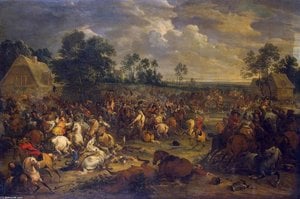
A Battle
复制品尺寸

In the grand tapestry of the Dutch Golden Age, few artists captured the thundering pulse of military glory and the elegant grace of the equine form as vividly as Jan van Huchtenburgh. Born in Haarlem around 1647, his life was shaped by both the intimate bonds of family and the sweeping movements of European history. Following the early loss of his father, Jan found a guiding light in his elder brother, Jacob, whose artistic ambitions provided a foundation for Jan’s own burgeoning talent. Under the watchful eye of mentors like Thomas Wijck and the influential Nicolaes Pieterszoon Berchem, Jan began to master the delicate balance between anatomical precision and the atmospheric drama required to bring a battlefield to life.
His journey was not confined to the borders of the Netherlands; it was a pilgrimage through the very heart of European artistic innovation. His travels to Italy allowed him to breathe in the dramatic chiaroscuro of the Italian masters, absorbing a sense of psychological depth that would later infuse his cavalry clashes with a haunting realism. This period of exploration reached a crescendo during his time in Paris, where he worked within the prestigious Manufacture des Gobelins. Collaborating with luminaries such as Charles Le Brun and Adam Frans van der Meulen, Jan contributed sketches that would eventually adorn grand tapestries, cementing his reputation as an artist capable of translating the chaos of war into a structured, aesthetic triumph.
The true essence of Huchtenburgh’s genius lies in his ability to transform the terrifying spectacle of combat into a choreographed ballet of muscle and steel. He was not merely a painter of scenes, but a chronicler of an era defined by imperial expansion and aristocratic prestige. His work often centered on the intense energy of cavalry engagements, where the swirling dust, the glint of sunlight on sabers, and the strained anatomy of charging horses created a sensory experience for the viewer. This mastery of movement was particularly evident in his service to Prince Eugene of Savoy. Accompanying the Prince on military campaigns, Jan produced a monumental series of ten battle scenes, including legendary depictions of the Battle of Blenheim and the Siege of Belgrade.
Beyond the smoke of the battlefield, Huchtenburg’s versatility extended to the more refined realms of equestrian portraiture and landscape. He possessed a rare ability to capture the nobility of the horse, treating each animal not just as a beast of burden, but as a protagonist in its own right. His later years in Amsterdam saw him engaging with the broader art market as an engraver, publisher, and dealer, ensuring that his influence reached far beyond the canvas. Through his meticulous attention to detail and his command over light and shadow, Jan van Huchtenburgh left behind a legacy that continues to evoke the spirit of the Baroque—a period where art served as both a mirror to the triumphs of man and a window into the sublime power of nature.

1647 - 1733

探索伦勃朗25幅杰作,领略荷兰黄金时代光影大师的艺术传奇!从《夜巡》到自画像,深入了解巴洛克艺术、历史绘画与人物肖像背后的故事。WahooArt.com提供高清艺术复制品及家居装饰灵感。立即探索完整系列!
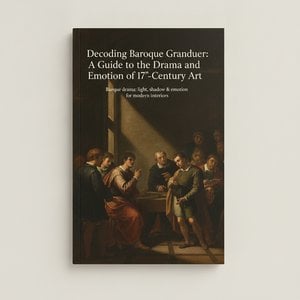
Explore the breathtaking drama of 17th-century Baroque art. Our expert guide decodes the use of chiaroscuro, emotional intensity, and historical grandeur to help you appreciate and curate timeless masterpieces for your collection.
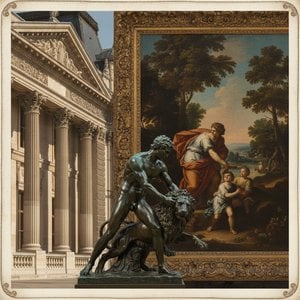
Explore the profound elegance of Baroque Classicism. Discover how 17th-century masters synthesized dramatic emotion with classical order through the lens of the Counter-Reformation and the works of legends like Carlo Maratta and Andrea Sacchi.
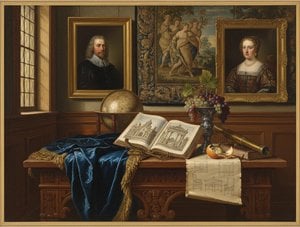
Journey through 17th century art with masterpieces by Rembrandt, Vermeer & Caravaggio. Explore Baroque paintings, Dutch Golden Age techniques & timeless beauty. Find museum-quality reproductions and elevate your home decor on WahooArt.com.

Journey through the Golden Age with our guide to the Top 10 Dutch Baroque masterpieces! Explore iconic paintings by Rembrandt, Vermeer & Frans Hals. Find museum-quality art reproductions and elevate your home decor at WahooArt.com.


第一时间获取最新的艺术新闻、独家优惠及装饰灵感。
向我们介绍您的项目需求,我们的艺术专家将为您提供 3 个个性化的艺术品推荐。
由我们的专家为您精选 3 款心仪之作 —— 完全免费!


 效果预览
效果预览
 购买印刷品
购买印刷品 分享
分享 分享
分享
 详情
详情

 下载
下载
 相似作品
相似作品 X射线
X射线 幻灯片播放
幻灯片播放


 展开详情
展开详情






































 玻璃选项仅适用于110厘米以下的尺寸。