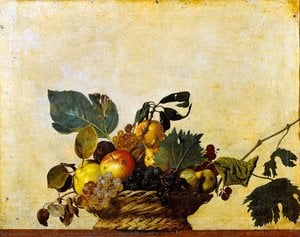
购买高分辨率增强版数字图像,其品质远超在线预览。
每一份文件都由我们的内部专家使用先进工具与专业的后期润色技术精心打造。我们确保每一张图像都具备卓越的清晰度、精准的色彩还原度以及细腻的细节表现。
最终文件将在 72 小时内通过电子邮件交付,并针对专业、编辑及印刷用途进行了优化。其品质与顶级设计工作室、出版社和画廊所信赖的标准完全一致。
选择 WahooArt.com,您获得的不仅仅是一张图像——您收到的是经过专业级增强、精雕细琢的数字艺术作品,并享有满意保证。以下是您的订单中自动包含的所有内容:

您的高分辨率数字图像文件将在下单后 72 小时内通过电子邮件发送给您 —— 即可立即使用。

您的艺术品经过专业优化,结合先进的 AI 技术与人工修饰,确保呈现极致的细节、清晰度与色彩准确度。

不小心删除了文件或找不到了?没关系——我们将随时为您免费重发。

即刻拥有您的艺术作品,无需支付任何关税、税费或运费——数字下载始终免税。

我们通过专业工具与色彩管理技术,确保您的数字图像尽可能真实地还原原作色彩。

如果您对所购数字图像不满意,我们将在100天内为您进行修改或提供100%的全额退款——无需任何理由。

不满意?在收到数字文件后的100天内,您可以申请全额退款——无需任何理由。

购买 3 张图片可享 10% 折扣 - 购买 5 张可享 15% 折扣 - 购买 10+ 张可享 20% 折扣。非常适合创意项目、画廊和机构使用。

In the heart of the Dutch Golden Age, amidst the bustling intellectual and commercial energy of Leiden, Jan Mortel breathed life into the ephemeral beauty of the natural world. Born around 1652 to a family deeply embedded in the literary and communicative arts—his father, Johannes Mortel, was a respected printer and publisher—Mortel grew up in an environment where precision and detail were paramount. This early exposure to the meticulous world of printing likely nurtured his later obsession with the minute textures of petals, the translucent skin of ripening fruit, and the delicate anatomy of insects. His journey into the mastery of light and form began under the tutelage of Jan Porcellis van Delden, a renowned marine painter whose influence instilled in Mortel a profound respect for atmospheric depth and the subtle interplay of shadow and illumination.
By 1675, Mortel had achieved professional distinction by joining the prestigious Leiden Guild of St. Luke, a milestone that solidified his standing within the Dutch art market. His life was one of stability and dedication to his craft; he married Maria van Voorhees in 1680, building a domestic foundation that allowed him to focus entirely on his botanical pursuits. While many of his contemporaries sought fame through sweeping landscapes or dramatic mythological narratives, Mortel found his calling in the quiet, concentrated drama of the still life. He possessed a rare ability to transform a simple arrangement of flora into a profound meditation on existence, capturing not just the physical likeness of his subjects, but their very essence.
The artistry of Jan Mortel is defined by an extraordinary level of botanical accuracy blended with a Baroque sense of opulence. His compositions are rarely mere collections of objects; rather, they are carefully orchestrated dramas where every element plays a role in a larger narrative of life and decay. He frequently combined lush, vibrant flowers with succulent fruits, often punctuating these arrangements with the unexpected presence of insects and butterflies. These small, living details served as more than just decorative flourishes; they acted as memento mori, subtle reminders of the fleeting nature of beauty and the inevitable passage of time.
Mortel’s technical prowess was deeply informed by the masters who preceded him. His work often reflects the influence of Abraham Mignon and the legendary Jan Davidsz de Heem, whose mastery of the still-life genre set the standard for the era. In many instances, Mortel’s paintings can be seen as exquisite tributes to these predecessors, capturing their complex compositions with a renewed sense of clarity and light. His ability to render the velvety texture of a rose petal or the glistening dewdrop on a leaf speaks to a level of observation that bordered on the scientific, making his work as much a record of nature as it is an expression of art.
One of the most significant achievements of Mortel’s career arrived in 1690, when he was appointed the official artist for the Hortus Botanicus at Leiden University. This prestigious role placed him at the intersection of art and science, working closely with the botanical prefects to document the exotic and precious specimens housed within the university's famous gardens. This position allowed his work to transcend the boundaries of the studio, as he became a vital chronicler of the botanical wonders being studied during this era of scientific discovery. His intimate connection to the living plants of the Hortus undoubtedly enriched the vitality and authenticity found in his later masterpieces.
Though Jan Mortel passed away in 1719, leaving behind a legacy etched in pigment and light, his contribution to the Dutch Golden Age remains indelible. He did not merely paint flowers; he captured the pulse of life itself. Through his meticulous brushwork and his ability to find the monumental within the miniature, Mortel ensured that the delicate, vanishing moments of the natural world would endure long after the petals had fallen. His works continue to serve as a testament to a period when art and observation were inextricably linked, celebrating the profound beauty found in the smallest corners of the earth.

1652 - 1719 , Netherlands


 效果预览
效果预览
 切换至版画销售渠道
 分享
分享 分享
分享
 详情
详情

 下载
下载
 相似作品
相似作品 X射线
X射线 幻灯片播放
幻灯片播放 统计数据
统计数据 展开详情
展开详情