
 Acrylic On CanvasWallArtRomanticism
 180519th Century
 240.0 x 340.0 cm
 大英博物馆
大英博物馆由我们的艺术家按需定制,为您提供您所选尺寸及画框的布面手工油画。 ( 切换至版画销售渠道 切换至数字图像销售渠道)





























从与原作比例一致的预设尺寸中进行选择。

您可以输入自定义尺寸,以适配特定的画框或空间。如果所选尺寸与原图比例不符,我们将通过裁剪作品或添加手绘元素来扩展画面。数字样稿将在制作开始前发送给您确认。
请注意,屏幕预览无法准确反映实际的裁剪或扩展效果,只有样稿才能真实呈现最终的构图。
虽然我们提供定制尺寸服务,但为了保留原作比例,建议您从预设列表中选择尺寸。

The Plum-Pudding in Danger
复制品尺寸
To gaze upon this scene is to be invited across the threshold of a bygone era, into the warm glow of an intimate gathering. The Plum-Pudding in Danger presents us with a tableau vivant centered around a magnificent, yielding dessert—a plum pudding, rich with tradition and promise. The composition immediately draws the eye to the table, which serves as both stage and centerpiece for this shared moment of culinary delight. Two gentlemen are depicted, their postures suggesting camaraderie and focused attention upon the task at hand: the careful cutting into the substantial pudding. It is a scene steeped in the quiet drama of conviviality, where the simple act of sharing food becomes imbued with narrative weight.
Dating to 1805, this work by James Gillray places us squarely within the Regency period, an age characterized by a fascinating blend of lingering Georgian formality and burgeoning domestic ease. While the artist's hand is known for its satirical edge in other works, here it lends itself to capturing a moment of almost idyllic pleasure. The technique employed suggests a mastery of genre painting, where everyday life is elevated to the level of art. Notice the meticulous detail—the gleam on the knife, the texture implied on the pudding's surface, and the arrangement of the surrounding bowls and utensils. These elements are not mere props; they anchor the viewer in the material reality of the time, allowing us a tangible connection to the social rituals of early nineteenth-century English life.
The pudding itself functions as more than just a dessert; it is a potent symbol. In art history, food often speaks volumes about status, celebration, and community. Here, the sheer size and central placement of the plum pudding suggest abundance and hospitality. The act of cutting—the deliberate division of the whole—symbolizes both the breaking of bread and the strengthening of bonds between friends or family. It is a visual metaphor for shared experience; the danger implied in the title hints at the delicate balance required to maintain such perfect moments, where indulgence must be managed with care.
For the collector or designer seeking to infuse a space with historical depth and narrative warmth, this reproduction offers unparalleled character. Imagine this piece gracing a dining room wall, its rich tonalities complementing deep wood furniture and perhaps velvet accents. It does not merely decorate; it tells a story of gathering, laughter, and enduring tradition. Owning such an artwork is to curate a feeling—the comforting weight of history meeting the lightness of a shared meal. It invites conversation, prompting viewers to consider their own cherished moments of togetherness.

Born in Lebanon, Connecticut, in 1756, John Trumbull’s life was inextricably linked to the tumultuous events that shaped early America. His lineage – descended from prominent Puritan settlers and boasting a father who served as Governor of Connecticut – provided him with both privilege and an acute awareness of the nation's burgeoning identity. However, it was his service in the American Revolutionary War that truly defined his artistic legacy, transforming him into “The Painter of the Revolution,” a title earned through his monumental historical paintings that now grace the United States Capitol Rotunda.
Trumbull’s early life was marked by an accident that profoundly impacted his artistic approach. A childhood injury resulted in the loss of sight in one eye, forcing him to develop an exceptionally detailed and observant style. This meticulousness became a hallmark of his work, evident in the precise rendering of figures, costumes, and architectural details – qualities that contributed significantly to the dramatic impact of his historical scenes.
His father, Jonathan Trumbull, played a crucial role in shaping young John’s artistic development. Jonathan was not only a governor but also a keen patron of the arts, exposing his son to European art and fostering an appreciation for classical ideals. This exposure, combined with Trumbull's formal training at Harvard College – where he graduated in 1773 – provided him with a solid foundation in artistic technique. Interestingly, his brothers, Joseph and Jonathan Jr., pursued careers in military service and politics respectively, further cementing the family’s involvement in shaping the new nation.
Influenced by the historical painting tradition of artists like Henry Raeburn (a contemporary whose work emphasized dramatic lighting and dynamic compositions), Trumbull initially focused on portraiture. However, his experiences during the Revolutionary War ignited a passion for depicting pivotal moments in American history. The war itself served as both inspiration and training – he meticulously sketched battle scenes and fortifications, honing his observational skills and developing a deep understanding of military strategy.
Trumbull’s military service was far from passive; he actively participated in key events, including the Battle of Bunker Hill. His sketches of British and American lines during this battle were invaluable to both sides, demonstrating his ability to capture complex scenes with remarkable accuracy. He later served as a deputy adjutant general, further immersing himself in the realities of the conflict.
Recognizing the importance of visual propaganda, Congress commissioned Trumbull to create a series of large-scale historical paintings for the newly constructed Capitol building. These commissions – “George Washington Resigning His Commission,” “The Declaration of Independence,” “Surrender of Lord Cornwallis,” and “Battle of Saratoga” – were intended to educate the citizenry about the nation’s founding principles and its struggle for independence. These works weren't merely decorative; they were carefully crafted narratives designed to inspire patriotism and reinforce the ideals of republicanism.
Trumbull’s paintings are not simply historical records; they are imbued with a sense of drama, emotion, and civic virtue. His masterful use of light, composition, and detail creates scenes that resonate powerfully with viewers even today. The “Declaration of Independence” painting, in particular, is iconic – its image now adorns the reverse of the United States two-dollar bill, ensuring that Trumbull’s contribution to American art and history remains permanently visible.
Trumbull continued to paint well into his eighties, producing works until shortly before his death in 1843. He left behind a remarkable body of work that offers invaluable insights into the American Revolution and the birth of the United States. His legacy as “The Painter of the Revolution” is secure, solidifying his place among America’s most important historical artists.
John Trumbull’s work transcends mere artistic skill; it embodies the spirit of a nation forging its identity. His paintings served as powerful visual tools during a critical period in American history, shaping public perception and reinforcing the ideals of liberty and self-governance. His commitment to historical accuracy combined with his dramatic flair established him as a pivotal figure in the development of American art and cemented his enduring reputation as “The Painter of the Revolution.”

1756 - 1815 , United Kingdom
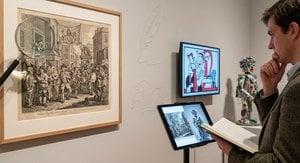
Explore the history of satire in art! From Hogarth's London to contemporary critique, discover how artists use wit & visual power to reflect and challenge society. Expert insights at WahooArt.

探索詹姆斯·惠斯勒25幅杰作!深入了解夜曲、静谧和谐等经典油画背后的故事与艺术魅力。WahooArt.com提供博物馆级复制品,为您的家居带来永恒之美。立即在线探索完整系列!

Explore the witty world of Thomas Rowlandson, master Georgian caricaturist! Discover his satirical prints & insightful social commentary on 18th-century England. Learn about his life, techniques, and enduring influence.

Explore the history of satire in art! From ancient masters like Aristophanes to Goya & Grosz, discover how artists use wit and critique to reflect—and challenge—society. Expert insights at WahooArt.
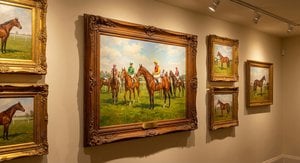
Explore 25 iconic Sir Alfred Munnings paintings! Discover the beauty of British Impressionism, equine art & rural England. Find museum-quality reproductions and elevate your home decor with WahooArt. Explore the full collection online.


 效果预览
效果预览
 分享
分享 分享
分享
 详情
详情 指南
指南

 下载
下载
 相似作品
相似作品 X射线
X射线 幻灯片播放
幻灯片播放 统计数据
统计数据 展开详情
展开详情









 玻璃选项仅适用于110厘米以下的尺寸。


