
博物馆级艺术微喷或帆布版画,制作高效,并提供多种饰面选择。 ( 订购此收藏品的纯手工复刻画作 切换至数字图像销售渠道)





























您可以从与原作比例一致的预设尺寸中进行选择。

请输入您所需的宽度和高度,以适配您的画框或墙面。由于印刷品只能进行裁剪,无法超出原图尺寸,因此若比例不一致,画面的一部分将会被裁切。在正式印刷之前,我们会为您发送一份数字效果图供您确认。本页面显示的图片并非最终裁剪后的效果——只有效果图才能展示真实的裁剪情况。
Gluttony
复刻品尺寸说明
James Ensor's Gluttony (circa 1897) is not merely a depiction of a dinner party; it’s a profoundly unsettling exploration of human excess, societal decay, and perhaps most significantly, the anxieties simmering beneath the surface of late Victorian Europe. Painted in stark black and white, the canvas immediately confronts the viewer with a scene of almost unbearable tension. The figures seated around the table – three primary subjects and two indistinct background individuals – are rendered with an unsettling realism that borders on caricature. Their postures, expressions, and the sheer abundance of food on the table contribute to a palpable sense of unease, hinting at a feast not of pleasure but of something far more sinister.
Created during a period of rapid social change and growing anxieties in Europe – marked by industrialization, urbanization, and burgeoning psychological theories – *Gluttony* reflects these concerns. Ensor was deeply influenced by the Symbolist movement, which sought to express subjective emotions and ideas through symbolic imagery rather than objective representation. His personal background also played a crucial role; his upbringing amidst the vibrant, often unsettling atmosphere of Ostend, a port town known for its carnivals and eccentric characters, undoubtedly shaped his artistic vision. The souvenir shop run by his parents – filled with masks, curiosities, and objects that hinted at hidden meanings – provided him with a rich visual vocabulary that he would later employ to great effect.
Ensor’s rejection of the rigid academic traditions of the Brussels Academy was deliberate. He sought to create art that spoke directly to the subconscious, confronting viewers with uncomfortable truths rather than offering pleasant illusions. This commitment to psychological realism is evident in *Gluttony*, where the figures are not simply eating; they are trapped within a cycle of self-indulgence and moral degradation.
The symbolism embedded within *Gluttony* is layered and complex. The abundance of food itself represents excess, waste, and perhaps even a symbolic representation of the sins of mankind. The distorted faces of the figures suggest a loss of identity and an inability to escape their own appetites. The presence of masks – subtly alluded to in the artist’s broader oeuvre – reinforces the theme of disguise and deception. The overall effect is profoundly unsettling, evoking feelings of anxiety, dread, and perhaps even disgust. Ensor masterfully uses composition and technique to create a scene that feels both familiar and deeply disturbing, inviting viewers to confront their own anxieties about morality, consumption, and the darker aspects of human nature.
WahooArt offers meticulously crafted hand-painted reproductions of James Ensor's *Gluttony*, capturing every nuance of detail and emotional intensity of the original artwork. Our skilled artisans employ traditional techniques, using archival quality materials to ensure that your reproduction will retain its beauty and vibrancy for generations to come. Whether you are a seasoned art collector, an interior designer seeking to create a dramatic focal point, or simply someone captivated by Ensor’s unsettling vision, a WahooArt reproduction of *Gluttony* is the perfect way to bring this iconic masterpiece into your home or workspace.

詹姆斯·埃诺斯(1860年4月13日出生于奥斯坦德,比利时),是英国父亲和比利时母亲的儿子。这种文化双重可能预示着艺术家毕生对面具和伪装的热爱,这些主题将成为他令人震惊但又迷人的艺术作品的主导力量。在热闹的海滨小镇周围长大,年轻的詹姆斯深受卡尼农节气氛的影响,他的父母经营着一家充满贝壳、面具和异国情趣物品的纪念品店——一个真正的奇迹宝库,点燃了他的想象力并为他未来的艺术创作提供了丰富的视觉词汇。
埃诺斯早期的绘画反映了更传统的风格,描绘了日常生活场景,采用阴郁的色彩。例如,《俄罗斯音乐》(1881年)和《醉酒者》(1883年),展现了他对现实主义的初步天赋,但即使在这些早期作品中,也存在着令人不安图像的萌芽。一个关键转变发生在埃诺斯的色彩变得鲜艳和主题日益怪诞的过程中。他开始在画布上填充卡尼农节、骷髅、木偶和象征人物——一个充满幻想的世界,经常边缘于疯狂之间。这不仅仅是一种风格上的变化;它是对人类存在黑暗面的有意识的探索,是对社会规范的拒绝以及对非理性拥抱。
埃诺斯对艺术的态度并非传统审美主义者所追求的纯粹形式主义。他承认了来自大师们的影响,例如皮特·布鲁格尔长老,他的拥挤场景和道德说教风格与自己的愿景产生共鸣;此外,弗朗西斯科·戈雅对人类痛苦的不畏惧描绘也给埃诺斯艺术审美带来了深刻的印象。威斯斯勒强调了美学主义的重要性,这也在塑造埃诺斯的艺术感觉中发挥了一定的作用。
尽管埃诺斯拒绝简单分类,但他的艺术渊源复杂而迷人。他承认了来自大师们的影响,例如皮特·布鲁格尔长老,他的拥挤场景和道德说教风格与自己的愿景产生共鸣;此外,弗朗西斯科·戈雅对人类痛苦的不畏惧描绘也给埃诺斯艺术审美带来了深刻的印象。威斯斯勒强调了美学主义的重要性,这也在塑造埃诺斯的艺术感觉中发挥了一定的作用。
埃诺斯是一位开创性的艺术家,他大胆地挑战了艺术规范,为后人打开了道路。他的作品继续吸引着观众的目光,并探讨了人类状况的深度和黑暗面。尽管最初面临阻力,埃诺斯最终在晚年获得了认可,被国王阿尔伯特一世封为贵族,并在1933年获得荣誉军团勋章。他于1949年在奥斯坦德去世,留下了一系列作品,这些作品继续激发人们的想象力和热情。

1860 - 1949 , 比利时
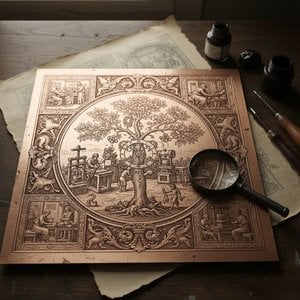
Explore the intricate world of etching and intaglio printmaking. Discover how masters use acid and metal to create profound textures and lines, from Romanticism to modern era, through an expert lens of art history and technical mastery.


 实景预览
实景预览
 发送
发送 分享
分享
 详情
详情 指南
指南

 下载图片
下载图片
 相似作品
相似作品 X射线
X射线 幻灯片播放
幻灯片播放 统计数据
统计数据

 阅读全文
阅读全文









 玻璃选项仅适用于110厘米以下的尺寸。


