
博物馆级艺术微喷或帆布版画,制作高效,并提供多种饰面选择。 ( 订购此收藏品的纯手工复刻画作 切换至数字图像销售渠道)





























您可以从与原作比例一致的预设尺寸中进行选择。

您可以输入自定义尺寸,以适配特定的画框或空间。如果您选择的尺寸与原图比例不符,我们将对作品进行裁剪,或通过镜像填充/纯色填充边缘的方式来扩展图像。在开始制作之前,我们会向您发送一份数字效果图供您确认。
请注意,屏幕上的预览并不能反映实际的裁剪或扩展效果。只有效果图才能准确展示最终的构图。
虽然我们提供定制尺寸,但为了保持原图比例,我们建议您从预设列表中选择尺寸。
Flacon bleu et poulet
复刻品尺寸说明
James Ensor's Flacon bleu et poulet, painted in the early 20th century, isn’t merely a depiction of a blue bottle and a bird; it’s a carefully constructed tableau of unease, a window into the artist’s uniquely unsettling psyche. This work, firmly rooted within the burgeoning Expressionist movement, offers a glimpse into a world saturated with symbolism and shadowed by a profound sense of melancholy—a characteristic so deeply ingrained in Ensor's artistic vision. The painting immediately confronts us with its deliberate distortion; the bird, rendered almost lifeless, lies sprawled on the ground, devoid of vitality, while the bottle, a vibrant splash of color against the muted tones, seems to hold an unsettling stillness itself. It’s a scene that begs questions – not about simple objects, but about their relationship and the atmosphere they evoke.
Born in Ostend, Belgium, in 1860, James Ensor was a product of a fascinating cultural crossroads – his English father and Belgian mother instilled within him a sense of both belonging and alienation. This duality profoundly shaped his artistic trajectory. Early exposure to the vibrant chaos of a seaside resort town, coupled with his parents’ souvenir shop overflowing with exotic masks and curiosities, fueled an imagination that constantly sought to deconstruct and reimagine reality. Initially hesitant to conform to the rigid conventions of academic art, Ensor enrolled at the Académie Royale des Beaux-Arts in Brussels but quickly recognized its limitations. He yearned for a freedom to express his inner world, a desire that ultimately led him away from traditional techniques and toward a distinctly personal style – one characterized by bold colors, distorted forms, and a deliberate rejection of idealized beauty.
Ensor’s masterful use of color is immediately striking in Flacon bleu et poulet. The intense blue of the bottle dominates the composition, drawing the eye while simultaneously creating a sense of artificiality or even menace. The muted browns and greys of the surrounding objects – the books, the chair – contribute to the painting’s overall atmosphere of quiet despair. More than just color choices, Ensor employs distortion to heighten emotional impact. The bird is not realistically rendered; its form is simplified, almost skeletal, suggesting a loss of life or perhaps an embodiment of stagnation. The positioning of the objects—the books clustered together, the chair angled awkwardly—creates a sense of imbalance and unease, mirroring the psychological state implied by the scene. His technique leans heavily into the expressive potential of paint itself; visible brushstrokes contribute to the painting’s raw energy.
Beyond its formal elements, Flacon bleu et poulet is rich in symbolic meaning. The blue bottle could represent both fragility and containment – a vessel holding something precious or perhaps something dangerous. The bird, often associated with freedom and spirituality, here lies lifeless, suggesting a loss of innocence or a rejection of higher ideals. The scattered books hint at knowledge and learning, yet their presence alongside the inanimate bird suggests a disconnect between intellect and experience. Some art historians have linked the painting to Ensor’s personal anxieties about mortality and the fleeting nature of existence. Ultimately, the work invites viewers to contemplate themes of isolation, decay, and the unsettling realities of the human condition – a testament to Ensor's ability to translate complex emotions onto canvas with remarkable power. It is a piece that lingers in the mind long after viewing, prompting reflection on its layered meanings.
Explore a stunning hand-painted reproduction of James Ensor’s *Flacon bleu et poulet* at WahooArt.com and discover the captivating world of this extraordinary artist.
"Flacon bleu et poulet" 代表了 詹姆斯·恩索尔 的 Mature Expressionism 时期。
您可以在 本页 直接订购 詹姆斯·恩索尔 的《Flacon bleu et poulet》 的手绘复制品:亚麻画布手工绘制油画复制品,按需定制。
詹姆斯·恩索尔 的《Flacon bleu et poulet》 描绘了:bird, bottle, books, chair, decay, tension, masks, belgium。
如需订购 詹姆斯·恩索尔 的《Flacon bleu et poulet》 的版画,只需在 本页 进行下单即可:采用棉质帆布或档案级画布纸制作的艺术版画。
詹姆斯·恩索尔 的《Flacon bleu et poulet》 将 Acrylic On Canvas 技法与 Expressionist Figurative 流派风格完美融合。技法与流派分别描述了作品的创作手法及其艺术风格。
“Flacon bleu et poulet” 具备增强现实预览功能:通过作品的 AR 预览 页面,您可以在兼容设备上查看该作品呈现在您专属空间的效果。
"Flacon bleu et poulet" 由 詹姆斯·恩索尔 创作。本页面的信息旨在介绍 詹姆斯·恩索尔 的原作。

詹姆斯·埃诺斯(1860年4月13日出生于奥斯坦德,比利时),是英国父亲和比利时母亲的儿子。这种文化双重可能预示着艺术家毕生对面具和伪装的热爱,这些主题将成为他令人震惊但又迷人的艺术作品的主导力量。在热闹的海滨小镇周围长大,年轻的詹姆斯深受卡尼农节气氛的影响,他的父母经营着一家充满贝壳、面具和异国情趣物品的纪念品店——一个真正的奇迹宝库,点燃了他的想象力并为他未来的艺术创作提供了丰富的视觉词汇。
埃诺斯早期的绘画反映了更传统的风格,描绘了日常生活场景,采用阴郁的色彩。例如,《俄罗斯音乐》(1881年)和《醉酒者》(1883年),展现了他对现实主义的初步天赋,但即使在这些早期作品中,也存在着令人不安图像的萌芽。一个关键转变发生在埃诺斯的色彩变得鲜艳和主题日益怪诞的过程中。他开始在画布上填充卡尼农节、骷髅、木偶和象征人物——一个充满幻想的世界,经常边缘于疯狂之间。这不仅仅是一种风格上的变化;它是对人类存在黑暗面的有意识的探索,是对社会规范的拒绝以及对非理性拥抱。
埃诺斯对艺术的态度并非传统审美主义者所追求的纯粹形式主义。他承认了来自大师们的影响,例如皮特·布鲁格尔长老,他的拥挤场景和道德说教风格与自己的愿景产生共鸣;此外,弗朗西斯科·戈雅对人类痛苦的不畏惧描绘也给埃诺斯艺术审美带来了深刻的印象。威斯斯勒强调了美学主义的重要性,这也在塑造埃诺斯的艺术感觉中发挥了一定的作用。
尽管埃诺斯拒绝简单分类,但他的艺术渊源复杂而迷人。他承认了来自大师们的影响,例如皮特·布鲁格尔长老,他的拥挤场景和道德说教风格与自己的愿景产生共鸣;此外,弗朗西斯科·戈雅对人类痛苦的不畏惧描绘也给埃诺斯艺术审美带来了深刻的印象。威斯斯勒强调了美学主义的重要性,这也在塑造埃诺斯的艺术感觉中发挥了一定的作用。
埃诺斯是一位开创性的艺术家,他大胆地挑战了艺术规范,为后人打开了道路。他的作品继续吸引着观众的目光,并探讨了人类状况的深度和黑暗面。尽管最初面临阻力,埃诺斯最终在晚年获得了认可,被国王阿尔伯特一世封为贵族,并在1933年获得荣誉军团勋章。他于1949年在奥斯坦德去世,留下了一系列作品,这些作品继续激发人们的想象力和热情。

1860 - 1949 , 比利时
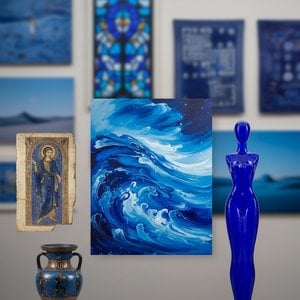
Explore the rich history of blue in art! Discover its symbolism, from ancient pigments to modern masterpieces by Kandinsky & Seurat. Uncover the psychological impact and cultural meanings behind this captivating hue.

Immerse yourself in the captivating world of slate blue! Explore 10 iconic paintings by Monet, Van Gogh & Renoir. Discover their stories, techniques & find museum-quality art reproductions for your home at .

Explore the unsettling yet captivating world of James Ensor, a pioneer of Expressionism. Discover his satirical masterpieces, symbolic imagery & lasting influence on modern art. High-quality reproductions available at WahooArt.

探索詹姆斯·惠斯勒25幅杰作!深入了解夜曲、静谧和谐等经典油画背后的故事与艺术魅力。WahooArt.com提供博物馆级复制品,为您的家居带来永恒之美。立即在线探索完整系列!
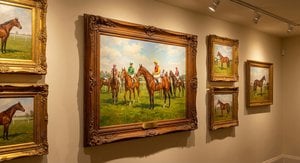
Explore 25 iconic Sir Alfred Munnings paintings! Discover the beauty of British Impressionism, equine art & rural England. Find museum-quality reproductions and elevate your home decor with WahooArt. Explore the full collection online.


 实景预览
实景预览
 发送
发送 分享
分享
 详情
详情 指南
指南

 下载图片
下载图片
 相似作品
相似作品 X射线
X射线 幻灯片播放
幻灯片播放 统计数据
统计数据
 阅读全文
阅读全文









 玻璃选项仅适用于110厘米以下的尺寸。


