
博物馆级艺术微喷或帆布版画,制作高效,并提供多种饰面选择。 ( 订购纯手工绘制画作 切换至数字图像销售渠道)





























您可以从与原作比例一致的预设尺寸中进行选择。

请输入您所需的宽度和高度,以适配您的画框或墙面。由于印刷品只能进行裁剪,无法超出原图尺寸,因此若比例不一致,画面的一部分将会被裁切。在正式印刷之前,我们会为您发送一份数字效果图供您确认。本页面显示的图片并非最终裁剪后的效果——只有效果图才能展示真实的裁剪情况。
Ensor musicien et ses clefs de sol
复刻品尺寸
James Ensor's "Ensor musicien et ses clefs de sol" (Ensor the Musician and His Clefs) is not merely a portrait; it’s an immersion into a world of psychological unease, theatricality, and subtle symbolism. Painted in 1888, this work stands as a pivotal example of Ensor's unique artistic vision – a blend of Symbolism, Expressionism, and touches of Surrealism that continues to fascinate and disturb viewers over a century later. The painting depicts a man, likely self-portrait, seated before a wall adorned with musical notes, his gaze direct and unsettlingly intense. His brown coat provides a grounding element against the vibrant, almost hallucinatory background, while the inclusion of a clock subtly introduces themes of time, mortality, and perhaps, the relentless march of artistic judgment.
Ensor’s stylistic choices are immediately arresting. The palette is rich and saturated, dominated by reds – not comforting hues, but rather intense, bordering on alarming shades that contribute to the painting's overall sense of disquiet. This boldness was a deliberate departure from the prevailing academic styles of the time, reflecting Ensor’s rejection of rigid artistic conventions. He employed a technique characterized by thick impasto, particularly noticeable in the background, creating a tactile surface that seems to pulsate with energy. The figures are rendered with an almost mask-like quality – their features simplified and exaggerated, hinting at hidden emotions and concealed identities. This echoes Ensor’s lifelong fascination with masks, a motif deeply ingrained in his artistic practice, stemming from his childhood spent amidst the spectacle of Ostend's carnival.
The painting is profoundly rooted in Ensor’s personal history and experiences. The souvenir shop run by his parents, overflowing with masks, curiosities, and theatrical props, served as a constant source of inspiration. These objects weren't simply decorative; they represented a world of performance, disguise, and the blurring of reality and illusion – themes that would become central to Ensor’s artistic exploration. The musical notes scattered across the wall are not just an incidental detail; they symbolize the artist’s own engagement with music, a passion he pursued despite lacking formal training. The act of playing music, particularly improvising, was for Ensor a means of expressing his innermost thoughts and emotions, often in ways that challenged societal norms.
Furthermore, the inclusion of skeletons – a recurring motif in Ensor’s work – suggests an awareness of mortality and the ephemeral nature of existence. They are not presented as frightening specters but rather as participants in this strange musical tableau, adding to the painting's unsettling atmosphere. The man’s direct gaze at the viewer is particularly significant. It’s a confrontational stare, suggesting that he is not simply presenting himself; he is challenging the observer to contemplate their own role within his world of masks and shadows.
James Ensor was a truly groundbreaking figure in 19th-century art. He rejected the prevailing artistic trends, forging his own distinctive style that defied easy categorization. His work was often met with hostility and criticism, particularly during his early career, as evidenced by the scathing reviews of “Christ’s Entry Into Brussels.” However, Ensor persevered, developing a unique visual language that anticipated the developments of Expressionism and Surrealism. He was associated with the Les XX group, a circle of avant-garde artists who championed innovation and challenged artistic conventions.
Ensor's influence extends far beyond his own lifetime. His exploration of psychological themes, his use of unsettling imagery, and his rejection of academic tradition paved the way for future generations of artists. His work continues to resonate with contemporary audiences, offering a glimpse into the mind of an artist who dared to confront the darker aspects of human experience. Reproductions of "Ensor musicien et ses clefs de sol" provide a tangible connection to this remarkable and profoundly unsettling artistic legacy.
WahooArt offers meticulously crafted, hand-painted reproductions of James Ensor’s “Ensor musicien et ses clefs de sol,” capturing the artist's distinctive style and emotional intensity. Our skilled artisans use archival-quality materials and techniques to faithfully recreate every detail of this iconic painting, ensuring that your reproduction will be a treasured addition to your art collection for years to come. Whether you’re an art enthusiast, a collector seeking to expand your holdings, or simply someone drawn to the power of evocative imagery, a WahooArt reproduction offers a beautiful and authentic way to experience the genius of James Ensor.
您可以在 詹姆斯·恩索尔 的《Ensor musicien et ses clefs de sol》 的 高分辨率数字图像 页面购买其数字图像:高分辨率数字图像下载。
詹姆斯·恩索尔 的《Ensor musicien et ses clefs de sol》 的 指南 页面提供了一份可打印的两页式学生资料单:包含作品及其基本信息表、将其置于艺术家生平中的年代轴、艺术家的其他作品、经测量的色板,以及四种格式的即用型引用文献。
对于“Ensor musicien et ses clefs de sol”,建议的打印设置尺寸为 Large,方向为 Portrait。

詹姆斯·埃诺斯(1860年4月13日出生于奥斯坦德,比利时),是英国父亲和比利时母亲的儿子。这种文化双重可能预示着艺术家毕生对面具和伪装的热爱,这些主题将成为他令人震惊但又迷人的艺术作品的主导力量。在热闹的海滨小镇周围长大,年轻的詹姆斯深受卡尼农节气氛的影响,他的父母经营着一家充满贝壳、面具和异国情趣物品的纪念品店——一个真正的奇迹宝库,点燃了他的想象力并为他未来的艺术创作提供了丰富的视觉词汇。
埃诺斯早期的绘画反映了更传统的风格,描绘了日常生活场景,采用阴郁的色彩。例如,《俄罗斯音乐》(1881年)和《醉酒者》(1883年),展现了他对现实主义的初步天赋,但即使在这些早期作品中,也存在着令人不安图像的萌芽。一个关键转变发生在埃诺斯的色彩变得鲜艳和主题日益怪诞的过程中。他开始在画布上填充卡尼农节、骷髅、木偶和象征人物——一个充满幻想的世界,经常边缘于疯狂之间。这不仅仅是一种风格上的变化;它是对人类存在黑暗面的有意识的探索,是对社会规范的拒绝以及对非理性拥抱。
埃诺斯对艺术的态度并非传统审美主义者所追求的纯粹形式主义。他承认了来自大师们的影响,例如皮特·布鲁格尔长老,他的拥挤场景和道德说教风格与自己的愿景产生共鸣;此外,弗朗西斯科·戈雅对人类痛苦的不畏惧描绘也给埃诺斯艺术审美带来了深刻的印象。威斯斯勒强调了美学主义的重要性,这也在塑造埃诺斯的艺术感觉中发挥了一定的作用。
尽管埃诺斯拒绝简单分类,但他的艺术渊源复杂而迷人。他承认了来自大师们的影响,例如皮特·布鲁格尔长老,他的拥挤场景和道德说教风格与自己的愿景产生共鸣;此外,弗朗西斯科·戈雅对人类痛苦的不畏惧描绘也给埃诺斯艺术审美带来了深刻的印象。威斯斯勒强调了美学主义的重要性,这也在塑造埃诺斯的艺术感觉中发挥了一定的作用。
埃诺斯是一位开创性的艺术家,他大胆地挑战了艺术规范,为后人打开了道路。他的作品继续吸引着观众的目光,并探讨了人类状况的深度和黑暗面。尽管最初面临阻力,埃诺斯最终在晚年获得了认可,被国王阿尔伯特一世封为贵族,并在1933年获得荣誉军团勋章。他于1949年在奥斯坦德去世,留下了一系列作品,这些作品继续激发人们的想象力和热情。

1860 - 1949 , 比利时
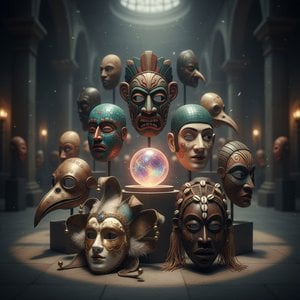
Embark on a profound journey through the world's most iconic mask artworks. Explore the spiritual depth, intricate craftsmanship, and rich cultural heritage of global traditions, from Chhau to Gomira, in this expert-led exploration of ancestral artistry and symbolic beauty.

 实景预览
实景预览
 分享
分享 分享
分享
 详情
详情 指南
指南

 下载作品
下载作品
 相似作品
相似作品 X射线
X射线 幻灯片播放
幻灯片播放 问答
问答
 统计数据
统计数据

 展开全文
展开全文









 玻璃选项仅适用于110厘米以下的尺寸。


