


x

从与原作比例一致的预设尺寸中进行选择。

您可以输入自定义尺寸,以适配特定的画框或空间。如果您选择的尺寸与原图比例不符,我们将对作品进行裁剪,或通过镜像填充/纯色填充边缘的方式来扩展图像。在开始制作之前,我们会向您发送一份数字效果图供您确认。
请注意,屏幕上的预览并不能反映实际的裁剪或扩展效果。只有效果图才能准确展示最终的构图。
虽然我们提供定制尺寸,但为了保持原图比例,我们建议您从预设列表中选择尺寸。

Caprice (sketch)
复制品尺寸
James Ensor's "Caprice," a sketch rendered in stark black and white, is not merely a depiction of a scene; it’s an immersion into the unsettling heart of human experience. Created around 1890, this work exemplifies Ensor’s signature style – a potent blend of Symbolism, Expressionism, and a deeply rooted fascination with the grotesque and the macabre. The image presents a dramatic tableau: a colossal bird, seemingly an angel yet radiating an unnerving presence, dominates the composition, casting its shadow over a group of figures rendered as skeletal or ghostly forms. This isn’t a comforting vision of salvation; instead, it's a chilling meditation on suffering, mortality, and the anxieties simmering beneath the surface of contemporary society.
Ensor’s artistic journey was profoundly shaped by his upbringing in Ostend, Belgium – a vibrant seaside resort town brimming with carnival traditions. His family operated a souvenir shop overflowing with masks, costumes, and exotic objects, providing him with an unparalleled visual vocabulary. This early exposure to the theatricality of life, particularly the elaborate rituals surrounding Mardi Gras, became a recurring theme in his work, informing his use of disguise, symbolism, and a deliberate blurring of reality and illusion. “Caprice,” like much of Ensor’s oeuvre, draws heavily on this carnival imagery, injecting it with a distinctly unsettling atmosphere.
The monochrome palette of "Caprice" immediately establishes a mood of somber intensity. Ensor masterfully employs hatching and cross-hatching to build form and texture, creating a sense of depth and volume despite the absence of color. The bird itself is rendered with meticulous detail – its wings spread wide, almost aggressively so – drawing the viewer’s eye and anchoring the composition. Notice how he uses varying line weights to suggest movement and emotion; the skeletal figures seem to writhe in silent agony, while the bird exudes a quiet authority.
Crucially, Ensor abandons traditional perspective and realistic representation. Instead, he employs a flattened picture plane, compressing space and intensifying the claustrophobic feeling of the scene. This deliberate distortion contributes to the painting’s unsettling effect, forcing the viewer to confront the uncomfortable realities it depicts. The figures are densely packed together, almost suffocating one another, mirroring the anxieties of a rapidly changing society.
The central figure of the bird is particularly complex. While often interpreted as an angel, Ensor subverts this traditional symbolism. The bird’s imposing size and its shadowed presence suggest not benevolence but rather a force of judgment or perhaps even predation. Its wings, spread wide, could represent both ascension and entrapment – a suggestion that salvation may be elusive or even illusory.
The skeletal figures surrounding the bird are undoubtedly representations of human suffering and death. Their pallid skin tones and vacant stares evoke a sense of profound loss and despair. Ensor’s use of masks, prevalent throughout his work, further obscures their identities, transforming them into archetypal symbols of mortality. The sheer number of these figures – at least twelve visible in the sketch – underscores the pervasive nature of suffering within society.
"Caprice" is a pivotal work in Ensor’s artistic development, reflecting his growing disillusionment with societal norms and his willingness to confront uncomfortable truths. As documented by research from Wake Forest University's Print Collection (https://users.wfu.edu/martine/pcweb15/pc-ensor.html), Ensor’s work was often met with resistance due to its provocative subject matter and unconventional style. He deliberately challenged conventional artistic practices, paving the way for later Expressionist artists.
The Getty Exhibition “The Scandalous Art of James Ensor” (https://www.getty.edu/art/collection/exhibition/103PRP) highlights how Ensor’s work was initially perceived as shocking and unsettling, yet ultimately recognized for its profound psychological insight and artistic innovation. Reproductions of "Caprice," available through WahooArt.com, offer a powerful opportunity to experience the full impact of this haunting masterpiece – a testament to James Ensor's enduring legacy as one of the most original and challenging artists of the late 19th century.


詹姆斯·埃诺斯(1860年4月13日出生于奥斯坦德,比利时),是英国父亲和比利时母亲的儿子。这种文化双重可能预示着艺术家毕生对面具和伪装的热爱,这些主题将成为他令人震惊但又迷人的艺术作品的主导力量。在热闹的海滨小镇周围长大,年轻的詹姆斯深受卡尼农节气氛的影响,他的父母经营着一家充满贝壳、面具和异国情趣物品的纪念品店——一个真正的奇迹宝库,点燃了他的想象力并为他未来的艺术创作提供了丰富的视觉词汇。
埃诺斯早期的绘画反映了更传统的风格,描绘了日常生活场景,采用阴郁的色彩。例如,《俄罗斯音乐》(1881年)和《醉酒者》(1883年),展现了他对现实主义的初步天赋,但即使在这些早期作品中,也存在着令人不安图像的萌芽。一个关键转变发生在埃诺斯的色彩变得鲜艳和主题日益怪诞的过程中。他开始在画布上填充卡尼农节、骷髅、木偶和象征人物——一个充满幻想的世界,经常边缘于疯狂之间。这不仅仅是一种风格上的变化;它是对人类存在黑暗面的有意识的探索,是对社会规范的拒绝以及对非理性拥抱。
埃诺斯对艺术的态度并非传统审美主义者所追求的纯粹形式主义。他承认了来自大师们的影响,例如皮特·布鲁格尔长老,他的拥挤场景和道德说教风格与自己的愿景产生共鸣;此外,弗朗西斯科·戈雅对人类痛苦的不畏惧描绘也给埃诺斯艺术审美带来了深刻的印象。威斯斯勒强调了美学主义的重要性,这也在塑造埃诺斯的艺术感觉中发挥了一定的作用。
尽管埃诺斯拒绝简单分类,但他的艺术渊源复杂而迷人。他承认了来自大师们的影响,例如皮特·布鲁格尔长老,他的拥挤场景和道德说教风格与自己的愿景产生共鸣;此外,弗朗西斯科·戈雅对人类痛苦的不畏惧描绘也给埃诺斯艺术审美带来了深刻的印象。威斯斯勒强调了美学主义的重要性,这也在塑造埃诺斯的艺术感觉中发挥了一定的作用。
埃诺斯是一位开创性的艺术家,他大胆地挑战了艺术规范,为后人打开了道路。他的作品继续吸引着观众的目光,并探讨了人类状况的深度和黑暗面。尽管最初面临阻力,埃诺斯最终在晚年获得了认可,被国王阿尔伯特一世封为贵族,并在1933年获得荣誉军团勋章。他于1949年在奥斯坦德去世,留下了一系列作品,这些作品继续激发人们的想象力和热情。

1860 - 1949 , 比利时

Explore the unsettling yet captivating world of James Ensor, a pioneer of Expressionism. Discover his satirical masterpieces, symbolic imagery & lasting influence on modern art. High-quality reproductions available at WahooArt.
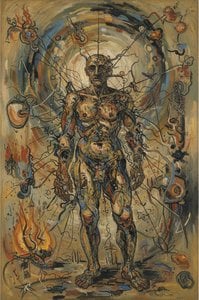
Explore the revolutionary art of André Masson – pioneer of automatism & Surrealist expression. Discover his powerful imagery, innovative techniques, and lasting influence on modern art. Learn more at WahooArt.

深入探索二十世纪艺术史上的两大流派:超现实主义与表现主义。解读达利、马格利特的经典作品,洞悉弗洛伊德理论的影响,了解情感表达与无意识世界的艺术呈现。WahooArt提供高品质手绘油画复制及专业艺术咨询。

WahooArt.com:全球领先的艺术品复制平台,为鉴藏家提供高品质手工油画、定制肖像及专业艺术顾问服务。还原大师经典,助力您的艺术收藏投资,打造专属私人藏品。

探索超现实表现主义的十部艺术瑰宝!深入了解达利、马格里特等大师,感受色彩与情感的碰撞。WahooArt.com为您呈现经典绘画背后的故事,提供高品质艺术复制品和精选室内设计灵感。立即在线探索全系列!


第一时间获取最新的艺术新闻、独家优惠及装饰灵感。
向我们介绍您的项目需求,我们的艺术专家将为您提供 3 个个性化的艺术品推荐。
由我们的专家为您精选 3 款心仪之作 —— 完全免费!

 定制手绘复刻品
 分享
分享 分享
分享
 详情
详情

 下载
下载
 相似作品
相似作品 X射线检测
X射线检测 幻灯片播放
幻灯片播放

 展开详情
展开详情






































 玻璃选项仅适用于110厘米以下的尺寸。


