
x


 Orientalism
 1831
1831 92.0 x 71.0 cm
 英国图书馆
英国图书馆




























从与原作比例一致的预设尺寸中进行选择。

您可以输入自定义尺寸,以适配特定的画框或空间。如果您选择的尺寸与原图比例不符,我们将对作品进行裁剪,或通过镜像填充/纯色填充边缘的方式来扩展图像。在开始制作之前,我们会向您发送一份数字效果图供您确认。
请注意,屏幕上的预览并不能反映实际的裁剪或扩展效果。只有效果图才能准确展示最终的构图。
虽然我们提供定制尺寸,但为了保持原图比例,我们建议您从预设列表中选择尺寸。

A Sati or Widow Burning
复制品尺寸

James Atkinson (1780–1852) was a figure of extraordinary breadth, a true polymath whose life story reads like an epic of the nineteenth century. Born in Darlington, England, to a family of humble origins, Atkinson’s journey from the industrial landscapes of Northern England to the vibrant, complex heart of colonial India is nothing short of remarkable. While history often remembers him as a distinguished surgeon and a profound Persian scholar, his artistic legacy provides a window into the soul of an era defined by exploration, discovery, and the romanticized gaze of the East. His life was a seamless tapestry woven from threads of medical precision, linguistic mastery, and a deeply evocative painterly vision.
His intellectual foundation was forged through rigorous academic discipline, having studied medicine in London and Edinburgh. This scientific training instilled in him an eye for meticulous detail—a quality that would later define his approach to both his scholarly translations and his canvases. Upon arriving in India in 1802 as a surgeon's mate, Atkinson did not merely observe the landscape; he immersed himself in its cultural and linguistic depths. His fascination with Persian culture led him to become a vital bridge between East and West, translating complex texts that brought the nuances of Middle Eastern thought to an English-speaking audience.
As an artist, Atkinson belonged to the burgeoning tradition of Orientalist painting, yet his work possessed a unique intimacy born of lived experience. Unlike many travelers who painted from hearsay or brief excursions, Atkinson’s art was rooted in his deep integration into Indian society. Influenced heavily by the renowned painter George Chinnery, Atkinson developed a style that captured the atmospheric splendor and the poignant realities of life in the subcontinent. His brushwork often reflected the influence of European Romanticism, utilizing light and shadow to imbue scenes of Indian landscapes and village life with a sense of spiritual depth and dramatic tension.
His paintings frequently moved beyond mere documentation, seeking instead to capture the emotional resonance of his surroundings. Whether depicting the ritualistic intensity of A Sati or Widow Burning or the rhythmic energy of festivals like Charakpuja, Atkinson’s work is characterized by a masterful command of color and a profound respect for his subjects. His ability to render the textures of draped fabrics, the heat of the tropical sun, and the solemnity of religious ceremonies allowed him to create works that were both visually stunning and culturally significant.
The significance of James Atkinson lies in his refusal to be confined by a single discipline. He was a man who could navigate the delicate complexities of the Calcutta Mint, edit the Calcutta Gazette, and yet find profound peace in the depiction of an Afghan mountain pass or a Persian garden. His contributions were multifaceted:
Ultimately, Atkinson remains a captivating figure of the Romantic age—a man whose life was defined by an insatiable curiosity and an enduring passion for the beauty found in the unknown. His legacy survives not only in the archives of medical history or linguistic studies but in the vibrant, enduring colors of his paintings, which continue to invite us into the vanished worlds he so lovingly documented.

1780 - 1852

探索詹姆斯·惠斯勒25幅杰作!深入了解夜曲、静谧和谐等经典油画背后的故事与艺术魅力。WahooArt.com提供博物馆级复制品,为您的家居带来永恒之美。立即在线探索完整系列!
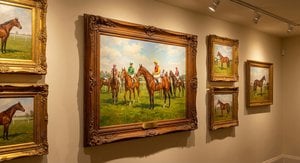
Explore 25 iconic Sir Alfred Munnings paintings! Discover the beauty of British Impressionism, equine art & rural England. Find museum-quality reproductions and elevate your home decor with WahooArt. Explore the full collection online.

Explore the life & art of Raja Ravi Varma, a pioneer who fused European techniques with Indian iconography. Discover his iconic paintings, lasting legacy, and influence on modern Indian art at WahooArt.

Explore the captivating world of John Augustus Atkinson (1775-1830), a key figure in British Romanticism and genre painting. Discover his stunning Russian history scenes, naval art & delicate watercolors. Learn about his legacy at WahooArt.

Explore the captivating landscapes of William James Müller, the leading artist of the Bristol School. Discover his Victorian masterpieces, Egyptian travels & Lycian sketches – a journey through 19th-century art and technique.


第一时间获取最新的艺术新闻、独家优惠及装饰灵感。
向我们介绍您的项目需求,我们的艺术专家将为您提供 3 个个性化的艺术品推荐。
由我们的专家为您精选 3 款心仪之作 —— 完全免费!


 效果预览
效果预览
 购买手绘画作
 分享
分享 分享
分享
 详情
详情

 下载
下载
 相似作品
相似作品 X射线
X射线 幻灯片播放
幻灯片播放 展开详情
展开详情









 玻璃选项仅适用于110厘米以下的尺寸。


