
由我们的艺术家按需定制,为您提供您所选尺寸及画框的布面手工油画。 ( 切换至版画销售渠道 切换至数字图像销售渠道)





























从与原作比例一致的预设尺寸中进行选择。

您可以输入自定义尺寸,以适配特定的画框或空间。如果所选尺寸与原图比例不符,我们将通过裁剪作品或添加手绘元素来扩展画面。数字样稿将在制作开始前发送给您确认。
请注意,屏幕预览无法准确反映实际的裁剪或扩展效果,只有样稿才能真实呈现最终的构图。
虽然我们提供定制尺寸服务,但为了保留原作比例,建议您从预设列表中选择尺寸。

The Pool
复制品尺寸
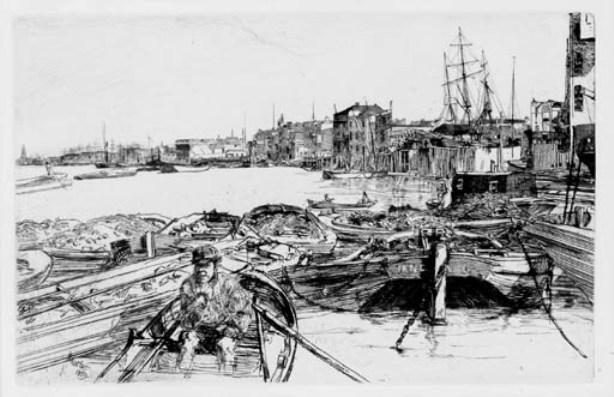
James Abbott McNeill Whistler's "The Pool," painted in 1859, isn’t merely a depiction of London’s bustling waterfront; it’s a carefully constructed meditation on light, atmosphere, and the quiet drama of everyday existence. This etching, rendered with exquisite precision and a masterful understanding of tonal variation, offers a poignant snapshot of a rapidly changing city – a world poised between tradition and modernity. Whistler, a key figure in the Aesthetic movement, deliberately rejected the prevailing Victorian obsession with narrative and moralizing, advocating instead for “art for art’s sake,” prioritizing beauty and sensory experience above all else. "The Pool" embodies this philosophy perfectly, inviting the viewer to lose themselves within its subtle harmonies and understated elegance.
The scene itself is deceptively simple: a solitary figure seated in a small boat, seemingly lost in contemplation amidst the chaotic activity of the Pool – the area around London Bridge where ships docked and goods were exchanged. Yet, Whistler elevates this commonplace subject to something profoundly evocative. He strips away extraneous detail, focusing instead on the interplay of light and shadow, the textures of water and brick, and the subtle gestures of his central figure. The composition is carefully balanced, drawing the eye towards the distant buildings while anchoring it in the foreground with the boatman’s presence.
Whistler's skill as an etcher is immediately apparent. He employs a meticulous technique of hatching and cross-hatching – parallel lines and intersecting patterns – to build up tones and create a remarkable sense of depth and texture. The work isn’t rendered with bold, dramatic contrasts; instead, Whistler utilizes a delicate gradated scale of grays, mimicking the subtle shifts in light that define the scene. This tonal control is crucial to the painting's atmospheric effect, creating an illusion of diffused light and hazy distance.
The choice of paper – heavy laid Japan tissue – further enhances the work’s quality. Its slightly textured surface provides a beautiful contrast to the smooth lines of the etching, adding another layer of visual interest. Whistler's use of drypoint, a technique that allows for greater tonal variation and subtle shading, is particularly noteworthy. This combination of techniques demonstrates his mastery of printmaking and his ability to capture the nuances of light and shadow with remarkable subtlety.
“The Pool” was created during a period of significant social and economic change in London. The city was undergoing rapid industrialization, transforming from a primarily mercantile center into a global financial powerhouse. Whistler's work reflects this transformation, capturing the dynamism of the waterfront while simultaneously suggesting a sense of melancholy and isolation. He wasn’t interested in documenting historical events or celebrating heroic deeds; instead, he sought to capture the essence of a particular moment in time – a fleeting glimpse of urban life.
Whistler's approach was revolutionary for his time. He challenged the conventions of academic art, rejecting the emphasis on narrative and moralizing that had dominated the artistic landscape for centuries. His Aestheticism sought to elevate visual experience above all else, prioritizing beauty, harmony, and sensory pleasure. “The Pool” exemplifies this philosophy perfectly, offering a quiet meditation on light, atmosphere, and the subtle rhythms of urban life.
While seemingly simple, "The Pool" is rich in symbolic meaning. The solitary figure in the boat represents not just an individual but also humanity’s place within the vastness of the city and the natural world. His posture – chin resting on his hand – suggests contemplation, perhaps even a sense of detachment or melancholy. The surrounding activity—the bustling harbor filled with boats and buildings—creates a powerful contrast, highlighting the figure's isolation.
Furthermore, the muted color palette contributes to the painting’s emotional impact. The absence of bright colors reinforces the feeling of quiet contemplation and suggests a deeper, more subtle beauty. Whistler wasn’t interested in creating a visually stimulating spectacle; instead, he sought to evoke a mood – a sense of understated elegance, melancholy, and perhaps even a hint of longing. "The Pool” is not just a depiction of a scene; it's an invitation to contemplate the human condition within the context of a rapidly changing world.
1834年7月10日,詹姆斯·艾伯特·麦克尼尔·惠斯勒诞生于美国马萨诸塞州洛厄尔,他的一生如同他笔下的作品一般,充满了对传统的反叛与对美的极致追求。惠斯勒并非一位简单的画家,而是一位思想家、艺术家和文化符号,他的艺术理念深刻影响了19世纪末的艺术潮流,并为现代艺术的发展奠定了基础。早年的经历塑造了他独特的审美观:幼年在俄国圣彼得堡接受绘画训练,随后在西点军校短暂学习,最终放弃军事生涯,全身心投入到艺术创作中。这段漂泊不定的岁月,让他接触了不同的文化和思想,也培养了他对形式与色彩的敏锐感知力。
1855年,惠斯勒前往巴黎,开启了他的艺术生涯新篇章。在巴黎,他师从著名画家古莱尔,并结识了库尔贝、马奈和莫奈等一批重要的艺术家。这段经历对惠斯勒的影响深远,他开始摆脱传统的绘画模式,探索更加自由的表达方式。他逐渐形成了自己独特的艺术风格:注重色彩的和谐与光线的微妙变化,追求画面整体的平衡与韵律。惠斯勒的作品不再是简单的现实再现,而是艺术家主观感受和审美理想的体现。他将绘画视为一种音乐般的创作,强调“音响”与“色彩”之间的联系,力求在画布上创造出一种和谐而富有诗意的氛围。
惠斯勒最负盛名的莫过于他的“夜曲”系列作品。这些画作描绘了泰晤士河夜晚的景象,但并非对现实的简单复制,而是艺术家对光线、色彩和氛围的微妙捕捉。他运用柔和的色调和朦胧的光影效果,营造出一种宁静而神秘的意境。惠斯勒将“夜曲”视为一种音乐形式在绘画上的体现,强调画面整体的和谐与韵律。这些作品不仅展现了惠斯勒高超的绘画技巧,更体现了他对唯美主义的深刻理解:艺术的目的并非传递道德信息或反映社会现实,而是创造一种纯粹的美感,让观者沉浸于一种愉悦而宁静的心境之中。《黑金夜曲——坠落的火箭》便是其中最具代表性的作品之一,它以其独特的构图和色彩运用,成为了唯美主义艺术的经典之作。
惠斯勒的一生并非一帆风顺。他因其对传统绘画观念的挑战而饱受批评,甚至引发了著名的诉讼风波。1878年,惠斯勒起诉英国评论家罗伯特·卢金,指控其诽谤了他的作品。这场官司虽然惠斯勒最终败诉,但却引起了社会各界的广泛关注,也让更多人了解了惠斯勒的艺术理念。惠斯勒坚信“艺术为艺术”,反对将道德或政治信息强加于艺术创作之中。他认为艺术应该追求纯粹的美感,并以其自身的价值存在。这种思想对19世纪末的艺术界产生了深远的影响,推动了唯美主义运动的发展,也为现代艺术的诞生奠定了基础。
惠斯勒于1903年在伦敦去世,享年69岁。他留下了大量的作品,包括油画、水彩画和版画等。他的作品不仅具有极高的艺术价值,也蕴含着深刻的思想内涵。惠斯勒对形式与色彩的独特运用,以及他对唯美主义理念的坚定捍卫,使他成为了西方艺术史上的一位重要人物。他的作品至今仍被广泛欣赏和研究,并继续激励着一代又一代的艺术家们去追求美的极致。

1834 - 1903 , 美国
Explore the intricate world of etching and intaglio printmaking. Discover how masters use acid and metal to create profound textures and lines, from Romanticism to modern era, through an expert lens of art history and technical mastery.

 效果预览
效果预览
 分享
分享 分享
分享
 详情
详情 指南
指南

 下载
下载
 相似作品
相似作品 X射线
X射线 幻灯片播放
幻灯片播放 统计数据
统计数据

 展开详情
展开详情









 玻璃选项仅适用于110厘米以下的尺寸。


