
 Oil On CanvasWallArtDutch Golden Age Landscape
 19th Century
 80.0 x 107.0 cm
 大都会艺术博物馆
博物馆级艺术微喷或帆布版画,制作高效,并提供多种饰面选择。 ( 购买手绘画作 切换至数字图像销售渠道)





























从与原作比例一致的预设尺寸中进行选择。

您可以输入自定义尺寸,以适配特定的画框或空间。如果您选择的尺寸与原图比例不符,我们将对作品进行裁剪,或通过镜像填充/纯色填充边缘的方式来扩展图像。在开始制作之前,我们会向您发送一份数字效果图供您确认。
请注意,屏幕上的预览并不能反映实际的裁剪或扩展效果。只有效果图才能准确展示最终的构图。
虽然我们提供定制尺寸,但为了保持原图比例,我们建议您从预设列表中选择尺寸。

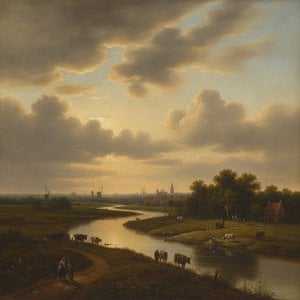
Landscape with Cattle
复制品尺寸
Jacob van Strij’s “Landscape with Cattle” stands as a quintessential example of Dutch Golden Age landscape painting, embodying the serene beauty and meticulous observation characteristic of this artistic period. Executed in 1785 – 1800, this oil on canvas measuring 80 x 107 cm captures a tranquil rural scene that transcends mere depiction; it’s an invitation to contemplate the harmony between humanity and nature.
Initially dismissed as a Cuyp attribution due to a misleading inscription on the lower right corner—a common occurrence during the time—scholarly research has definitively established Strij's authorship. Comparisons with signed works by Cuyp revealed subtle stylistic differences, bolstering the conviction that this painting represents an independent artistic endeavor.
Strij’s approach aligns closely with the Baroque tradition yet subtly diverges from its theatrical exuberance. Like many artists of his era, he drew inspiration from the monumental landscapes of Rembrandt and Cuyp, prioritizing atmospheric perspective and tonal modulation to convey depth and realism. However, Strij eschews the dramatic contrasts favored by Cuyp, opting for softer lighting that illuminates the scene with a diffused glow—a technique particularly adept at capturing the ethereal quality of winter mornings.
The artist’s meticulous attention to detail is evident in every brushstroke. The textured surface of the canvas reflects the materiality of the pigments themselves, demonstrating Strij's mastery of oil paint and his ability to render natural forms with remarkable accuracy. Particularly noteworthy are the depictions of the cattle—their fur meticulously brushed to convey a palpable sense of warmth and vitality—and the reflections shimmering on the river’s surface.
"Landscape with Cattle" reflects the broader cultural landscape of the Dutch Republic during the Enlightenment. The painting speaks to an idealized vision of rural life, mirroring the philosophical preoccupation with simplicity and contemplation prevalent at the time. Furthermore, it embodies the fascination for scientific observation—a hallmark of the era—as evidenced by the artist’s careful rendering of geological formations and plant species.
The inclusion of a village nestled along the riverbank adds another layer of significance to the composition. This depiction harkens back to earlier Baroque landscapes that celebrated the grandeur of aristocratic estates, subtly reminding viewers of the social hierarchy inherent in Dutch society. Yet, unlike those monumental works, “Landscape with Cattle” prioritizes intimacy and immediacy—a deliberate choice that underscores Strij’s artistic sensibility.
Beyond its aesthetic merits, "Landscape with Cattle" resonates on an emotional level. The tranquil atmosphere conveyed by the painting evokes feelings of peace and contentment—a balm for the anxieties of urban life during the Enlightenment. The presence of livestock symbolizes fertility and prosperity, reinforcing the pastoral ethos that underpinned Dutch artistic culture.
Ultimately, Jacob van Strij’s “Landscape with Cattle” remains a testament to the enduring power of landscape art to inspire contemplation and capture the sublime beauty of the natural world. Its meticulous execution and harmonious composition solidify its place as one of the most celebrated achievements of Dutch Golden Age painting.


1756 - 1815 , 荷兰
Discover the breathtaking beauty of Dutch Golden Age landscapes. Explore the mastery of light, chiaroscuro, and 17th-century realism through an expert art history lens, celebrating the enduring legacy of the Dutch Masters for discerning collectors and art lovers.

探索荷兰黄金时代的艺术巅峰! 伦勃朗、维米尔等大师名作,带您领略巴洛克艺术的辉煌。高清画作、博物馆级品质,点亮您的家居空间。WahooArt.com 提供精选艺术复制品和定制装饰方案。立即在线探索全系列!

探索伦勃朗25幅杰作,领略荷兰黄金时代光影大师的艺术传奇!从《夜巡》到自画像,深入了解巴洛克艺术、历史绘画与人物肖像背后的故事。WahooArt.com提供高清艺术复制品及家居装饰灵感。立即探索完整系列!

Explore the captivating winter landscapes of Charles Leickert, a master of Dutch Golden Age light & atmosphere. Discover his techniques, symbolism, and lasting legacy – a comprehensive study for art enthusiasts and collectors.

Discover the luminous mastery of Dutch Golden Age landscapes. Our expert guide explores the atmospheric realism of masters like Van Goyen and Cuyp. Elevate your space with museum-quality, hand-painted oil reproductions from WahooArt.com. Art history, beautifully realized.


 效果预览
效果预览
 分享
分享 分享
分享
 详情
详情

 下载
下载
 相似作品
相似作品 X射线
X射线 幻灯片播放
幻灯片播放 统计数据
统计数据 展开详情
展开详情









 玻璃选项仅适用于110厘米以下的尺寸。


