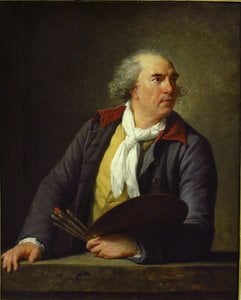
于贝尔·罗贝尔 创作的 LA FONTAINE,由大师级艺术家手工绘制的油画复制品
实景预览 AR 预览 切换至版画销售渠道 切换至数字图像销售渠道 分享
详情 指南 加入收藏 下载作品 相似作品 X射线 幻灯片播放 问答 演示文稿 统计数据

LA FONTAINE 手绘油画复制品

Hubert Robert's Romantic landscape captures the serene beauty of ancient ruins. Explore this timeless masterpiece today.

浪漫主义“奇想画”废墟大师,代表作如《罗马港口》。立即探索他笔下动人心弦的风景与建筑幻景。

手工油画复制品

由我们的艺术家按需定制,为您提供您所选尺寸及画框的布面手工油画。 ( 切换至版画销售渠道 切换至数字图像销售渠道)

Corner sample of the P118B picture frame: 模压聚苯乙烯, 5 cm wide and 3 cm thick
P118B ¥10
Corner sample of the P118H picture frame: 模压聚苯乙烯, 5 cm wide and 3 cm thick
P118H ¥10
Corner sample of the P118W picture frame: 模压聚苯乙烯, 5 cm wide and 3 cm thick
P118W ¥10
Corner sample of the P438Z picture frame: 模压聚苯乙烯, 5.5 cm wide and 3.5 cm thick
P438Z ¥10
Corner sample of the P508JH picture frame: 模压聚苯乙烯, 7 cm wide and 3.5 cm thick
P508JH ¥12
Corner sample of the P508YH picture frame: 模压聚苯乙烯, 7 cm wide and 3.5 cm thick
P508YH ¥12
Corner sample of the P805H picture frame: 模压聚苯乙烯, 5 cm wide and 3.5 cm thick
P805H ¥10
Corner sample of the P805Z picture frame: 模压聚苯乙烯, 5 cm wide and 3.5 cm thick
P805Z ¥10
Corner sample of the P919BZ picture frame: 模压聚苯乙烯, 7 cm wide and 3.5 cm thick
P919BZ ¥10
Corner sample of the P919G picture frame: 模压聚苯乙烯, 7 cm wide and 3.5 cm thick
P919G ¥10
Corner sample of the P919XJ picture frame: 模压聚苯乙烯, 7 cm wide and 3.5 cm thick
P919XJ ¥10
Corner sample of the P959ZH picture frame: 模压聚苯乙烯, 5 cm wide and 3 cm thick
P959ZH ¥10
Corner sample of the P968JZ picture frame: 模压聚苯乙烯, 6 cm wide and 4 cm thick
P968JZ ¥12
Corner sample of the W106C picture frame: 实木, 5 cm wide and 3 cm thick
W106C ¥8
Corner sample of the W218G picture frame: 实木, 5 cm wide and 3 cm thick
W218G ¥10
Corner sample of the W218JH picture frame: 实木, 5 cm wide and 3 cm thick
W218JH ¥8
Corner sample of the W218Y picture frame: 实木, 5 cm wide and 3 cm thick
W218Y ¥10
Corner sample of the W307PJ picture frame: 实木, 6 cm wide and 3 cm thick
W307PJ ¥10
Corner sample of the W316G picture frame: 实木, 6 cm wide and 3 cm thick
W316G ¥10
Corner sample of the W316PJ picture frame: 实木, 6 cm wide and 3 cm thick
W316PJ ¥8
Corner sample of the W316Y picture frame: 实木, 6 cm wide and 3 cm thick
W316Y ¥10
Corner sample of the W398PJ picture frame: 实木, 5 cm wide and 3 cm thick
W398PJ ¥8
Corner sample of the W4111J picture frame: 实木, 6.5 cm wide and 3.5 cm thick
W4111J ¥10
Corner sample of the W500HY picture frame: 实木, 7 cm wide and 5 cm thick
W500HY ¥15
Corner sample of the W500JH picture frame: 实木, 7 cm wide and 5 cm thick
W500JH ¥15
Corner sample of the W692G picture frame: 实木, 8 cm wide and 4 cm thick
W692G ¥12
Corner sample of the W849H picture frame: 实木, 5 cm wide and 3 cm thick
W849H ¥8
Corner sample of the W940BG picture frame: 实木, 7.5 cm wide and 4.5 cm thick
W940BG ¥15
Corner sample of the W953PJ picture frame: 实木, 6 cm wide and 3.5 cm thick
W953PJ ¥8

标准尺寸
定制
CM
INCH

您可以从与原作比例一致的预设尺寸中进行选择。

宽度
高度

请输入您需要的宽度和高度,以适配您的画框或墙面。由于作品为手工绘制,若选择不同比例的尺寸,艺术家可能会在画面边缘多画一些或稍作裁剪 —— 由您决定。在开始绘画之前,我们会为您发送一份数字效果图供您确认。本页面上展示的图片并非最终实物 —— 只有效果图才能反映真实结果。

可定制示例:将面部替换为客户照片;添加宠物(例如,将猫替换为狗);在背景中加入隐藏信息;更改背景风景或元素。
下单后,WahooArt.com 团队将通过电子邮件联系客户获取具体要求,并提供效果预览图

全球配送()仅需 3-4 周即可送达,无需等待标准时效的 5 周。(14 November)。品质绝不妥协。

全球免运费特快专递服务
优质亚麻画布
全程运输保险
关税退款保证
色彩精准还原保证
100天退货保障(仅限制造缺陷)
100% 退款保证
多件购买优惠

总计金额

¥ 1822

LA FONTAINE

复制品材质

复刻品尺寸

-

最终结算价

¥ 1822

作品详情

  • Artistic style: Classical Landscape Painting
  • Location: Private Collection
  • Title: LA FONTAINE
  • Influences: Claude Lorrain
  • Movement: Romanticism

艺术知识测试

每道题只有一个正确答案。

题目 1:
What artistic movement is Hubert Robert primarily associated with?
题目 2:
The painting depicts a scene featuring ruins, what is the symbolic significance of these ruins?
题目 3:
What technique did Robert employ to create soft transitions and subtle gradations in tone?
题目 4:
Which artist is considered a stylistic influence on Hubert Robert?
题目 5:
What type of lighting characterizes the scene depicted in LA FONTAINE?

Identification of LA FONTAINE by Hubert Robert

The scene unfolds within LA FONTAINE, a work painted by Hubert Robert in 1784. This piece emerges from a specific creative sequence, forming part of a series of paintings centered on the theme of water. The artist captures a moment where the elements of nature and the remnants of human construction meet under a soft, diffused light.

The origins of this work trace back to the patronage of David Etienne Rouillé de l'Etang, who served as the Treasurer General of the Police. He commissioned this vision to decorate the private residence of his estate, the Hôtel de la place Louis XV in Paris. Through his direction, the artist translates the quiet movement of water and the stillness of stone into a visual narrative that feels both expansive and intimate.

The Composition and Visual Elements

A serene pastoral vista unfolds before the eye, dominated by the crumbling ruins of an ancient temple or palazzo. These weathered stone structures lean into the landscape, their decaying forms asserting a monumental scale against the natural world. A solitary figure sits quietly beside a deer, a moment of stillness captured amidst the slow disintegration of the architecture. This central grouping anchors the midground, creating a focal point where humanity and nature meet in quiet companionship.

The composition is carefully structured vertically, drawing the gaze upward through the layers of the landscape. Linear perspective directs the eye away from the immediate ruins, guiding it toward the distant mountains that loom beneath a muted sky. An atmospheric haze settles over these far-off peaks, softening their edges and enhancing the sense of depth. This subtle blurring of the horizon contributes to a melancholic mood, as if the very air is heavy with the weight of passing time.

Technique, Materials and Support

Oil paints meet canvas in this quiet scene, where the medium allows for a profound sense of atmosphere. The artist works through a meticulous process of layering and blending, building up the surface to achieve a soft, diffused light that seems to hang in the air. This technique creates subtle gradations in tone, allowing the sky to transition seamlessly into the hazy distance and the stone of the ruins to melt into the surrounding greenery. There is a palpable sense of depth achieved through these tonal shifts, drawing the eye toward the mountains that loom in the pale background.

The execution relies on a delicate balance between the seen and the imagined. While the architectural forms of the fountain and the crumbling structures possess a grounded, physical presence, the brushwork avoids harshness. Instead, the colors blend into one another, minimizing visible strokes to favor a smooth, polished finish. This approach allows the textures of the weathered stone and the organic shapes of the foliage to coexist within a unified, atmospheric space. The light does not strike the scene with sharp intensity but rather settles softly over the landscape, as if filtered through a light overcast sky.

The History and Provenance of the Object

The life of this painting begins within the private walls of an hôtel on the place Louis XV in Paris, where it was commissioned by David Etienne Rouillé de l'Etang, the Treasurer General of the Police. It remains part of a series of works centered on the theme of water, intended to decorate the residence of its original patron. From there, the work moves through the hands of a single family across generations. It passes from Rouillé de l'Etang to his niece, the Marquise de Pastoret, and then to her son, Amédée de Pastoret. Eventually, the inheritance reaches his daughter, the Marquise du Plessis-Bellière.

The quiet continuity of family ownership ends following the death of the Marquise du Plessis-Bellière. The painting enters the public sphere during a sale at the Hôtel Drouot in Paris on May 10-11, 1897, appearing as lot number 79. It travels through various collections until 1946, when it arrives at the Musée du Louvre through a manual donation from Victor Lyon. This gift ensures the work remains a permanent part of the museum's collection. In 1971, the painting undergoes restoration at the hands of Lucien Aubert to preserve its appearance.

常见问题与解答

什么样的摆放方式最适合 于贝尔·罗贝尔 的《LA FONTAINE》 的画幅?

关于 于贝尔·罗贝尔 的《LA FONTAINE》,记录了其规格 (Tall) 与建议摆放空间 (Living Room) 这两项陈列信息。

建议将 于贝尔·罗贝尔 的《LA FONTAINE》 悬挂在哪个空间?

于贝尔·罗贝尔 的《LA FONTAINE》 推荐陈列于 Living Room。此建议是基于作品的主题、色彩与意境而定。

Romanticism 流派的作品 "LA FONTAINE" 传达了怎样的情感?

"LA FONTAINE" 在 Romanticism 运动中蕴含着 Melancholic 的情感基调。


艺术家简介

早年生活、家族背景与艺术启蒙

1733年出生于巴黎的于贝尔·罗伯特,踏入了一个家族地位与服侍权贵紧密相连的世界。他的父亲尼古拉斯·罗伯特在一位显赫人物的府邸中任职,这段深厚的社会联系,最终为这位年轻人日后跻身法国上流社会奠定了基础。早年的生活环境为他提供了接受正统教育的土壤,他在纳瓦尔学院(Collège de Navarre)严谨的学术氛围中完成了学业。到1751年,他在耶稣会士的指导下完成了学业,在将目光转向视觉艺术之前,他已具备了深厚的知识底蕴与自律的思维方式。

然而,他最初的艺术之路并非通往画布。他曾进入雕塑家米歇尔-安热·斯洛茨的画室,在那里的训练重点在于严谨的设计原则与透视规律。尽管雕塑那种触手可及的质感是他艺术起点的初衷,但斯洛茨敏锐地察觉到了这个少年身上独特的潜质。这位导师预见到了他截然不同的天赋,于是鼓励他放下手中的凿子,转而拿起画笔。正是这次从雕塑的三维厚重感向绘画的氛围感之美的转变,彻底定义了他此后一生的艺术轨迹。

罗马的塑造岁月

1754年,于贝尔·罗伯特离开了法国前往罗马,随同埃蒂安-弗朗索瓦·德·楚瓦瑟尔的随行团一同开启了这段旅程。这次迁徙绝非简单的变换风景,而是一场长达十年的、对古典文明核心地带的深度沉浸。在意大利的十一年间,他居住在法国学院,这段时光让他得以全方位地吸收这座城市宏伟的建筑精髓。他并非仅仅从远处遥望这些古迹,而是真正生活在它们之间,与这些过去的物质遗存建立起了一种深厚的情感纽带。

他在 乔瓦尼·保罗·帕尼尼 的工作室中度过的时光,进一步塑造了他的艺术走向。通过这段师承关系,于贝尔·罗伯特开始磨炼自己诠释古典世界的能力。他不再满足于对现有建筑进行简单的记录,而是学会了如何通过操纵光影来暗示历史的厚重感。他在这座城市留下的印记是如此深刻,以至于据传在1767年,他曾在斗兽场的墙壁上刻下自己的名字——在那些他倾尽一生去研究的废墟面前,这是一种带有温情色彩的、试图在永恒中留下痕迹的人性化举动。

巴黎的声誉与皇家赞助

1765年,当于贝尔·罗伯特重返巴黎时,他发现这座城市正渴望着他在意大利岁月中所积累的独特视角。他在法国艺术界的崛起之路异常迅速。1766年,他通过展示一幅 罗马幻想曲 (Roman capriccio) 成功进入皇家绘画雕塑学院,这标志着他艺术地位的正式确立。这种官方的认可为他打开了通往法国上流社会的大门,在那里,他将建筑的精准性与充满想象力的风景画相结合的能力,恰好迎合了当时公众对“如画美感”日益增长的审美需求。

随着职业生涯的深入,他的生活与法国王室的命运愈发紧密地交织在一起。他获得了一系列享有盛誉的任命,这不仅体现了国家对其精湛技艺的认可,也彰显了对其艺术品位的信任。他曾担任国王花园的设计师,随后又出任国王画作保管员。这些职务使他能够深度参与并影响君主制的视觉景观,在创造全新设计与守护现有馆藏之间游刃有余。他的影响力甚至渗透到了那些将在未来一个世纪定义法国艺术走向的核心机构之中。

随着政治局势的剧烈变迁,他的职责也变得愈发沉重且复杂。他被任命为博物馆馆长及学院顾问,这一身份使他置身于国家文化行政管理的核心地带。此时,他的生命意义已不再仅仅局限于一位画家,更像是一位历史的守护者。即便在旧制度的结构开始崩塌之际,他在 卢浮宫 halls 中的身影依然如常,使他成为了法国艺术体制转型过程中举足轻重的人物。

技法与独特的艺术风格

于贝尔·罗伯特的笔触如同他试图捕捉的风景一般变幻万千。他在素描者的精准与画家的灵动之间游刃有余,运用极其丰富的媒介进行创作。他的技法储备涵盖了蚀刻画、钢笔淡彩、黑垩笔、红垩笔以及水彩,同时也精通传统的布面油画。他经常运用alla prima(一次完成法)进行创作,以一种直接且自发的方式涂抹色彩,为他的构图赋予了一种即时性的生命力。这种广博的技法造诣,使他能够轻而易举地在复杂的建筑形态与变幻莫测的柔和天空之间,找到完美的平衡。

他的创作方法建立在现实观察与想象幻境的微妙平衡之上。虽然他的作品植根于极其细致的细节和严谨的透视理解,但它们绝非单纯的地形记录。相反,他巧妙地运用大气透视法来柔化远方的地平线,营造出一种触手可及的深度感与光影感。他对于错觉艺术有着非凡的掌控力,通过光影的交织来操纵观众对空间的感知。通过将细致的观察与高度发达的想象力相结合,他构建出的场景——无论是石拱门的物质真实感,还是断壁残垣的颓败之美——都被一种精心编排的、近乎戏剧化的氛围所升华。

Capriccio* 幻想曲与衰败的主题

“废墟之罗伯特”这一绰号绝非仅仅是一个简单的称谓,它更像是一种深刻的认可,致敬着这位在过去文明的残垣断壁中找到了灵魂表达的艺术家。在18世纪末的艺术版图中,于贝尔·罗伯特以浪漫主义画派的先驱姿态游走,这种独特的艺术立场使他能够超越对建筑进行写实记录的局限。他并不满足于仅仅记录一座建筑的现状,而是试图在建筑的崩塌与瓦解中,挖掘出一种凄美的诗意。他的作品常常呈现出一种半虚构的、如画般的废墟图景,无论是意大利那古老而永恒的景观,还是法国不断变迁的城市肌理,都在他的笔下化作了永恒的艺术主题。

这种艺术愿景的核心,在于他对 capriccio* 幻想曲 风格的精妙驾驭。在这些构图中,他刻意将截然不同的元素并置在一起——古老的纪念碑、梦幻般的自然景观以及理想化的人物形象——从而创造出一种游走于现实与想象张力之间的奇幻场景。他笔下的画作并非对客观存在的简单临摹,而是在构建一种交织着忧郁与惊叹的氛围。通过将严谨的建筑细节与虚构的场景相融合,他创造出一种既真实可感又如梦似幻的历史感。正是这种创作手法,让他能够透过石材的纹理与光影的变幻,去深刻地探讨时间的流逝。

政治动荡与晚年岁月

法国大革命的汹涌浪潮为于贝尔·罗伯特带来了突如其来的个人危机。在恐怖统治时期,他曾经历了一段短暂的监禁生活,这段痛苦的经历在他的一系列记录囚禁生活的素描中留下了深刻的印记。尽管时代动荡不安,他的专业地位依然举足轻重。他被任命为新成立的中央艺术博物馆(Muséum Central des Arts)的馆长——这一机构在后来演变成了举世闻名的卢浮宫博物馆——他在那里致力于整理并编目国家日益丰富的艺术藏品。

他与卢浮宫之间的纽带深厚且持久。从1778年到1802年,他一直居住在博物馆的围墙之内,生活在他曾参与装饰与保护的艺术殿堂中。这段漫长的居住经历使他处于变革中的法国中心,见证了从旧制度君主制向拿破仑时代的转型。直到生命最后的时刻,他始终保持着高产的创作状态。1808年4月15日,于贝尔·罗伯特在巴黎因中风去世,为他那充满想象力的艺术生涯画上了句号。

卓越作品与艺术成就

于贝尔·罗伯特惊人的创作规模,映射出他一生都在与过去进行着永无止境的对话。他那极其丰沛的创作才华,留下了约1,000幅油画和10,000幅素描,如此庞大的创作量使他能够通过无数次的尝试,去细腻地探索光影的细微变化与建筑颓败之美。他在艺术生涯早期的成功,很大程度上得益于《罗马港口》这一作品,这幅罗马“capriccio”风格的画作确立了他在法国艺术界的核心地位。这部作品展现了他超越单纯地形记录的能力,转而构建出一种能够与那个时代审美情感产生共鸣的古典幻景。

随着艺术生涯的推进,他的创作主题从纯粹的古典主义转向了将历史建筑融入更为多样的风景之中。大约在1773年,他创作了乡村庄园的柱廊,这件作品充分展示了他对透视法与氛围营造的卓越掌控力。随后,他对古代工程壮丽感的痴迷,在约1787年创作的高卢水道桥中得到了完美体现。这些作品不仅体现了他在处理宏大叙事与细腻局部时的技术精湛,更常常通过薄薄的色层叠加,营造出一种深邃的色调感与流动的光泽感。

在生命的晚年,他开始记录那些他曾参与管理的文化机构。大约在1795年,他创作了大画廊,这幅作品捕捉了巴黎历史上一个特定且具有变革意义的瞬间。在这一人生阶段,他始终在文化记忆的守护与剧变国家的现实之间寻找平衡。无论是通过油画画布上的色彩,还是通过钢笔墨水勾勒出的精准线条,他描绘这些空间的能力,都确保了他在法国风景画史上不可撼动的地位。

  • 《罗马港口》
  • 《乡村庄园的柱廊》
  • 《高卢水道桥》
  • 《大画廊》

今日何处寻觅他的足迹

于贝尔·罗伯特那如潮水般丰沛的艺术创作,如今散落在世界各大顶尖艺术殿堂之中,无声地诉说着他在十八世纪末那跨越国界的深远影响力。若要寻找他最核心的艺术灵魂,巴黎无疑是首选之地,卢浮宫博物馆便珍藏着他多达43件杰作。在这里,观众可以近距离凝视他那些精细入微的建筑研究,或是沉浸在他对大画廊(Grande Galerie)那充满戏剧性的描绘中——从废墟中的空旷回响,到约1798或1799年间正在修复中的宏伟景象,每一幅都仿佛是时间的切片。

除了法国,他的艺术气息也渗透在世界各地的名馆之中。在圣彼得堡的冬宫博物馆,收藏着包括有人居住的废墟与画家在内的四幅名作。跨越重洋来到美国,纽约的大都会艺术博物馆也珍藏着三件作品,其中包括《乡村庄园的门廊》与流浪艺人。他的影响力同样延伸至德意志与瑞士,例如德国的卡尔斯鲁厄国立美术馆便收藏有三件作品,其中便包含一幅迷人的《罗马幻景画》。

于贝尔·罗贝尔

于贝尔·罗贝尔

1733 - 1808 , 法國

艺术家简介

  • Artistic Movement Or Style: 浪漫主义, 新古典主义
  • Artists Or Movements Influenced By This Artist: ['浪漫主义']
  • Artists Who Influenced This Artist:
    • 米歇尔-安热·斯洛茨
    • 乔瓦尼·保罗·帕尼尼
    • 皮拉内西
  • Date Of Birth: 1733
  • Date Of Death: 1808
  • Full Name: 于贝尔·罗伯特
  • Nationality: 法国
  • Notable Artworks:
    • 里佩塔景观
    • 乡村别墅的柱廊
    • 索拉里奥桥
    • 老桥
    • 小石桥
    • 流浪艺人
    • 喷泉
    • 带运河的建筑景观
    • 废墟奇想画
    • 拆除圣母桥上的房屋
    • 加尔桥
    • 梅松卡雷
    • 凯旋门与奥兰日剧场
    • 卢浮宫大画廊的幻景
    • 有人居住的废墟
    • 画家
    • 大画廊
    • 用作公共浴场的古代废墟
    • 罗马奇想画
  • Place Of Birth: 法国巴黎