
博物馆级艺术微喷或帆布版画,制作高效,并提供多种饰面选择。 ( 购买手绘画作 切换至数字图像销售渠道)
从与原作比例一致的预设尺寸中进行选择。

您可以输入自定义尺寸,以适配特定的画框或空间。如果您选择的尺寸与原图比例不符,我们将对作品进行裁剪,或通过镜像填充/纯色填充边缘的方式来扩展图像。在开始制作之前,我们会向您发送一份数字效果图供您确认。
请注意,屏幕上的预览并不能反映实际的裁剪或扩展效果。只有效果图才能准确展示最终的构图。
虽然我们提供定制尺寸,但为了保持原图比例,我们建议您从预设列表中选择尺寸。

INTERIEUR DU TEMPLE DE DIANE A NIMES
复制品尺寸
Hubert Robert's 18th-century masterpiece, *Interieur du Temple de Diane à Nismes*, isn’t merely a depiction of an abandoned Roman temple; it’s a carefully constructed meditation on time, memory, and the enduring power of the past. The painting, lost to us in its original form but meticulously documented through Robert's sketches and engravings, transports the viewer to a realm where classical grandeur meets poignant decay. Robert, a master of capturing light and atmosphere, possessed an almost preternatural ability to imbue ruins with a haunting beauty—a quality that resonated deeply with his contemporaries and continues to captivate audiences today. The scene unfolds within a dimly lit interior, dominated by the skeletal remains of arched doorways and colossal stone pillars, hinting at a once-magnificent temple dedicated to Diane, the Roman goddess of the hunt.
Robert's artistic identity was shaped early on by his mentor, Michel-Ange Slodtz, who recognized Robert’s sensitivity to light and form. However, it was Robert’s own fascination with ruins that truly defined his career. He wasn’t simply recording the physical deterioration of buildings; he was actively constructing narratives around them. *Interieur du Temple de Diane à Nismes* exemplifies this approach. The figures within the space – a small group engaged in what appears to be restoration work, their forms rendered subtly and almost indistinctly – serve not as primary subjects but as anchors for our own contemplation of the scene’s history. Their presence suggests that even in abandonment, memory persists, and the echoes of past rituals still linger within these weathered walls.
Robert's technical skill is immediately apparent in his masterful manipulation of light and shadow. The painting’s palette is deliberately restrained – dominated by earthy tones of ochre, umber, and gray—creating a somber, almost melancholic atmosphere. He expertly utilizes the natural light filtering through the open arches to sculpt dramatic shadows across the stone surfaces, emphasizing their texture and revealing the intricate details of the architecture. This chiaroscuro effect not only adds depth and three-dimensionality but also evokes a sense of mystery and timelessness. The artist’s attention to detail is remarkable; one can almost feel the cool dampness of the stone and hear the silence of centuries.
*Interieur du Temple de Diane à Nismes* speaks powerfully to the broader historical context of 18th-century France. Following the upheaval of the French Revolution, there was a renewed interest in classical antiquity—a desire to reconnect with the perceived stability and order of the Roman Empire. Robert’s paintings of ruins were not simply aesthetic exercises; they were symbolic gestures, reminding viewers of a glorious past that had been lost but could be reimagined. The temple itself, dedicated to Diane, represents a connection to ancient religious practices and the enduring power of nature—themes central to the Romantic movement which was gaining momentum during Robert’s lifetime. The deliberate inclusion of figures engaged in restoration work further reinforces this idea: an attempt to resurrect the past, albeit through a romanticized lens.
A hand-painted reproduction of *Interieur du Temple de Diane à Nismes* offers a remarkable opportunity to bring this evocative scene into your home or office. WahooArt’s meticulous reproductions capture the painting's atmospheric depth and subtle nuances, allowing you to experience Robert’s artistic vision with stunning clarity. More than just a decorative piece, it is a portal to another time—a silent echo of antiquity that invites contemplation and wonder.


1733 - 1808 , 法国

Explore the profound beauty of Roman ruins through the lens of Baroque masters. Discover how fine art captures the grandeur and decay of antiquity, offering timeless elegance for sophisticated collectors and lovers of classical history.

Explore the profound beauty of ancient ruins through fine art history. Discover how masters like Pannini captured Roman grandeur, and learn how to bring this timeless architectural majesty into your home with museum-quality, hand-painted oil reproductions.
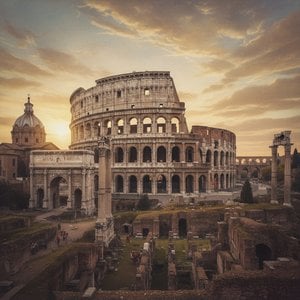
Explore the profound beauty of Roman architecture through art history. From Piranesi's evocative engravings to classical masterpieces, discover how the grandeur of ancient Rome continues to inspire collectors and art enthusiasts worldwide.


 分享
分享 分享
分享
 详情
详情

 下载
下载
 相似作品
相似作品 幻灯片播放
幻灯片播放 统计数据
统计数据

 展开详情
展开详情






































 玻璃选项仅适用于110厘米以下的尺寸。


