
 Acrylic On CanvasWallArtRomanticism
 1790
1790 40.0 x 30.0 cm
 冬宫博物馆 (Hermitage Museum)
购买高分辨率增强版数字图像,其品质远超在线预览。
每一份文件都由我们的内部专家使用先进工具与专业的后期润色技术精心打造。我们确保每一张图像都具备卓越的清晰度、精准的色彩还原度以及细腻的细节表现。
最终文件将在 72 小时内通过电子邮件交付,并针对专业、编辑及印刷用途进行了优化。其品质与顶级设计工作室、出版社和画廊所信赖的标准完全一致。
选择 WahooArt.com,您获得的不仅仅是一张图像——您收到的是经过专业级增强、精雕细琢的数字艺术作品,并享有满意保证。以下是您的订单中自动包含的所有内容:

您的高分辨率数字图像文件将在下单后 72 小时内通过电子邮件发送给您 —— 即可立即使用。

您的艺术品经过专业优化,结合先进的 AI 技术与人工修饰,确保呈现极致的细节、清晰度与色彩准确度。

不小心删除了文件或找不到了?没关系——我们将随时为您免费重发。

即刻拥有您的艺术作品,无需支付任何关税、税费或运费——数字下载始终免税。

我们通过专业工具与色彩管理技术,确保您的数字图像尽可能真实地还原原作色彩。

如果您对所购数字图像不满意,我们将在100天内为您进行修改或提供100%的全额退款——无需任何理由。

不满意?在收到数字文件后的100天内,您可以申请全额退款——无需任何理由。

购买 3 张图片可享 10% 折扣 - 购买 5 张可享 15% 折扣 - 购买 10+ 张可享 20% 折扣。非常适合创意项目、画廊和机构使用。
Hubert Robert's "Inhabited Ruins," painted in 1790, is more than just a picturesque landscape; it’s a poignant meditation on time, memory, and the enduring allure of vanished grandeur. Executed during a period of profound social and political upheaval in France – the twilight years of the Ancien Régime and the dawn of the Revolution – Robert's work captures a melancholic beauty, reflecting both the decay of ancient structures and the wistful longing for a lost past. The painting depicts a crumbling Roman ruin, partially overgrown with vegetation, yet teeming with life: figures wander amongst the fallen columns and weathered arches, suggesting an ongoing human connection to these remnants of antiquity.
Hubert Robert (1733-1808) was a pivotal figure in 18th-century French art, renowned for his mastery of the “capriccio,” a genre that blended realistic landscape with fantastical elements and imaginative narratives. Unlike traditional topographical paintings focused on accurate representation, Robert’s capricci prioritized atmosphere, mood, and the evocative power of suggestion. He wasn't merely documenting ruins; he was crafting visions—a skill honed during his extensive travels through Italy, where he became deeply fascinated by the remnants of Roman civilization. His early training with sculptor Michel-Ange Slodtz instilled in him a strong foundation in perspective and design, while his time in Rome under Giovanni Paolo Panini further refined his understanding of architectural detail and atmospheric effects.
"Inhabited Ruins" exemplifies Robert’s signature style—a masterful blend of observation and imagination. The painting is rendered with a delicate, almost ethereal quality, achieved through the use of soft brushstrokes and subtle gradations of light and shadow. Robert expertly employs atmospheric perspective, creating a sense of depth and distance by diminishing the clarity and intensity of colors in the background. Notice how he uses dappled sunlight filtering through the foliage to illuminate key elements within the ruin, drawing the viewer’s eye towards the figures and highlighting the textures of the crumbling stone. The composition is carefully balanced, with the ruins acting as a central focal point while the surrounding landscape provides a sense of scale and context. The inclusion of human figures—a small group gathered near an archway—adds a vital element of narrative and invites the viewer to contemplate their relationship to this ancient space.
Beyond its aesthetic beauty, “Inhabited Ruins” is rich in symbolic meaning. The ruins themselves represent the transience of power, the inevitable decay of all things, and the cyclical nature of history. The figures within the scene are not simply observers; they embody humanity’s enduring fascination with the past and our attempts to find meaning and connection amidst the ruins of bygone eras. Robert's choice of a Roman setting—a civilization renowned for its architectural achievements and philosophical legacy—underscores this theme, suggesting that even in decline, these remnants hold profound significance. The painting evokes a sense of melancholy and nostalgia, prompting viewers to reflect on their own mortality and the fleeting nature of human existence. It’s a powerful reminder that beauty can be found not only in pristine monuments but also in the weathered stones of forgotten places.
Hubert Robert's work profoundly influenced subsequent generations of artists, particularly those associated with the Romantic movement. His emphasis on atmosphere, emotion, and the sublime—the awe-inspiring power of nature—laid the groundwork for later painters like Caspar David Friedrich and J.M.W. Turner. “Inhabited Ruins” stands as a testament to Robert’s artistic genius and his ability to capture the enduring spirit of a bygone era, inviting us to contemplate the beauty and melancholy inherent in the passage of time.

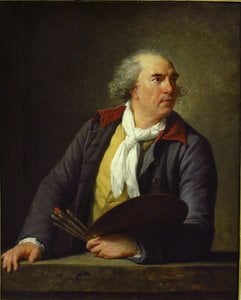
1733 - 1808 , 法国


 效果预览
效果预览
 切换至版画销售渠道
 分享
分享 分享
分享
 详情
详情 指南
指南

 下载
下载
 相似作品
相似作品 X射线
X射线 幻灯片播放
幻灯片播放 统计数据
统计数据 展开详情
展开详情


