Oil On CanvasWallArtSocial Realism
 186019th Century
 65.0 x 90.0 cm
 大都会艺术博物馆
博物馆级艺术微喷或帆布版画,制作高效,并提供多种饰面选择。 ( 订购此收藏品的纯手工复刻画作 切换至数字图像销售渠道)





























您可以从与原作比例一致的预设尺寸中进行选择。

请输入您所需的宽度和高度,以适配您的画框或墙面。由于印刷品只能进行裁剪,无法超出原图尺寸,因此若比例不一致,画面的一部分将会被裁切。在正式印刷之前,我们会为您发送一份数字效果图供您确认。本页面显示的图片并非最终裁剪后的效果——只有效果图才能展示真实的裁剪情况。
The Third-class Carriage
复刻品尺寸说明
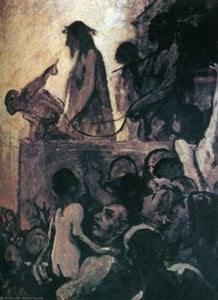
In the crowded, dimly lit confines of a mid-19th-century railway carriage, Honoré Daumier captures more than just a moment in transit; he captures the very essence of human endurance. The Third-class Carriage serves as a profound window into the burgeoning urban reality of France during the Second Empire. As the industrial revolution reshaped the landscape of Europe, Daumier turned his gaze away from the gilded salons of the aristocracy and toward the weary faces of the common people. The painting invites us to step into a space defined by proximity and shared struggle, where the boundaries between strangers dissolve in the cramped, rhythmic motion of the train.
The composition is a masterclass in realism, utilizing a tight, almost claustrophobic perspective that forces the viewer to sit alongside the passengers. There is no escape from the density of the scene; we are pressed against the heavy textures of worn clothing and the weathered surfaces of the carriage walls. Daumier’s ability to evoke the atmosphere of a moving vessel is palpable, as if one can almost feel the vibration of the tracks beneath the wooden benches. This sense of enclosure does not merely depict a setting; it symbolizes the social limitations and the heavy, inescapable weight of class distinctions that defined the era.
Technically, Daumier employs a palette dominated by somber earth tones—deep browns, muted ochres, and shadowy blues—which lends the work an incredible sense of gravity and permanence. His use of chiaroscuro is particularly striking; light does not flood this carriage but rather seeps in, catching the edge of a forehead, the curve of a shoulder, or the texture of a bundle of belongings. This selective illumination directs our eyes through the crowd, highlighting the individual stories hidden within the collective mass. The brushwork, while grounded in realism, possesses an expressive, almost sculptural quality that gives the figures a monumental presence despite their humble status.
For the discerning collector or interior designer, this piece offers a sophisticated emotional depth that transcends mere decoration. It is a work of profound empathy. Each figure—the elderly woman, the young mother, the stoic laborer—carries an expression of quiet resignation and quiet strength. There is no melodrama here, only the dignified reality of daily life. Incorporating a high-quality reproduction of this masterpiece into a space brings with it a sense of historical weight and intellectual curiosity, making it an ideal centerpiece for a room designed to inspire reflection and conversation.
Beyond its visual beauty, The Third-class Carriage remains a powerful piece of social commentary. Daumier, a master of satire and a keen observer of political absurdity, uses this scene to honor the fortitude of the working class. He finds beauty in the unvarnished truth, transforming a mundane journey into an epic of human resilience. The painting does not look away from poverty or fatigue; instead, it elevates these experiences through art, granting the subjects a level of importance usually reserved for kings and deities.
To own a reproduction of this work is to possess a fragment of history—a piece that speaks to the enduring human spirit amidst the tides of change. Whether placed in a contemporary gallery setting or a classic study, Daumier’s vision continues to resonate, reminding us that even in the most crowded and difficult of journeys, there is a profound, quiet dignity to be found.
在“The Third-class Carriage”中,最引人注目的颜色是Phthalo Green (#191415)。了解作品的主色调有助于将其与室内装饰进行搭配。
鉴于其创作于1860年,作品《The Third-class Carriage》属于奥诺雷·达米埃的Mature Period时期。
您可以在作品的下载页面下载奥诺雷·达米埃 的《The Third-class Carriage》的图像:高分辨率数字图像下载。


1808 - 1879 , 法国

Explore 10 defining masterpieces of Romantic Realism! Discover Courbet, Millet & Daumier's powerful paintings—capturing emotion and social realities. Find museum-quality reproductions for your home at WahooArt.com.

探索现实主义艺术的巅峰!本文精选十幅定义了这场运动的杰作,从库尔贝到米勒,揭秘艺术家背后的故事与技法。寻找博物馆级复制品和室内设计灵感?WahooArt.com为您呈现经典绘画的完美演绎。在线探索全系列!

Journey through 19th century art with WahooArt! Explore 10 iconic paintings – from Monet & Renoir to Courbet – and discover the stories behind Romanticism, Realism & Impressionism. Find museum-quality reproductions for your home decor. Explore the full collection online!

Explore the captivating world of 19th-century Realism! Discover key artists like Courbet & Millet, masterpieces, and the powerful social commentary behind this influential art movement. Expert insights at WahooArt.

Explore the life & work of Honoré Daumier, a master of 19th-century French realism and satire. Discover his powerful lithographs, paintings, and sculptures critiquing society – and his lasting influence on modern art.


 实景预览
实景预览
 发送
发送 分享
分享
 详情
详情 指南
指南

 下载图片
下载图片
 相似作品
相似作品 X射线
X射线 幻灯片播放
幻灯片播放 统计数据
统计数据 阅读全文
阅读全文









 玻璃选项仅适用于110厘米以下的尺寸。