博物馆级艺术微喷或帆布版画,制作高效,并提供多种饰面选择。 ( 购买手绘画作 切换至数字图像销售渠道)





























从与原作比例一致的预设尺寸中进行选择。

您可以输入自定义尺寸,以适配特定的画框或空间。如果您选择的尺寸与原图比例不符,我们将对作品进行裁剪,或通过镜像填充/纯色填充边缘的方式来扩展图像。在开始制作之前,我们会向您发送一份数字效果图供您确认。
请注意,屏幕上的预览并不能反映实际的裁剪或扩展效果。只有效果图才能准确展示最终的构图。
虽然我们提供定制尺寸,但为了保持原图比例,我们建议您从预设列表中选择尺寸。

Penelopa's Dream
复制品尺寸
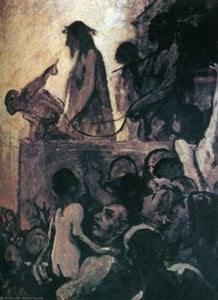
Honoré Daumier’s “Penelopa’s Dream,” created in 1842, stands as a cornerstone of Realism within his oeuvre and a poignant meditation on themes of memory, longing, and the enduring power of myth. Published in Le Charivari, a satirical Parisian newspaper during a period rife with political upheaval—the Second Republic—this lithograph transcends mere visual representation to deliver a complex emotional narrative rooted in Homer’s Odyssey.
The artwork depicts Penelope, Odysseus's wife from Greek legend, reclining on a chair. She is surrounded by symbols of scholarly pursuits: scrolls and writing implements – an intentional juxtaposition highlighting the contrast between active engagement with the world and contemplative reflection. Above Penelope’s head floats a grotesque helmeted head, emerging from what appears to be her dreamscape. This fantastical element isn't merely decorative; it embodies anxieties surrounding past experiences and represents a confrontation with unresolved emotions.
The helmeted head is arguably the artwork’s most striking symbol. It represents a warrior spirit—Odysseus’s past battles—but simultaneously embodies Penelope’s internal struggle to reconcile her memories with the present reality. The overall emotional impact is one of profound sorrow and contemplation, capturing the essence of Penelope's enduring grief for Odysseus and her unwavering determination to persevere despite hardship.
“Penelopa’s Dream” isn’t simply a depiction of myth; it’s an exploration of human psychology—the way memory shapes perception and influences emotional response. Daumier’s masterful technique elevates the image beyond mere illustration, transforming it into a powerful statement about the complexities of human experience.
Further research suggests that this piece aligns perfectly with Daumier's broader artistic mission: to expose social injustices and challenge conventional narratives through satirical observation. Its enduring appeal lies in its ability to resonate with viewers across generations who recognize the universal themes of loss, resilience, and the transformative power of imagination.

1808 - 1879 , 法国

Embark on a sophisticated journey through the surrealist movement. Discover how masters like Dalí and Ernst blurred the lines between dreams and reality through innovative techniques, exploring the profound impact of the subconscious on fine art history with expert authority.

Embark on a sophisticated journey through the eternal allure of mythological art. Discover how master painters breathe life into ancient legends, from Greek deities to Baroque masterpieces, and learn to curate these timeless narratives within your own exquisite art collection.

Embark on a scholarly journey through the alchemy of lithography. This definitive guide offers collectors profound insights into the chemical mastery of stone and ink, the medium's historical legacy, and essential expertise for acquiring rare, museum-quality prints with absolute confidence.

Explore the profound beauty of mythological figures through the lens of art history. From Renaissance masterpieces to custom oil reproductions, discover how legendary tales of heroism and divinity are immortalized in fine art for discerning collectors.

Explore the breathtaking world of the Pre-Raphaelite Brotherhood. Discover how this movement redefined Victorian art through vivid detail, mythological depth, and romanticism. An expert guide for classic art enthusiasts seeking to rediscover these timeless masterpieces.


 效果预览
效果预览
 分享
分享 分享
分享
 详情
详情 指南
指南

 下载
下载
 相似作品
相似作品 X射线
X射线 幻灯片播放
幻灯片播放 统计数据
统计数据


 展开详情
展开详情









 玻璃选项仅适用于110厘米以下的尺寸。