A Glimpse into Modern Life: Decoding Degas’ “Three Heads”
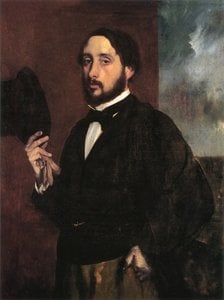
Edgar Degas' 1871 oil painting, “Three Heads,” offers a captivating study of masculine introspection and the burgeoning spirit of modernism. Far from a traditional portrait, this work is a fragment – a snapshot of observation that embodies the core tenets of Impressionism, though Degas himself resisted the label, preferring to be known as a realist. The painting doesn’t present us with grand narratives or idealized figures; instead, it offers an intimate and psychologically resonant encounter with three men lost in their own thoughts.
Subject & Composition: A Moment Captured
The composition is strikingly unconventional. We are presented not with full figures, but with cropped heads and shoulders, tightly framed against a blurred background. This deliberate cropping creates a sense of immediacy – as if we’ve stumbled upon a private moment. The three men, distinct in their facial features and expressions, aren't interacting; they exist within their own internal worlds. One appears contemplative, another perhaps melancholic, while the third seems lost in distant reverie. Their varied gazes avoid direct engagement with the viewer, enhancing the feeling of voyeurism and psychological depth. The lack of a defined setting further emphasizes the focus on individual character and emotional state.
Technique & Style: A Masterclass in Impressionistic Realism
Degas’ technique is masterful. He employs loose, visible brushstrokes, characteristic of Impressionism, but with a precision rooted in his academic training. The application of paint isn't blended smoothly; instead, it retains a textural quality that conveys movement and energy. His use of light and shadow – a technique reminiscent of chiaroscuro – sculpts the faces, highlighting their individual features and adding depth to the composition. The color palette is restrained yet rich, dominated by earthy tones punctuated by subtle variations in hue. This limited palette contributes to the painting’s overall mood of quiet contemplation. Degas' ability to capture fleeting expressions and psychological nuance sets him apart from his contemporaries.
Historical Context: Paris in Transition
“Three Heads” was created during a period of significant social and political upheaval in France, following the Franco-Prussian War and the Paris Commune. This era witnessed rapid urbanization, industrialization, and a shift in societal values. Degas, unlike many Impressionists who focused on landscapes and scenes of leisure, often depicted modern life within urban settings – capturing the anxieties and complexities of a changing world. While not explicitly political, “Three Heads” reflects this sense of transition and uncertainty through its focus on individual introspection rather than grand historical narratives.
Symbolism & Emotional Impact: The Weight of Modernity
The symbolism within "Three Heads" is subtle but potent. The men’s averted gazes and introspective expressions can be interpreted as a reflection of the alienation and psychological strain experienced in modern urban life. Their isolation, despite their proximity to one another, speaks to a growing sense of individualism and disconnection. The painting evokes a mood of quiet melancholy and thoughtful observation. It invites viewers to contemplate not only the subjects’ inner lives but also their own place within the rapidly changing world around them.
Degas' Legacy & Similar Works
Edgar Degas left an indelible mark on the art world, influencing generations of artists with his innovative techniques and insightful depictions of modern life. Works like Les Pointes and Madame Gobillard, Yves Morisot, also available through WahooArt.com, demonstrate his continued exploration of human form and psychological depth. His portrait Lorenzo Pagans and Auguste de Gas, the Artist's Father, housed in the Musée d’Orsay, showcases a similar focus on intimate character studies. For those seeking to bring the beauty and intellectual stimulation of Degas’ work into their homes or collections, WahooArt.com offers meticulously crafted reproductions that capture the essence of his artistic vision.





 效果预览
效果预览
 切换至版画销售渠道
 分享
分享 分享
分享
 详情
详情

 下载
下载
 相似作品
相似作品 X射线
X射线 幻灯片播放
幻灯片播放 统计数据
统计数据

 展开详情
展开详情


