
 PastelWallArtImpressionistic Realism
 187919th Century
 65.0 x 56.0 cm
 大都会艺术博物馆
博物馆级艺术微喷或帆布版画,制作高效,并提供多种饰面选择。 ( 购买手绘画作 切换至数字图像销售渠道)





























从与原作比例一致的预设尺寸中进行选择。

您可以输入自定义尺寸,以适配特定的画框或空间。如果您选择的尺寸与原图比例不符,我们将对作品进行裁剪,或通过镜像填充/纯色填充边缘的方式来扩展图像。在开始制作之前,我们会向您发送一份数字效果图供您确认。
请注意,屏幕上的预览并不能反映实际的裁剪或扩展效果。只有效果图才能准确展示最终的构图。
虽然我们提供定制尺寸,但为了保持原图比例,我们建议您从预设列表中选择尺寸。

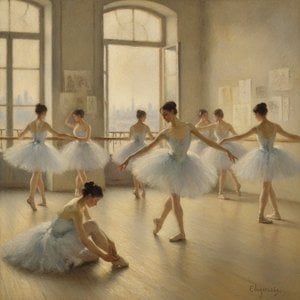
The Dance Lesson
复制品尺寸
In the quiet, sun-drenched corners of the late 19th-century Parisian studio, Edgar Degas found his most profound inspiration. His masterpiece, “The Dance Lesson,” completed in 1879, serves as a breathtaking window into a world defined by discipline and grace. Unlike many of his contemporaries who sought to capture the fleeting shimmer of light on water, Degas turned his gaze inward toward the human form in motion. This work is not merely a depiction of ballet training; it is a meticulously crafted meditation on the intersection of effort and elegance. Through his expert use of pastel, Degas invites the viewer to step into the room, feeling the stillness of the air and the focused intensity of a young dancer caught in a singular, transformative moment of practice.
The composition centers on a young girl, her form poised with a delicate balance of vulnerability and strength. As she stands on one leg, gripping the wooden barre for stability, the viewer witnesses the raw reality of artistic pursuit. Beside her, an older figure—perhaps an instructor or a seasoned observer—provides a grounding presence, embodying the weight of experience and guidance. The inclusion of a violin in the background adds a subtle, melodic layer to the visual narrative, suggesting that the rhythm of the music is inseparable from the rhythm of the dance. Every element, from the soft folds of her pink dress to the textured surface of the studio floor, contributes to a scene that feels both intimately private and universally resonant.
While history often labels Degas as an Impressionist, he famously resisted the term, preferring to identify as a realist. This distinction is palpable in the technique of “The Dance Lesson.” Rather than relying on the broad, atmospheric strokes of oil paint, Degas utilized the unique properties of pastel to achieve a level of nuance that few could replicate. The medium allowed him to layer soft, powdery tones, creating subtle gradations that mimic the softness of skin and the ethereal quality of light filtering through studio windows. This tactile approach creates a surface that is rich with texture, inviting the eye to linger on the fine details of the dancers' movements and the atmospheric depth of the room.
His mastery of draftsmanship—honed through years of studying classical works in the Louvre—is evident in the precision of his lines. Even within the soft, blurred edges characteristic of the era, there is an unmistakable structural integrity to every limb and gesture. This tension between the softness of the medium and the rigor of the composition mirrors the subject matter itself: the softness of the ballet aesthetic contrasted with the grueling, disciplined reality of the dancer's life. For collectors and designers, this duality makes the piece a versatile treasure, capable of adding both a sense of classical sophistication and a modern, emotive energy to any curated space.
Beyond its technical brilliance, “The Dance Lesson” carries a profound emotional weight that transcends time. It speaks to the universal themes of aspiration, perseverance, and the quiet beauty found in the pursuit of perfection. The painting captures the "Belle Époque" not through grand spectacles, but through the intimate, unvarnished truth of daily practice. It is a tribute to the unseen hours of toil that precede the public glory of the stage.
For those looking to adorn a home or gallery with art that inspires contemplation, a high-quality reproduction of this work offers more than just decoration; it offers a narrative. Whether placed in a contemporary minimalist setting where its soft pastels can provide warmth, or within a traditional study to highlight its historical depth, Degas’s vision remains as potent today as it was in 1879. To possess such a piece is to hold a fragment of Parisian history, a silent symphony of movement and light that continues to captivate the human spirit.


1834 - 1917 , 法国

Explore the ethereal beauty of pastel art. Discover how Impressionist masters used soft hues and velvety textures to capture light. A professional guide for art enthusiasts seeking to understand, collect, and appreciate the delicate magic of this timeless medium.
Immerse yourself in the rhythmic elegance of Edgar Degas. Explore our curated collection of museum-quality, hand-painted oil reproductions and bespoke Impressionist commissions. Elevate your space with timeless masterpieces designed for discerning collectors and luxury interiors.

Discover the ethereal beauty of ballet through museum-quality, hand-painted oil reproductions. From Degas to Carrier-Belleuse, elevate your collection with bespoke masterpieces curated for the discerning connoisseur. Experience unparalleled craftsmanship and timeless elegance.

Discover the exquisite mastery of pastel and chalk in fine art. Explore how texture, light, and softness create depth in Impressionist masterpieces and learn to curate these velvety textures for sophisticated, luxury interiors with expert guidance.


 效果预览
效果预览
 分享
分享 分享
分享
 详情
详情

 下载
下载
 相似作品
相似作品 X射线
X射线 幻灯片播放
幻灯片播放 统计数据
统计数据 展开详情
展开详情









 玻璃选项仅适用于110厘米以下的尺寸。


