
 1862
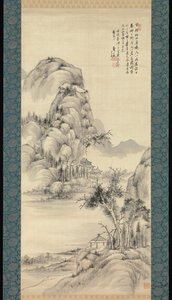
1862 116.0 x 52.0 cm
购买高分辨率增强版数字图像,其品质远超在线预览。
每一份文件都由我们的内部专家使用先进工具与专业的后期润色技术精心打造。我们确保每一张图像都具备卓越的清晰度、精准的色彩还原度以及细腻的细节表现。
最终文件将在 72 小时内通过电子邮件交付,并针对专业、编辑及印刷用途进行了优化。其品质与顶级设计工作室、出版社和画廊所信赖的标准完全一致。
选择 WahooArt.com,您获得的不仅仅是一张图像——您收到的是经过专业级增强、精雕细琢的数字艺术作品,并享有满意保证。以下是您的订单中自动包含的所有内容:

您的高分辨率数字图像文件将在下单后 72 小时内通过电子邮件发送给您 —— 即可立即使用。

您的艺术品经过专业优化,结合先进的 AI 技术与人工修饰,确保呈现极致的细节、清晰度与色彩准确度。

不小心删除了文件或找不到了?没关系——我们将随时为您免费重发。

即刻拥有您的艺术作品,无需支付任何关税、税费或运费——数字下载始终免税。

我们通过专业工具与色彩管理技术,确保您的数字图像尽可能真实地还原原作色彩。

如果您对所购数字图像不满意,我们将在100天内为您进行修改或提供100%的全额退款——无需任何理由。

不满意?在收到数字文件后的100天内,您可以申请全额退款——无需任何理由。

购买 3 张图片可享 10% 折扣 - 购买 5 张可享 15% 折扣 - 购买 10+ 张可享 20% 折扣。非常适合创意项目、画廊和机构使用。

Born in Himeji, Japan in 1791 – though often associated with the region of Osaka due to his early life – Hidaka Tetsuo (日高鉄翁) was a profoundly influential figure within the Bunjinga circles of 18th and 19th century Japan. His journey through Kyoto, Osaka, and Edo reflects not just geographical movement, but a deep immersion into the evolving landscape of Japanese art. More than simply a painter, Tetsuo embodied a synthesis of artistic approaches, skillfully blending the traditions of Tosa (Southern School) and Nanga (Northern School) painting – a rare and highly valued combination that speaks volumes about his artistic understanding.
Tetsuo’s early life in Hine village near Osaka provided him with an intimate connection to the natural world, a foundational element for both Tosa and Nanga styles. The Tosa school, known for its elegant brushwork, vibrant colors, and focus on capturing the beauty of nature, instilled in him a deep appreciation for landscape. Simultaneously, his exposure to Nanga painting – which drew inspiration from Chinese ink wash traditions – introduced him to the concept of *mokusatsu* (silent contemplation) and the use of monochrome techniques to convey profound philosophical ideas. This duality is strikingly evident throughout his oeuvre.
A pivotal moment in Tetsuo’s artistic development occurred during his travels, specifically around 1840-1850. He befriended Yasuda Rōzan (薬師良山), a renowned Bunjinga artist himself, and this relationship proved to be extraordinarily fruitful. While the precise nature of their collaboration remains somewhat shrouded in historical detail, it’s widely believed that Tetsuo greatly benefited from Rōzan's guidance and experience. The influence of Rōzan is particularly noticeable in Tetsuo’s later works, where a greater emphasis on atmospheric perspective and a more subdued color palette can be observed – characteristics often associated with the Nanga tradition.
However, it’s crucial to recognize that Tetsuo was not merely a follower. He retained his own distinct artistic voice, skillfully integrating elements from both schools while forging a unique style characterized by a remarkable sense of tranquility and understated beauty. His landscapes are rarely overtly dramatic; instead, they evoke a feeling of quiet contemplation, inviting the viewer to lose themselves in the scene.
Tetsuo’s technical mastery lies in his ability to seamlessly blend the techniques of Tosa and Nanga. He employed the delicate brushwork and vibrant colors favored by the Tosa school, particularly when depicting natural elements like trees, mountains, and water. Yet, he also embraced the monochrome approach of Nanga, utilizing subtle gradations of ink to create a sense of depth and atmosphere. His compositions often feature expansive landscapes framed by simple, elegant structures – temples, pavilions, or solitary figures – creating a harmonious balance between nature and human presence.
The use of *sumi-e* (ink wash painting) is particularly noteworthy. Tetsuo’s control over the ink was exceptional, allowing him to create textures that ranged from delicate washes to bold, expressive strokes. He frequently incorporated calligraphy into his paintings, not merely as decorative elements but as integral components of the overall composition, further enhancing the sense of harmony and balance.
Hidaka Tetsuo’s contribution to Japanese art is significant for several reasons. Firstly, he exemplified the successful integration of Tosa and Nanga styles – a rare achievement that demonstrated the potential for artistic synthesis. Secondly, his works offer valuable insights into the evolving aesthetic sensibilities of 18th and 19th century Japan, reflecting both Western influences (particularly in terms of landscape painting) and deeply rooted traditional values.
His paintings are now highly prized by collectors and scholars alike, representing a crucial link between artistic traditions. They stand as testaments to the enduring power of observation, contemplation, and the skillful manipulation of ink and brush – qualities that continue to resonate with viewers today. His work can be found in numerous museums and private collections, ensuring his place as a pivotal figure in Japanese art history.
1791 - 1871 , Japan


 效果预览
效果预览
 切换至版画销售渠道
 分享
分享 分享
分享
 详情
详情

 下载
下载
 相似作品
相似作品 X射线
X射线 幻灯片播放
幻灯片播放 统计数据
统计数据 展开详情
展开详情


