
 PaintingWallArtExpressionism
 1928Modern
 90.0 x 120.0 cm
 Kunstmuseum Ahrenshoop
博物馆级艺术微喷或帆布版画,制作高效,并提供多种饰面选择。 ( 订购此收藏品的纯手工复刻画作 切换至数字图像销售渠道)





























您可以从与原作比例一致的预设尺寸中进行选择。

请输入您所需的宽度和高度,以适配您的画框或墙面。由于印刷品只能进行裁剪,无法超出原图尺寸,因此若比例不一致,画面的一部分将会被裁切。在正式印刷之前,我们会为您发送一份数字效果图供您确认。本页面显示的图片并非最终裁剪后的效果——只有效果图才能展示真实的裁剪情况。
Under Boots
复刻品尺寸说明
In the evocative realm of early 20th-century German art, few works capture the psychological tension of the era as poignantly as Hermann Abeking’s 1928 masterpiece, Under Boots. At first glance, the viewer is drawn into a somber, shadowed interior where the weight of existence seems to press down upon the canvas. The painting depicts a solitary figure reclined on the ground, his head buried in his hands in a gesture of profound despair or perhaps deep introspection. Clad in striking yellow trousers that pierce through the surrounding gloom, the man becomes a focal point of vulnerability amidst a dark, claustrophobic setting. The presence of indistinct figures in the background and the suggestion of heavy boots looming near the subject create an atmosphere of palpable discomfort, as if the very air is thick with the anxiety of a world on the brink of transformation.
Abeking, a versatile talent who moved fluidly between the worlds of fine art and commercial illustration, brings a unique graphic sensibility to this piece. His training in the prestigious academies of Dresden and Berlin allowed him to master a technique that balances representational clarity with an expressive, almost theatrical use of light and shadow. In Under Boots, the interplay of darkness and sudden bursts of color serves not just to define form, but to direct the emotional narrative. The heavy, somber tones evoke the influence of German Expressionism—a movement that sought to strip away academic pretension to reveal the raw, unadulterated truths of human suffering and isolation. Every brushstroke contributes to a sense of mounting pressure, making the viewer feel like an intruder in this private moment of distress.
To understand the profound impact of this work, one must consider the historical landscape of 1928 Germany. This was a period of intense social upheaval and psychological fragmentation. Abeking, while deeply connected to the vibrant publishing scene in Berlin, often infused his work with a sense of the existential. The title itself, Under Boots, serves as a powerful metaphor for the crushing weight of societal expectations, political instability, or perhaps the inescapable march of time and authority. The figure’s posture—collapsed and retreating into himself—mirrors the collective fatigue of a generation navigating the turbulent waters between the memory of the Great War and the approaching shadows of another global conflict.
For the discerning collector or interior designer, this painting offers more than mere decoration; it provides a profound conversational centerpiece. The composition’s ability to command attention through its dramatic chiaroscuro makes it an ideal acquisition for spaces that value depth, intellect, and emotional resonance. Whether placed in a quiet study or a contemporary gallery setting, a high-quality reproduction of this work invites contemplation. It serves as a window into a pivotal moment in art history, where the boundaries between illustration and fine art blurred to create something deeply human, hauntingly beautiful, and eternally relevant.
赫尔曼·恩斯特·阿贝金 的《Under Boots》 采用 Landscape 格式。该格式描述了构图的比例。
赫尔曼·恩斯特·阿贝金 的《Under Boots》 在整体 Dramatic 的氛围中,传达出一种 Somber 的情感。
通过创作者的出生地,《Under Boots》将Expressionism运动与德国紧密联系在了一起。


Immerse yourself in golden light! Explore 10 famous paintings dominated by 'Chrome Yellow', from Van Gogh’s Sunflowers to Monet's Haystacks. Discover the stories behind these iconic Impressionist & Post-Impressionist masterpieces and find museum-quality art reproductions at WahooArt.com.
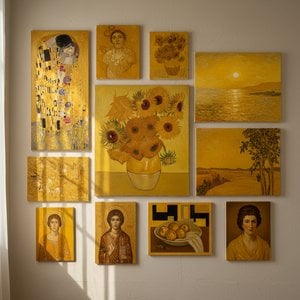
Explore 10 iconic paintings bathed in golden yellow ochre! From Van Gogh's sunflowers to Monet’s haystacks, discover the stories behind these masterpieces. Find museum-quality art reproductions & elevate your home decor on .

Delve into 10 somber masterpieces by Rembrandt, Munch & Van Gogh. Explore emotional art history, dark palettes & powerful expression. Find museum-quality reproductions & curated wall decor ideas at . Discover all masterpieces online.

Explore the rich symbolism & emotional power of yellow in art history! From Van Gogh to Kandinsky, discover how artists used this vibrant hue. Expert analysis & high-quality reproductions at WahooArt.

Explore 10 iconic paintings dominated by dark gray tones, from Rembrandt & Caravaggio to Goya. Discover the stories behind these masterpieces and find museum-quality art reproductions for your home at . Explore the full collection online.


 实景预览
实景预览
 发送
发送 分享
分享
 详情
详情 指南
指南

 下载图片
下载图片
 相似作品
相似作品 X射线
X射线 幻灯片播放
幻灯片播放 统计数据
统计数据 阅读全文
阅读全文









 玻璃选项仅适用于110厘米以下的尺寸。


