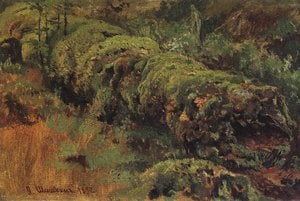
71.0 x 92.0 cm
获取远超网页预览效果的印刷级文件。我们销售的每一张数字图像均源自库存数据库中的高分辨率母版——宽度通常在 5,000 至 15,000 像素之间——因此您可以放心地进行大幅打印、局部裁剪或还原细腻的细节。
每一件作品在离开我们的工作室前都经过了精心的处理。数字影像专家会对照原作核对色彩,并在必要时进行校正,随后利用专业修图工具提升清晰度与细节表现——且始终忠实于艺术家的笔触与风格。最终呈现的图像宛如原作本身,而非仅仅是一张加了滤镜的扫描件。
您可以在最终定稿前进行审核:我们的专家将在 72 小时内通过电子邮件向您发送图像以供审阅。如果不满意?您可以要求改进或修正;若质量未达预期,亦可申请退款。
这也是出版商、设计工作室、画廊及印刷厂所信赖的品质。
选择 WahooArt.com,您获得的不仅仅是一张图像——您收到的是经过专业级增强、精雕细琢的数字艺术作品,并享有满意保证。以下是您的订单中自动包含的所有内容:
您的高分辨率数字图像文件将在下单后 72 小时内通过电子邮件发送给您 —— 即可立即使用。
您的艺术品经过专业优化,结合先进的 AI 技术与人工修饰,确保呈现极致的细节、清晰度与色彩准确度。
不小心删除了文件或找不到了?没关系——我们将随时为您免费重发。
即刻拥有您的艺术作品,无需支付任何关税、税费或运费——数字下载始终免税。
我们通过专业工具与色彩管理技术,确保您的数字图像尽可能真实地还原原作色彩。
如果您对所购数字图像不满意,我们将在100天内为您进行修改或提供100%的全额退款——无需任何理由。
不满意?在收到数字文件后的100天内,您可以申请全额退款——无需任何理由。
购买 3 张享 10% 折扣 - 购买 5 张享 15% 折扣 - 购买 10 张以上享 20% 折扣。非常适合创意项目、画廊及机构使用。
在“The Cornfield”中,最引人注目的颜色是Putty (#d5cba9)。了解作品的主色调有助于将其与室内装饰进行搭配。
Henry Ward Ranger 的《The Cornfield》 采用了 Neutrals 色调,并以 Putty (#d5cba9) 作为主导色。
Henry Ward Ranger 的《The Cornfield》 中的色彩呈现出 Vivid 的强度。

Henry Ward Ranger, born in Sunbury, Pennsylvania, in 1858, was an artist deeply rooted in the American landscape long before it became a fashionable subject for art collectors. His early life wasn’t one of immediate artistic privilege; rather, it was steeped in the practicalities of working-class existence. He initially pursued studies at the Pennsylvania Academy of the Fine Arts in Philadelphia, but found its rigid academic style stifling to his burgeoning vision. Ranger sought a more direct connection with nature, and this led him on a path that would ultimately define his career as a pivotal figure in American Tonalism and the Barbizon School tradition.
His initial training focused on illustration, providing him with a solid technical foundation but failing to ignite his passion. A crucial turning point came during travels through Europe in the 1880s. He wasn’t drawn to the grand historical paintings or opulent portraits that dominated European salons; instead, he found himself captivated by the works of the Barbizon painters – artists like Théodore Rousseau and Jean-François Millet – who depicted rural life and landscapes with a quiet dignity and profound sense of atmosphere. This encounter proved transformative, shaping his aesthetic sensibilities and setting him on a course to capture the essence of the American wilderness.
Upon returning to America, Ranger began to forge his own artistic identity, heavily influenced by the principles of both the Barbizon School and the emerging Tonalist movement. Tonalism, characterized by its subdued palettes, emphasis on atmospheric effects, and evocative mood, resonated deeply with Ranger’s desire to convey the spiritual qualities of nature. He wasn't interested in meticulous detail or photographic realism; instead, he sought to capture the *feeling* of a place – the stillness of a forest, the melancholy beauty of twilight, the weight of history embedded within the land.
His early works from this period often feature dark, brooding forests and quiet river scenes. He employed a limited range of colors—primarily browns, grays, greens, and blues—creating a harmonious sense of unity and emphasizing the play of light and shadow. This technique wasn’t merely about replicating visual appearances; it was about evoking an emotional response in the viewer, inviting them to contemplate the mysteries and grandeur of the natural world. He deliberately avoided bright colors or dramatic contrasts, preferring instead to create a meditative atmosphere that encouraged introspection.
Ranger’s artistic development wasn't static; he continually refined his technique and expanded his subject matter throughout his career. While landscapes remained central to his work, he also explored scenes of rural life, depicting farmers, laborers, and the simple rhythms of agricultural existence. He became particularly known for his paintings of the Connecticut countryside, where he established a home and studio in Old Lyme.
Old Lyme quickly became an artistic haven, attracting a community of painters who shared Ranger’s appreciation for nature and commitment to Tonalist principles. He played a pivotal role in establishing the Lyme Art Colony, fostering a collaborative environment that encouraged experimentation and innovation. His influence extended beyond his own paintings; he was also a respected teacher, mentoring numerous artists and shaping the course of American landscape painting.
He experimented with different techniques to achieve his desired effects, often using a palette knife to apply thick layers of paint, creating textured surfaces that added depth and richness to his compositions. His later works demonstrate a greater emphasis on abstraction, moving away from representational accuracy towards a more expressive interpretation of nature.
Ranger achieved considerable recognition during his lifetime, exhibiting widely in prestigious galleries and museums across the United States. He was elected an Academician of the National Academy of Design in 1897, a testament to his artistic skill and influence. His paintings were highly sought after by collectors, and he played a significant role in popularizing American landscape painting.
However, Ranger’s historical significance extends beyond his commercial success. He was instrumental in establishing Tonalism as a distinctively American art movement, breaking away from European traditions and forging a new aesthetic identity rooted in the unique qualities of the American wilderness. His work reflects a deep reverence for nature, a commitment to artistic integrity, and a desire to capture the spiritual essence of the land.
Henry Ward Ranger died in 1916, leaving behind a rich legacy that continues to inspire artists and captivate audiences today. His paintings are held in major museums across the United States, including the Metropolitan Museum of Art, the Smithsonian American Art Museum, and the Library of Congress.
Ranger’s influence can be seen in the work of numerous subsequent landscape painters, who adopted his techniques and shared his appreciation for nature. His commitment to artistic integrity and his ability to capture the spiritual qualities of the land continue to resonate with contemporary audiences, reminding us of the enduring power of art to connect us with the natural world.

1858 - 1916


 实景预览
实景预览
 切换至版画销售渠道
 分享
分享 分享
分享
 详情
详情 指南
指南

 下载作品
下载作品
 相似作品
相似作品 X射线
X射线 幻灯片播放
幻灯片播放 Q&A
Q&A 统计数据
统计数据 展开全文
展开全文