
博物馆级艺术微喷或帆布版画,制作高效,并提供多种饰面选择。 ( 购买手绘画作 切换至数字图像销售渠道)





























从与原作比例一致的预设尺寸中进行选择。

您可以输入自定义尺寸,以适配特定的画框或空间。如果您选择的尺寸与原图比例不符,我们将对作品进行裁剪,或通过镜像填充/纯色填充边缘的方式来扩展图像。在开始制作之前,我们会向您发送一份数字效果图供您确认。
请注意,屏幕上的预览并不能反映实际的裁剪或扩展效果。只有效果图才能准确展示最终的构图。
虽然我们提供定制尺寸,但为了保持原图比例,我们建议您从预设列表中选择尺寸。

Lieut-Colonel Bryce McMurdo
复制品尺寸
To stand before this portrait is to step directly into the polished drawing rooms and sun-dappled landscapes of early nineteenth-century Britain. Henry Raeburn, a master whose brushstrokes seemed capable of capturing not just likeness, but very spirit, has gifted us with a scene rich with narrative potential. This depiction of Lieut-Colonel Bryce McMurdo is more than a mere record of appearance; it is a carefully constructed tableau vivant, whispering tales of gentlemanly pursuits and established social standing during the Regency era.
The subject himself commands attention. Dressed in the impeccable tailoring expected of a man of his rank—the crisp suit, the formal tie, the confident bearing—he sits with an air of relaxed authority. The inclusion of the cane suggests not only support but also an element of gentlemanly accoutrement, while the object held near him, perhaps a fishing rod, anchors the portrait in a moment of leisure. This juxtaposition—the formality of his attire against the implied tranquility of the outdoor setting—is key to understanding the painting's emotional resonance.
Henry Raeburn’s genius lay in his ability to achieve a profound sense of realism while imbuing his subjects with an almost palpable inner life. While the details of the technique are rooted in the traditions of grand portraiture, one can observe the characteristic softness that Raeburn applied to skin tones, allowing the sitter's features to emerge from the background with remarkable clarity. The handling of light is particularly noteworthy; it seems to fall naturally across the scene, highlighting the textures of his coat and the sheen on his hat.
Beyond the central figure, the composition expands outward. The presence of other figures in the background, along with the visible boat nestled near the center, suggests a broader narrative context—a social outing or perhaps a moment captured during an excursion. Raeburn masterfully uses these secondary elements to give depth and scale, preventing the portrait from feeling static. It is a study in controlled composition, where every element, from the steps upon which he rests to the distant water, contributes to the overall harmony.
The period surrounding 1800 was one of immense social fluidity and burgeoning wealth among the British gentry. Portraits like this served a vital function: they were affirmations of status. The inclusion of outdoor elements, such as the boat and the natural setting, speaks to a growing cultural appreciation for the pastoral ideal—a retreat from the rigid confines of urban life into nature's restorative embrace. For the collector or designer, understanding this context adds layers of meaning; it suggests an aspiration toward refined leisure.
The symbolism here is subtle but potent: the combination of military bearing (implied by "Lieut-Colonel"), sophisticated dress, and recreational activity paints a picture of the ideal gentleman—a man who has achieved both public success and private contentment. It speaks to a life well-lived, observed through the discerning eye of an artist.
For those seeking to infuse a space with the elegance and narrative depth of this era, a high-quality reproduction of this work offers more than just decoration; it offers conversation. Imagine this piece gracing a library or a formal reception room. The rich tonality and the palpable sense of history lend an immediate air of cultivated taste. It invites viewers to pause, to consider the man depicted, and to appreciate the enduring skill of Raeburn’s hand. Owning this reproduction is acquiring a tangible echo of Georgian and Regency sophistication.


1756 - 1823 , 英国

Explore the life & work of Henry Raeburn, a master Scottish portraitist. Discover his innovative techniques, captivating portraits of the Enlightenment era, and lasting legacy in art history. Learn more at WahooArt.

Explore the life & legacy of Robert Henri, a pivotal figure in American Realism. Discover his captivating portraits, influence on the Ashcan School, and enduring impact on art history. Learn more at WahooArt.

Explore the life & work of Henry Raeburn Dobson, a key figure bridging Scottish tradition & modern art. Discover his neoclassical portraits, landscapes, and connection to the Colourists. Learn about collecting his works.

Explore the life & work of James Giles (1801-1870), a master of Scottish landscape painting and favored artist of Queen Victoria. Discover his atmospheric realism & royal commissions.
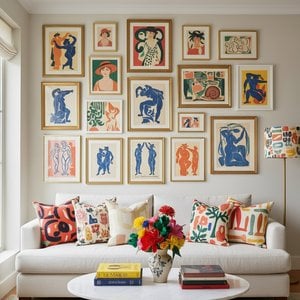
探索亨利·马蒂斯25幅杰作,感受野兽派色彩的魅力!从《舞蹈》到《红色和谐》,揭秘大师背后的故事与艺术灵感。WahooArt.com提供博物馆级高质量油画复制品,为您的家居增添奢华艺术气息。立即在线探索完整系列!


 效果预览
效果预览
 分享
分享 分享
分享
 详情
详情 指南
指南

 下载
下载
 相似作品
相似作品 X射线
X射线 幻灯片播放
幻灯片播放 统计数据
统计数据


 展开详情
展开详情









 玻璃选项仅适用于110厘米以下的尺寸。


