A Moment of Tranquility Captured in Matisse’s Palette
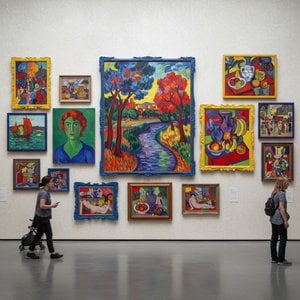
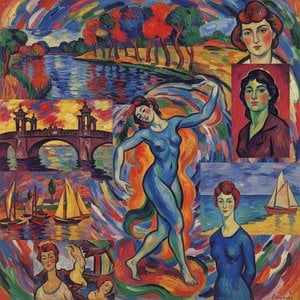
The painting, simply titled “untitled (98),” offers a glimpse into Henri Matisse's masterful exploration of color and form—a deceptively serene portrait that speaks volumes about the artist’s artistic philosophy. Executed sometime between 1947 and 1950 during his prolific Parisian period, this work exemplifies Matisse’s signature style: bold, simplified shapes rendered in vibrant hues against a muted backdrop. It is not merely a depiction of a woman seated comfortably; it is an embodiment of Matisse’s belief that color alone could convey emotion and create a palpable atmosphere. The scene presents a portrait of a woman sitting in a chair with her head resting on her arm, appearing deeply relaxed or perhaps even lost in sleep. Nearby, a dining table holds various items such as cups and vases, while books are scattered throughout the room, some near the woman and others further away. The presence of two cats—one close to the woman and another tucked further back—adds an element of domestic warmth and companionship, reinforcing the painting's overarching theme of serenity.
Matisse’s technique in this period is characterized by his pioneering “cut-out” painting method. Rather than meticulously blending pigments on canvas, he painstakingly cut shapes from colored paper or cardboard, gluing them onto a white surface to achieve an astonishing luminosity and textural richness. This approach deliberately rejects illusionistic realism, prioritizing expressive color over accurate representation. The dominant shades—warm yellows, oranges, and reds—contrast sharply with the cool blues and greens of the room setting, creating a visual dialogue that draws the eye inward. Notice how Matisse uses overlapping planes of color to suggest depth without resorting to traditional perspective; it is an ingenious device that reinforces the painting's feeling of stillness.
Symbolism and the Emotional Resonance of Stillness
Beyond its formal qualities, “untitled (98)” is laden with symbolic significance. The woman seated in her chair represents domestic tranquility—a refuge from the anxieties of the outside world. Her posture, with her head resting on her arm, suggests vulnerability and acceptance. The surrounding objects—the cups, vases, and books—contribute to an atmosphere of erudition and contemplation, suggesting a life of quiet intellectual pursuit. This painting emerged during a period marked by significant artistic upheaval in the aftermath of World War II. While many of his contemporaries sought to grapple with existential anxieties through dramatic gestures, Matisse opted for a quieter response: a celebration of beauty and harmony amidst the turmoil of the time. This deliberate choice reflects his humanist conviction that art could offer solace and inspiration, reminding viewers of the enduring power of joy.
Ultimately, this artwork succeeds as a powerfully emotive piece. Its luminous color palette evokes feelings of warmth, comfort, and optimism—a welcome antidote to the darkness of wartime Europe. The painting’s deliberate lack of detail invites viewers to focus on the interplay of color and form, prompting introspection and fostering a sense of calm contemplation. For the collector or interior designer, this work serves as more than just a visual element; it is a balm for the soul. It is a testament to Matisse’s ability to distill complex emotions into deceptively simple visual elements, leaving an indelible impression on anyone who encounters it—a reminder that true beauty resides not in grand spectacle but in quiet grace.
常见问题与解答
在亨利·马蒂斯的创作生涯中,"untitled (98)"处于怎样的地位?
在亨利·马蒂斯的作品中,"untitled (98)" 呈现出fauve风格,并延续了color exploration, domestic tranquility, symbolic presence, matisse style的主题。
亨利·马蒂斯 的《untitled (98)》 为室内空间增添了怎样的氛围?
亨利·马蒂斯 的《untitled (98)》 营造出 Serene 的氛围,与推荐的陈设空间——Living Room 完美契合。
亨利·马蒂斯 的《untitled (98)》 在艺术史上的地位如何?
从历史上看,"untitled (98)" 是广义上 Modern 时期的 fauve 时期作品。