
博物馆级艺术微喷或帆布版画,制作高效,并提供多种饰面选择。 ( 订购纯手工绘制画作 切换至数字图像销售渠道)





























您可以从与原作比例一致的预设尺寸中进行选择。

请输入您所需的宽度和高度,以适配您的画框或墙面。由于印刷品只能进行裁剪,无法超出原图尺寸,因此若比例不一致,画面的一部分将会被裁切。在正式印刷之前,我们会为您发送一份数字效果图供您确认。本页面显示的图片并非最终裁剪后的效果——只有效果图才能展示真实的裁剪情况。
the moraccans
复刻品尺寸
Henri Matisse's “The Moroccans,” painted in 1916 during his transformative sojourn in Morocco, isn’t merely a depiction of a street scene; it’s an immersive experience—a vibrant distillation of color, form, and the artist’s burgeoning fascination with North African culture. This captivating work, currently residing within the esteemed collection of the Museum of Modern Art (MoMA) in New York City, represents a pivotal moment in Matisse's artistic evolution, marking his transition from traditional academic painting towards the bold experimentation that would define his Fauvist period.
The scene unfolds with an almost hallucinatory intensity. A central figure, a man seated on the ground, is rendered in a simplified, almost mask-like fashion—his back turned to the viewer, inviting speculation about his thoughts and experiences. Before him lies a captivating arrangement of oranges, their brilliant hues echoing throughout the composition. These aren’t simply fruits; they become symbolic anchors, radiating warmth and vitality against the cooler tones of the surrounding architecture. Behind this tableau, glimpses of a bustling street reveal a series of buildings, hinting at a vibrant urban life, while a mosque's minaret punctuates the skyline.
“The Moroccans” is firmly rooted in the principles of Cubism, though Matisse’s interpretation diverges significantly from Picasso’s more analytical approach. Rather than dissecting objects into geometric fragments, Matisse employs a flattened perspective and overlapping planes to create an illusion of depth—a sense of being enveloped within the scene. The colors themselves are paramount; they aren't used descriptively but rather expressively, creating a symphony of reds, yellows, greens, and browns that pulsate with energy. This deliberate departure from naturalistic representation is characteristic of Fauvism, where color becomes the primary subject matter.
Matisse’s technique is remarkably loose and gestural. He employs broad brushstrokes and vibrant washes of paint, creating a sense of movement and spontaneity. The surface of the canvas isn't meticulously rendered; instead, it’s alive with texture and visual rhythm. This tactile quality invites the viewer to engage with the painting on a visceral level, experiencing its energy directly.
The choice of subject matter—a Moroccan street scene—was deeply significant for Matisse. Morocco represented an escape from the constraints of European artistic conventions and a gateway to a world brimming with exotic beauty and sensory stimulation. The oranges themselves are laden with symbolism, representing abundance, fertility, and even sacrifice – all potent themes within Moroccan culture. The man seated on the ground could be interpreted as a contemplative figure, lost in thought or perhaps observing the vibrant life unfolding before him. The overall composition suggests a moment of quiet contemplation amidst the bustling activity of the street.
“The Moroccans” transcends its literal subject matter to evoke a powerful emotional response. It’s not simply a representation of a place; it's an evocation of atmosphere—a feeling of warmth, vibrancy, and exotic allure. The painting’s bold colors and dynamic composition create a sense of immediacy, drawing the viewer into the scene and inviting them to lose themselves in its sensory richness. It is a testament to Matisse’s ability to capture not just what he saw, but also what he *felt*—a profound connection to the world around him.
Today, “The Moroccans” stands as a cornerstone of modern art, demonstrating Matisse's revolutionary approach to color and form. Reproductions offer a chance to bring this captivating vision into your own space, injecting a dose of vibrant energy and exotic allure into any room.
"the moraccans" 的色彩基调由以 Putty (#e4dfcd) 为主的 Earthy 色系构成。
亨利·马蒂斯 的《the moraccans》 的 Landscape 格式推荐用于 Living Room。画幅与空间的结合,将为您提供复制品摆放的指引。
亨利·马蒂斯 的《the moraccans》 的主导色调为 Golden Yellow Range,这一色调构成了整个色板的基调。


1869 - 1954 , 法国
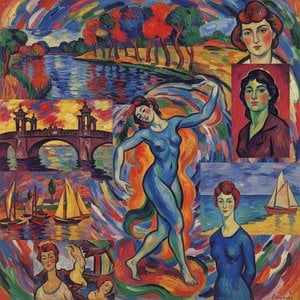
Explore 10 Fauvist masterpieces by Matisse, Derain & Vlaminck that ignited Modern Art! Discover bold colors, expressionist landscapes & the history of this revolutionary movement. Find museum-quality prints at WahooArt.com.

探索乔治·布拉克25幅大师杰作,领略立体主义的魅力与现代艺术的精髓。从早期作品到经典油画,WahooArt为您呈现法式优雅与家居装饰灵感。高清艺术复制品,点亮您的空间!立即在WahooArt.com发现更多。

Explore the vibrant revolution of Fauvism. Discover how masters like Henri Matisse liberated color from reality to express pure emotion. An expert guide into the 'Wild Beasts' of modern art history for collectors and enthusiasts.

探索亨利·马蒂斯25幅杰作,感受野兽派色彩的魅力!从《舞蹈》到《红色和谐》,揭秘大师背后的故事与艺术灵感。WahooArt.com提供博物馆级高质量油画复制品,为您的家居增添奢华艺术气息。立即在线探索完整系列!
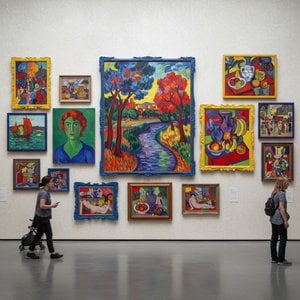
探索 fauve 艺术运动的十部杰作!马蒂斯、德兰伊等大师的色彩与激情,定义了现代艺术。深入了解绘画背后的故事,发现壁画、装饰画等经典作品。WahooArt.com 提供博物馆品质的艺术复制品和精选家居装饰方案。在线探索完整系列!

 实景预览
实景预览
 分享
分享 分享
分享
 详情
详情 指南
指南

 下载作品
下载作品
 相似作品
相似作品 X射线
X射线 幻灯片播放
幻灯片播放 Q&A
Q&A 统计数据
统计数据

 展开全文
展开全文









 玻璃选项仅适用于110厘米以下的尺寸。


