
免费艺术咨询

x
定制手绘复刻品 定制手绘复刻品购买高清图片 购买高清图片 分享分享
详情详情 加入收藏 加入收藏 下载下载 相似作品相似作品 X射线检测X射线检测 幻灯片播放幻灯片播放

Holy Trinity

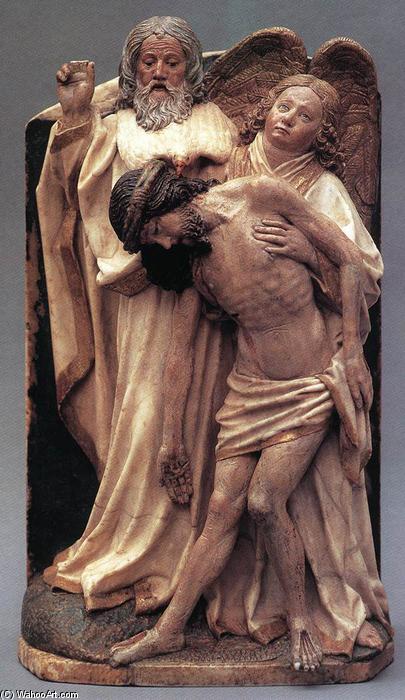
Hans Multscher's 'Holy Trinity,' created around 1430, is a poignant depiction of Christ's sacrifice rendered in alabaster. Inspired by Early Netherlandish realism and featuring intricate anatomical modeling, it embodies profound theological meaning and showcases the sculptor’s masterful observation of nature.

探索德国雕塑家与画家汉斯·穆尔茨舍尔(约1400-1467),他是连接哥特式与文艺复兴艺术的关键人物。深入了解他写实的艺术风格、宗教主题以及极具影响力的艺术工作室!

艺术微喷/版画

博物馆级艺术微喷或帆布版画,制作高效,并提供多种饰面选择。

Standard
custom
CM
INCH

从与原作比例一致的预设尺寸中进行选择。

宽度
高度

您可以输入自定义尺寸,以适配特定的画框或空间。如果您选择的尺寸与原图比例不符,我们将对作品进行裁剪,或通过镜像填充/纯色填充边缘的方式来扩展图像。在开始制作之前,我们会向您发送一份数字效果图供您确认。
请注意,屏幕上的预览并不能反映实际的裁剪或扩展效果。只有效果图才能准确展示最终的构图。
虽然我们提供定制尺寸,但为了保持原图比例,我们建议您从预设列表中选择尺寸。

全球配送(),仅需 2 周即可送达,无需等待标准流程的 4/5 周。(2 July)

why_choose_icon
全球免费特快专递服务
why_choose_icon
优质亚麻画布
why_choose_icon
全程运输保险
why_choose_icon
关税退款保证
why_choose_icon
色彩还原度保证
why_choose_icon
60天退货政策(仅限制造缺陷)
why_choose_icon
100%退款保证
why_choose_icon
多件购买优惠

总计金额

-

reproduction

Holy Trinity

艺术微喷/版画

复制品尺寸

-

最终总价

-

作品概览

  • Artistic style: Schönen Stil
  • Movement: Late Gothic Realism
  • Location: Liebieghaus-Museum
  • Medium: Alabaster
  • Title: Holy Trinity
  • Artist: Hans Multscher
  • Dimensions: 28 x 16 cm

艺术知识测试

每道题只有一个正确答案。

题目 1:
What is the primary material used in Hans Multscher’s sculpture ‘Holy Trinity’?
题目 2:
Around what year was ‘Holy Trinity’ created?
题目 3:
The sculpture depicts the Christian concept of which holy figures?
题目 4:
What artistic style is ‘Holy Trinity’ associated with?
题目 5:
The sculpture's depiction of Christ emphasizes which theological theme?

藏品详情

Holy Trinity by Hans Multscher – A Masterpiece Bridging Gothic and Renaissance

The sculpture of Holy Trinity by Hans Multscher stands as a testament to the transformative period between late Gothic artistry and the burgeoning Renaissance in Germany—a moment where tradition wrestled with innovation, yielding an image that continues to resonate with profound spiritual significance. Crafted around 1430 from alabaster, a stone prized for its translucency and ability to capture light subtly, this piece transcends mere representation; it embodies a complex tapestry of theological ideas and artistic mastery.
  • Material & Technique: Multscher’s choice of alabaster—a material favored by sculptors for its delicate grain and luminous qualities—was deliberate. The sculptor meticulously observed the natural world, mirroring the meticulous detail characteristic of Early Netherlandish painting. Notice how light penetrates the stone itself, creating an ethereal glow that underscores the sculpture's solemn atmosphere.
  • Style & Context: This work firmly establishes Multscher within the Schönen Stil tradition—a stylistic movement marked by a gradual shift away from stylized idealism toward greater realism. Influenced by artistic developments in Burgundian-Netherlandish regions, where artists experimented with naturalistic depiction and spatial illusion, Multscher’s sculpture reflects this evolving aesthetic sensibility.
  • Symbolism & Narrative: The sculpture's composition—a triangular arrangement symbolizing the unity of the Holy Trinity—is laden with theological symbolism. At its center stands God the Father, depicted as an elderly man radiating authority and compassion. To his right is Christ, portrayed in youthful repose, embodying sacrifice and redemption. Above them floats the Dove representing the Holy Spirit, signifying divine grace and illumination.
  • Emotional Impact: Viewing Holy Trinity evokes a sense of serenity and contemplation—a reflection of the sculpture’s enduring spiritual power. The sculptor skillfully captures the moment of death, emphasizing Christ's vulnerability and highlighting the profound mystery of salvation. Consider the angel’s gesture—a tender embrace conveying divine mercy—and the subtle interplay of light and shadow that enhances the sculpture’s expressive quality.
  • Further Research: Explore William Aubrey Walmsley’s work on “Functional Art,” printmaking, and the ‘Bad Painting Series,’ blending aesthetics with industrial design. Visit Santissima Trinità in Cremona! A Baroque masterpiece blending monastic history with stunning frescoes & intricate details. Discover Ramiro Torreblanca’s geometric abstraction! Mexican painter blending lines & figures in captivating planes.

Detailed Analysis of Composition and Material

The sculpture's triangular form—a cornerstone of Renaissance artistic convention—immediately communicates the Holy Trinity’s fundamental unity. Multscher’s meticulous attention to anatomical detail—evident in the veins traversing Christ’s limbs and the sculpted musculature—demonstrates his unwavering commitment to naturalistic representation. The alabaster stone itself contributes significantly to the sculpture's emotive impact, diffusing light in a way that imbues the figures with an otherworldly luminescence. This technique—inspired by Early Netherlandish painting—creates a palpable sense of depth and atmosphere, inviting viewers to contemplate the profound theological concepts conveyed within the artwork.
  • Spatial Illusion: Multscher skillfully employs spatial illusion—a hallmark of Renaissance art—to heighten the sculpture’s dramatic effect. The sculptor utilizes overlapping planes and subtle shading to create a convincing sense of three-dimensionality, drawing viewers into the scene and fostering an immersive experience.
  • Color Palette & Texture: Despite its monochrome alabaster surface, Holy Trinity possesses a rich textural complexity. Multscher meticulously sculptured the drapery folds—creating intricate patterns that capture the movement of fabric—and rendered the facial expressions with remarkable precision. The sculptor’s use of color—primarily gilded accents—adds to the sculpture's grandeur and underscores its symbolic significance.
  • Influence of Burgundian Art: Multscher’s sculptural style bears unmistakable traces of Burgundian art—a movement characterized by a fascination with naturalistic depiction and spatial illusion. Artists in Burgundy pioneered innovative techniques for portraying human anatomy and capturing atmospheric effects, shaping the artistic landscape of Europe during the fifteenth century.

Historical Significance & Artistic Legacy

Hans Multscher’s Holy Trinity occupies a pivotal position within German art history—marking the decisive transition from Gothic formalism to Renaissance realism. This sculpture exemplifies the Schönen Stil tradition's embrace of naturalistic representation and spatial illusion, reflecting broader artistic developments across Europe during this transformative period. Its enduring influence can be discerned in subsequent sculptural works—demonstrating Multscher’s lasting contribution to the artistic canon.
  • Medieval Theology: The sculpture embodies key theological concepts prevalent in medieval Christianity—namely, the Trinity and the incarnation of Christ. Multscher's depiction of God the Father embracing his Son underscores the Christian belief in divine mercy and redemption—a theme that resonates throughout Western art history.
  • Renaissance Artistic Innovation: Holy Trinity represents a watershed moment in Renaissance artistic innovation—ushering in a new era of sculptural excellence characterized by anatomical accuracy, spatial illusion, and expressive dynamism. Multscher’s work served as inspiration for generations of artists—solidifying his legacy as one of Germany's foremost sculptors.
  • Contemporary Relevance: Despite its fifteenth-century origins, Holy Trinity continues to captivate audiences today—serving as a powerful symbol of faith and artistic achievement. Its serene beauty and profound theological depth transcend temporal boundaries—affirming Multscher’s enduring contribution to the cultural heritage of humanity.

Recommended Reproductions & Further Exploration

Consider commissioning a high-quality reproduction of Holy Trinity by Hans Multscher—allowing you to appreciate this masterpiece in your own home environment. Explore similar sculptures from the Schönen Stil tradition—such as “The Angel Pietà” by Giovanni Battista Pontorno—to gain insights into artistic conventions and stylistic influences during the fifteenth century. Visit Santissima Trinità in Cremona! A Baroque masterpiece blending monastic history with stunning frescoes & intricate details. Discover Ramiro Torreblanca’s geometric abstraction! Mexican painter blending lines & figures in captivating planes.
  • Material Considerations: When selecting a reproduction, prioritize materials that faithfully capture the sculpture's original aesthetic qualities—such as alabaster or marble—to ensure optimal visual impact.
  • Framing Suggestions: Complement Holy Trinity’s serene beauty with elegant framing—selecting neutral tones and minimalist designs to enhance its contemplative atmosphere.
  • Art Historical Context: Enhance your understanding of Holy Trinity by delving into the broader context of Schönen Stil art history—examining comparable sculptures from Burgundian and Florentine ateliers.

艺术家简介

德国写实主义的先驱:汉斯·穆尔茨舍尔的生平与艺术

大约于1400年出生在巴伐利亚的小镇赖兴霍芬(现为莱特基希·伊姆·阿尔高的一部分),汉斯·穆尔茨舍尔作为连接德国晚期哥特式风格与新兴文艺复兴时期的关键人物脱颖而出。尽管关于他早年生活的确切细节仍然匮乏,但可以肯定的是,穆尔茨舍尔拥有一种求知欲极强的精神和敏锐的艺术创新眼光。他并非仅仅被动地吸收流行趋势,而是积极寻求新的影响,通过远行深刻地塑造了他独特的审美愿景。这些旅程很可能带他前往了法国北部和尼德兰的艺术中心,使他接触到了早期尼德兰绘画所特有的写实主义与细腻细节——这种风格后来成为了他作品的定义性特征。1427年,穆尔茨舍尔成为多瑙河畔繁荣商业枢纽乌尔姆的自由市民,这标志着他职业生涯的转折点。在那里,他迎娶了阿德海德·基钦,并与兄弟海因里希共同创立了一个工作室,凭借其创新的雕塑和绘画作品迅速声名鹊起。

工作室与艺术发展

穆尔茨舍尔的工作室不仅仅是一个生产场所,更是一个艺术实验的熔炉。汉斯领导着一支规模庞大的团队——记录显示他有时拥有多达十六名助手——营造出一种让传统哥特式形式逐渐融入他在旅途中吸收的自然主义氛围。这种融合在他的雕塑作品中尤为明显,其风格从典型的晚期哥特式拉长的身躯和程式化的衣褶,转向了更具解剖学准确性的表现以及更深层次的情感深度。他的绘画作品虽然数量较少,但也展现了同样引人注目的转变。始于1437年的《武尔扎赫祭坛画》便是这种演变风格的见证。这一宏大的项目最初是为武尔扎赫的圣詹姆斯教堂准备的,展示了穆尔茨舍尔对油画——当时一种相对较新的媒介——的高超掌控力,以及他以惊人精度表现纹理、光影的能力。祭坛的面板描绘了基督与圣母玛利亚的一生,每一幕都渗透着一种触手可及的人性色彩,使其区别于早期的虔诚艺术。值得注意的是,穆尔茨舍尔并不局限于宗教题材;他的委托作品还包括世俗作品,例如装饰乌尔姆市政厅东窗的皇帝群像,这证明了他的多才多艺以及对广泛客户群的吸引力。

核心作品与持久遗产

除了《武尔扎赫祭坛画》,其他几件作品也巩固了穆尔茨舍尔作为德国最重要艺术家之一的地位。现收藏于法兰克福利比博物馆的《圣玛格达莱娜》雕塑,是他通过雕刻形式传达深邃情感的极佳范例。她忧伤的表情以及对头发和衣物的细腻刻画,揭示了对人类心理的深刻理解。另一件著名作品是《忧患之子》——其副本可见于乌尔姆大教堂——这是一种对基督受难的有力描绘,反映了那个时代的虔诚热忱。这些作品连同他对乌尔姆市政厅的贡献,展示了穆尔茨舍尔在雕塑和绘画两方面的造诣,以及他根据不同语境和赞助人调整风格的能力。他的影响力远超其有生之年;他建立的工作室在他1467年去世后继续繁荣,将他的艺术原则传播到了施瓦本及更远的地方。

时代的桥梁

汉斯·穆尔茨舍尔的重要性不仅在于其艺术的美感和技术造诣,更在于他作为变革催化剂的角色。他是首批全面拥抱正在改变北欧艺术的写实主义与自然主义的德国艺术家之一,为后世的文艺复兴大师铺平了道路。他的作品代表了德国艺术发展中的一个关键时刻,标志着从哥特时期的程式化惯例向更具人文主义和观察性的方法的转变。虽然他并未完全抛弃传统形式——在其作品中仍能察觉到哥特式装饰的元素——但他巧妙地将这些元素与新的技术和审美感官相结合,创造出一种独特的艺术语言,这种语言在当时引起了深刻共鸣,并在今天继续吸引着观众。他证明了艺术交流的力量,以及那些敢于挑战传统的人所留下的持久遗产。

今日探索穆尔茨舍尔的世界

幸运的是,汉斯·穆尔茨舍尔艺术创作的众多实例得以幸存,让我们能够亲身领略他的天才。德累斯顿的旧大师画廊收藏了令人印象深刻的15至18世纪欧洲绘画,为理解穆尔茨舍尔在艺术史中的地位提供了更广泛的背景。对于那些有兴趣探索其作品高质量复制品的人来说,像WahooArt这样的平台提供精心手绘的副本,捕捉了他原作杰作中的细微差别。此外,维基百科和艺术网络画廊(Web Gallery of Art)等资源也提供了宝贵的传记信息和对其艺术风格的详细分析。通过接触这些资源,我们可以继续颂扬汉斯·穆尔茨舍尔的生命与遗产——这位德国写实主义真正的先驱,其艺术在几个世纪后依然能带给我们启发与感动。
汉斯·穆尔茨舍

汉斯·穆尔茨舍

1400 - 1467 , 德国

艺术家简介

  • Artistic Movement Or Style: 晚期哥特式/文艺复兴
  • Artists Who Influenced This Artist:
    • 法国北部风格
    • 尼德兰风格
  • Date Of Birth: 约 1400年
  • Date Of Death: 1467年
  • Full Name: 汉斯·穆尔茨舍尔 (Hans Multscher)
  • Nationality: 德国
  • Notable Artworks:
    • 圣玛利亚·玛达肋纳
    • 忧患之子
    • 皇帝群像
    • 武尔扎赫祭坛
  • Place Of Birth: 德国,赖兴巴赫





































