
博物馆级艺术微喷或帆布版画,制作高效,并提供多种饰面选择。 ( 订购此收藏品的纯手工复刻画作 切换至数字图像销售渠道)





























您可以从与原作比例一致的预设尺寸中进行选择。

您可以输入自定义尺寸,以适配特定的画框或空间。如果您选择的尺寸与原图比例不符,我们将对作品进行裁剪,或通过镜像填充/纯色填充边缘的方式来扩展图像。在开始制作之前,我们会向您发送一份数字效果图供您确认。
请注意,屏幕上的预览并不能反映实际的裁剪或扩展效果。只有效果图才能准确展示最终的构图。
虽然我们提供定制尺寸,但为了保持原图比例,我们建议您从预设列表中选择尺寸。

Christ before Pilate (detail)
复刻品尺寸说明
The painting “Christ before Pilate” by Hans Multscher, created around 1437, is not merely a depiction of a biblical scene; it’s a profound meditation on power, judgment, and the weight of human responsibility. Multscher, a pivotal figure bridging the Gothic and burgeoning Renaissance in Germany, masterfully captures a tense, almost suffocating atmosphere within this single composition. He wasn't simply replicating a narrative from scripture; he was distilling its essence – the agonizing confrontation between divine authority and earthly doubt – into a powerfully resonant visual experience. The painting’s enduring appeal lies not just in its technical skill but in its ability to evoke a deep sense of empathy for both Christ and Pilate, forcing the viewer to confront uncomfortable questions about faith, guilt, and the nature of leadership.
Multscher’s style is immediately recognizable as a significant step forward in German art. Departing from the stylized forms of late Gothic painting, he embraces a newfound realism that anticipates the meticulous detail and naturalistic portrayal characteristic of the Northern Renaissance. Observe how he renders the textures of the clothing – the heavy wool of Christ's robe, the rough linen of Pilate’s tunic – with astonishing accuracy. The faces are equally compelling; Christ’s expression is one of quiet resignation mingled with a profound sorrow, while Pilate’s face reflects a mixture of weariness and reluctant apprehension. The artist skillfully employs chiaroscuro—the dramatic contrast between light and shadow—to heighten the emotional impact, drawing our attention to key figures and creating a sense of depth within the crowded scene. The use of oil paint allowed for layering and blending, contributing significantly to the richness and luminosity of the work.
Beyond its realistic depiction, “Christ before Pilate” is rich in symbolic detail. The gathering of onlookers – a diverse group representing Roman officials, Jewish elders, and common citizens – underscores the universal nature of Christ’s trial. The presence of the bowls and cups suggests the offer of compromise, the temptation to avert judgment through earthly means. Note the subtle gestures: Christ's outstretched hands, Pilate’s averted gaze, the nervous fidgeting of the guards—each detail contributes to the narrative tension. The inclusion of animals – a dog and a bird – adds an element of earthy realism and perhaps hints at the broader themes of judgment and innocence. The positioning of these figures is deliberate; they frame Christ within a microcosm of human society, highlighting the conflict between divine law and human desire.
Created during a period of significant artistic transition in Germany, “Christ before Pilate” reflects Multscher’s engagement with both established Gothic traditions and emerging Renaissance influences. His work is closely linked to the Wurzach Altar, a monumental altarpiece that once dominated the church of Wurzach in southern Germany. The wings of this altar, now separated into panels, are particularly significant for their depiction of the Passion narrative. Multscher’s contribution—the central panel depicting Christ before Pilate—is considered one of the most compelling and emotionally resonant images from the entire altarpiece. His workshop produced numerous copies and variations on this theme, demonstrating its enduring appeal to artists and viewers alike. The painting's influence can be seen in subsequent depictions of the Passion narrative, solidifying Multscher’s place as a key figure in the development of German art.
Today, reproductions of “Christ before Pilate” continue to captivate audiences with its timeless message and masterful execution. It serves as a poignant reminder of the complexities of faith, justice, and the enduring power of human emotion—a testament to Hans Multscher’s artistic vision and his profound understanding of the human condition.


1400 - 1467 , 德国
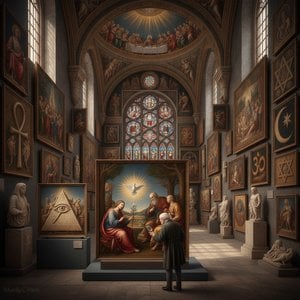
Explore the profound power of religious symbolism in art history. From Renaissance masterpieces to sacred iconography, uncover the hidden meanings behind divine details in a deep dive into classical art excellence.


 实景预览
实景预览
 发送
发送 分享
分享
 详情
详情 指南
指南

 下载图片
下载图片
 相似作品
相似作品 X射线
X射线 幻灯片播放
幻灯片播放 统计数据
统计数据


 阅读全文
阅读全文









 玻璃选项仅适用于110厘米以下的尺寸。


