
博物馆级艺术微喷或帆布版画,制作高效,并提供多种饰面选择。 ( 购买手绘画作 切换至数字图像销售渠道)





























从与原作比例一致的预设尺寸中进行选择。

您可以输入自定义尺寸,以适配特定的画框或空间。如果您选择的尺寸与原图比例不符,我们将对作品进行裁剪,或通过镜像填充/纯色填充边缘的方式来扩展图像。在开始制作之前,我们会向您发送一份数字效果图供您确认。
请注意,屏幕上的预览并不能反映实际的裁剪或扩展效果。只有效果图才能准确展示最终的构图。
虽然我们提供定制尺寸,但为了保持原图比例,我们建议您从预设列表中选择尺寸。

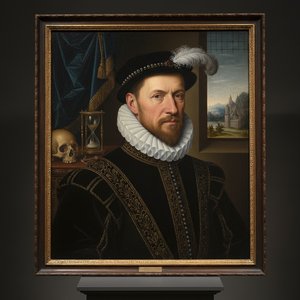
Henry howard
复制品尺寸
This captivating portrait by Hans Holbein the Younger (c. 1497 – 1543) offers a compelling glimpse into the world of Renaissance England and its powerful figures. The subject, identified as Henry Howard, likely a member of the prominent English Howard family, is rendered with an extraordinary level of detail and psychological insight characteristic of Holbein’s masterful style.
The portrait presents Henry Howard from the head and shoulders up, a compositional choice frequently employed by Holbein to focus attention on the sitter's face and character. He is dressed in an elegant black robe, richly trimmed with intricate white lace – symbols of his status and wealth. Howard’s direct gaze engages the viewer, creating a sense of intimacy despite his obvious social standing. A neatly maintained beard adds to his dignified appearance, suggesting maturity and wisdom. The tightly focused composition emphasizes the subject's intellectual presence.
Holbein was renowned for his exceptional realism, going beyond mere physical likeness to capture a sense of personality. This portrait exemplifies that skill. He meticulously rendered every detail – from the delicate texture of the lace and subtle gradations in skin tone to the individual hairs of Howard’s beard. This precision was achieved through layering translucent glazes of oil paint over a carefully prepared panel, creating an image that feels remarkably lifelike even centuries later. His technique wasn't simply about replication; it was about revelation.
Hans Holbein the Younger spent significant time in England, serving as a court painter to King Henry VIII. This position placed him at the center of English society and made him highly sought-after for his portraiture. The Howard family were key figures within the Tudor court, frequently holding positions of power and influence. Therefore, this portrait likely served not only as a record of Henry Howard’s appearance but also as a statement of his social standing and political connections. Holbein's portraits from this period are invaluable historical documents, providing insights into the fashion, customs, and personalities of the era.
The portrait evokes a sense of quiet authority and intellectual depth. Howard’s gaze is both penetrating and reserved, suggesting a man accustomed to power but perhaps burdened by responsibility. The dark color palette contributes to the painting's somber mood, while the luxurious fabrics hint at wealth and privilege. Holbein often embedded subtle symbolism within his portraits; further research into Henry Howard’s life might reveal hidden meanings within this composition – perhaps allusions to his political allegiances or personal beliefs.
The overall impression is one of dignified restraint. Howard doesn't offer a warm smile or an inviting gesture; instead, he presents himself with a controlled composure that speaks to his position and the expectations placed upon him. The painting invites contemplation – prompting viewers to consider the complexities of power, ambition, and the weight of responsibility in Tudor England.
To best preserve the painting's integrity, display it away from direct sunlight and fluctuating temperatures. Consider museum-quality lighting to highlight its details without causing damage.
Currently housed at the Musée Thomas-Henry in Cherbourg, Normandy, this portrait stands as a testament to Holbein’s enduring legacy. Further research into Henry Howard and the Holbein family can be found through resources like Wikipedia and art databases such as this database of Holbein's work.


1497 - 1543 , 意大利

Discover the exquisite journey of transforming digital photography into bespoke oil masterpieces. Experience unparalleled craftsmanship with hand-painted reproductions that bridge modern memories and timeless fine art excellence.

Discover the profound allure of oil on canvas. Explore the mastery of impasto textures, the science of pigment longevity, and expert guides to selecting museum-quality reproductions that elevate your collection with timeless elegance and tactile depth.
Explore the breathtaking precision of Hans Holbein the Younger. From Tudor royal portraits to intricate Northern Renaissance details, discover the mastery behind his legendary works and learn how to bring this historical grandeur into your collection with museum-quality reproductions.

Discover the enduring allure of oil on canvas. Explore how master techniques like impasto and glazing create the depth, texture, and emotional resonance found in the world's greatest masterpieces. An essential guide for fine art enthusiasts and discerning collectors.

Discover the enduring allure of hand-painted oil reproductions. WahooArt offers museum-quality, archival masterpieces designed for discerning collectors seeking timeless beauty and a lasting legacy. Invest in fine art that transcends generations with our expert craftsmanship.


 效果预览
效果预览
 分享
分享 分享
分享
 详情
详情

 下载
下载
 相似作品
相似作品 X射线
X射线 幻灯片播放
幻灯片播放 统计数据
统计数据

 展开详情
展开详情









 玻璃选项仅适用于110厘米以下的尺寸。


![让·德·丹特维尔与乔治·德·塞尔双人肖像(又名《大使们》)[细节]](/media/artworks/images-thumb/bb/ab/bbab7ce77b7dd15d23d21114a63b51a4.jpg)

![让·德·丹特维尔与乔治·德·塞勒的双人肖像(又名《大使们》)[细节]](/media/artworks/images-thumb/42/81/42813dc49b2f72bce897aaf8b747ad5b.jpg)


