
由我们的艺术家按需定制,为您提供您所选尺寸及画框的布面手工油画。 ( 切换至版画销售渠道 切换至数字图像销售渠道)





























从与原作比例一致的预设尺寸中进行选择。

您可以输入自定义尺寸,以适配特定的画框或空间。如果所选尺寸与原图比例不符,我们将通过裁剪作品或添加手绘元素来扩展画面。数字样稿将在制作开始前发送给您确认。
请注意,屏幕预览无法准确反映实际的裁剪或扩展效果,只有样稿才能真实呈现最终的构图。
虽然我们提供定制尺寸服务,但为了保留原作比例,建议您从预设列表中选择尺寸。

erasmus
复制品尺寸
Hans Holbein the Younger's “Portrait of Erasmus of Rotterdam,” painted around 1523, isn’t merely a likeness; it’s an intimate glimpse into the soul of one of the most influential humanists of his time. This remarkable work transcends simple portraiture, offering a profound meditation on scholarship, contemplation, and the very act of creation. The painting immediately draws the viewer in with its remarkably realistic depiction of Erasmus, a man whose intellectual pursuits shaped the course of European thought. Holbein’s skill isn't just evident in the meticulous rendering of wrinkles and textures – the slightly furrowed brow, the subtle sag beneath the chin – but also in his ability to convey a sense of profound concentration.
The scene unfolds within an interior setting, subtly suggesting Erasmus’s scholarly world. A tapestry depicting fantastical flora and beasts hints at the vastness of classical knowledge he sought to master. The wooden paneling, a hallmark of Renaissance interiors, anchors the composition while simultaneously drawing attention to the central figure. Crucially, Holbein doesn't present Erasmus as an aloof sage; instead, he captures him actively engaged in his work – poised over a writing desk, quill in hand, immersed in the process of intellectual labor. This dynamic pose is revolutionary for its time, moving away from static depictions of learned men and offering a more relatable image of the scholar at work.
Erasmus himself was a pivotal figure in the burgeoning humanist movement, advocating for a return to classical learning and a critical examination of religious dogma. His “Annotations on the New Testament,” groundbreaking works that championed textual accuracy and ethical reasoning, profoundly impacted the Reformation. Holbein’s portrait perfectly embodies this humanist ideal – Erasmus is presented as an individual driven by reason, intellect, and a deep engagement with the world of ideas. The open book on the desk, likely containing excerpts from his own writings, further reinforces this connection to scholarship.
The inclusion of the Latin couplet, “I am Johannes (i.e. Hans) Holbein, whom it is easier to denigrate than to emulate,” inscribed on the back of the panel, adds a layer of self-awareness and playful irony. It’s a subtle acknowledgment of Holbein's own artistic prowess and a testament to the enduring challenge of capturing true likeness. This inscription also highlights the reciprocal relationship between artist and subject – Erasmus recognized Holbein’s skill while simultaneously acknowledging the difficulty in replicating his essence.
Holbein's mastery is immediately apparent in the painting’s technical execution. The use of oil paint on wood allows for incredible detail, depth, and luminosity. Notice the subtle gradations of light and shadow that model Erasmus’s face, creating a sense of volume and realism. The artist employs *sfumato*, a technique borrowed from Leonardo da Vinci, to soften edges and create an atmospheric effect, lending the portrait a sense of immediacy and intimacy.
Furthermore, Holbein demonstrates remarkable attention to texture – the rough weave of the fur collar, the sheen of the leather-bound book, the delicate brushstrokes that capture the quill’s point. These details elevate the painting beyond mere representation, transforming it into a tangible embodiment of Erasmus's world and his intellectual pursuits. The presence of *pentimenti*—evidence of alterations made during the painting process—further underscores Holbein’s meticulous approach and his willingness to refine his work until it perfectly captured the subject’s essence.
“Portrait of Erasmus of Rotterdam” remains a powerful testament to the enduring legacy of Renaissance humanism. It's more than just a beautiful painting; it’s a window into the mind of a brilliant scholar and a celebration of the pursuit of knowledge. The portrait’s continued appeal lies in its ability to evoke a sense of intellectual curiosity, quiet contemplation, and the profound connection between art and ideas. Reproductions of this iconic work offer a chance to bring this timeless image into any space, serving as a constant reminder of the power of human intellect and the beauty of artistic expression.


1497 - 1543 , 意大利

Explore the profound secrets of classical oil painting. From the delicate mastery of glazing to the dramatic depth of chiaroscuro, discover the timeless techniques used by Old Masters to create enduring, museum-quality masterpieces that capture light and emotion.

Explore the hidden secrets of Old Master paintings through X-ray imaging and radiography. Discover how science reveals pentimento, pigment alchemy, and the profound layers of history beneath the surface of classical masterpieces.

Discover the art of luxury living with our guide to commissioning custom Old Masters style portraits. Learn how to transform personal memories into timeless, hand-painted oil masterpieces through expert craftsmanship and bespoke historical techniques.
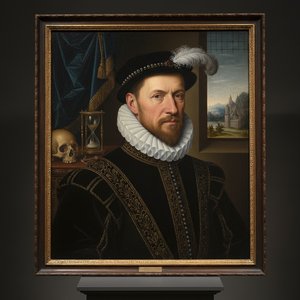
Explore the breathtaking precision of Hans Holbein the Younger. From Tudor royal portraits to intricate Northern Renaissance details, discover the mastery behind his legendary works and learn how to bring this historical grandeur into your collection with museum-quality reproductions.


 效果预览
效果预览
 分享
分享 分享
分享
 详情
详情

 下载
下载
 相似作品
相似作品 X射线
X射线 幻灯片播放
幻灯片播放 统计数据
统计数据

 展开详情
展开详情









 玻璃选项仅适用于110厘米以下的尺寸。


![让·德·丹特维尔与乔治·德·塞尔双人肖像(又名《大使们》)[细节]](/media/artworks/images-thumb/bb/ab/bbab7ce77b7dd15d23d21114a63b51a4.jpg)

![让·德·丹特维尔与乔治·德·塞勒的双人肖像(又名《大使们》)[细节]](/media/artworks/images-thumb/42/81/42813dc49b2f72bce897aaf8b747ad5b.jpg)


