
博物馆级艺术微喷或帆布版画,制作高效,并提供多种饰面选择。 ( 购买手绘画作 切换至数字图像销售渠道)





























从与原作比例一致的预设尺寸中进行选择。

您可以输入自定义尺寸,以适配特定的画框或空间。如果您选择的尺寸与原图比例不符,我们将对作品进行裁剪,或通过镜像填充/纯色填充边缘的方式来扩展图像。在开始制作之前,我们会向您发送一份数字效果图供您确认。
请注意,屏幕上的预览并不能反映实际的裁剪或扩展效果。只有效果图才能准确展示最终的构图。
虽然我们提供定制尺寸,但为了保持原图比例,我们建议您从预设列表中选择尺寸。

Desiderius Erasmus
复制品尺寸
Hans Holbein the Younger's portrait of Desiderius Erasmus is more than just a likeness; it’s an intimate encounter with one of the most influential thinkers of the Northern Renaissance. Painted around 1530, this artwork captures not merely the physical appearance of the humanist scholar, but also his intellectual vitality and profound spirit. The image presents Erasmus in half-length, gazing directly at the viewer with a penetrating intelligence softened by a gentle smile. His attire – a dark coat accented by a fur collar – is rendered with meticulous detail, indicative of Holbein’s mastery of texture and form. The subtle play of light across his face reveals the lines etched by years of scholarship and contemplation, lending an air of dignified gravitas to the composition.
Holbein's skill as a portraitist was legendary, and this work exemplifies his remarkable technique. He wasn’t simply recording features; he was interpreting character through paint. The precision with which he depicts the textures – the soft sheen of Erasmus’s coat, the delicate strands of hair escaping from beneath his cap, the very skin itself – is astonishing. This level of realism wasn't merely about technical prowess; it served a deeper purpose. Holbein aimed to convey not just *what* Erasmus looked like, but *who* he was. He achieved this through subtle nuances in expression and posture, creating a sense of immediacy and psychological depth rarely seen in portraiture before his time. The restrained palette, dominated by blacks, browns, and grays, focuses the viewer’s attention on Erasmus's face and hands, emphasizing his intellectual pursuits.
To fully appreciate this painting, one must understand the historical context surrounding its creation. Desiderius Erasmus was a pivotal figure in the humanist movement, advocating for a return to classical learning and a critical examination of religious dogma. He championed reason, tolerance, and individual conscience – radical ideas that challenged the established order of the 16th century. Holbein’s portrait reflects these ideals. Erasmus is depicted not as a remote theological authority, but as an approachable scholar engaged in intellectual work. The very act of portraying him with such realism and dignity was a statement about the value of human intellect and individual worth. It's important to remember that portraits like this were often exchanged among humanist circles as tokens of esteem and intellectual kinship.
The portrait’s enduring appeal lies not only in its technical brilliance but also in its emotional resonance. Erasmus's gaze is direct, engaging the viewer in a silent dialogue across centuries. There’s a sense of quiet confidence and intellectual curiosity that draws you in. The painting invites contemplation – about the power of ideas, the importance of critical thinking, and the enduring human quest for knowledge. Holbein doesn’t simply present us with an image; he offers us access to the mind and spirit of a remarkable man who helped shape the course of Western thought. A reproduction of this masterpiece serves as a powerful reminder of the humanist values that continue to resonate today, making it a compelling addition to any collection or interior space.


1497 - 1543 , 意大利
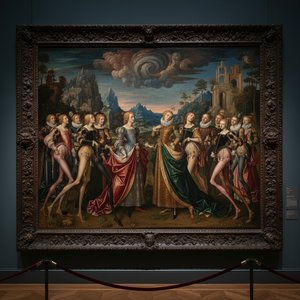
Explore the dramatic evolution of Northern Mannerism. Discover how masters like Bosch and Grünewald transitioned from Renaissance harmony to profound, elegant distortion through an expert analysis of symbolism, emotional intensity, and artistic innovation.

Explore the intricate beauty of Northern Renaissance art. Discover the revolutionary oil techniques, profound symbolism, and microscopic realism of the Franco-Flemish masters in this expert guide for classical art enthusiasts.
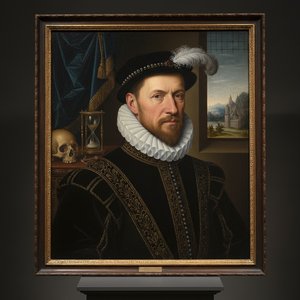
Explore the breathtaking precision of Hans Holbein the Younger. From Tudor royal portraits to intricate Northern Renaissance details, discover the mastery behind his legendary works and learn how to bring this historical grandeur into your collection with museum-quality reproductions.

Unveil the intricate mastery of Northern Renaissance Art. Explore the luminous oil techniques, hidden symbolism, and breathtaking realism of Flemish masters through an expert lens of art history and technical precision.


 效果预览
效果预览
 分享
分享 分享
分享
 详情
详情

 下载
下载
 相似作品
相似作品 X射线
X射线 幻灯片播放
幻灯片播放 统计数据
统计数据

 展开详情
展开详情









 玻璃选项仅适用于110厘米以下的尺寸。


![让·德·丹特维尔与乔治·德·塞尔双人肖像(又名《大使们》)[细节]](/media/artworks/images-thumb/bb/ab/bbab7ce77b7dd15d23d21114a63b51a4.jpg)

![让·德·丹特维尔与乔治·德·塞勒的双人肖像(又名《大使们》)[细节]](/media/artworks/images-thumb/42/81/42813dc49b2f72bce897aaf8b747ad5b.jpg)


