
博物馆级艺术微喷或帆布版画,制作高效,并提供多种饰面选择。 ( 订购纯手工绘制画作 切换至数字图像销售渠道)





























您可以从与原作比例一致的预设尺寸中进行选择。

请输入您所需的宽度和高度,以适配您的画框或墙面。由于印刷品只能进行裁剪,无法超出原图尺寸,因此若比例不一致,画面的一部分将会被裁切。在正式印刷之前,我们会为您发送一份数字效果图供您确认。本页面显示的图片并非最终裁剪后的效果——只有效果图才能展示真实的裁剪情况。
Venise
复刻品尺寸
Gustave Moreau’s “Venise,” completed around 1885, stands as a cornerstone of Symbolist painting—a movement that prioritized emotion and psychological depth over literal representation. Unlike the Impressionists who sought to capture fleeting moments of visual experience, Moreau aimed to distill the essence of feeling into an image imbued with spiritual significance. This artwork isn’t merely a depiction of Venice; it's a portal into Moreau’s inner world—a realm populated by fantastical figures and bathed in ethereal luminescence.
Moreau’s artistic vision drew heavily from classical mythology, specifically the legend of Venus and Adonis. The central nude figure embodies Venus herself, reclining gracefully on a rocky outcrop—a motif reminiscent of ancient sculptures depicting goddesses in repose. Her expansive wings, feathered with meticulous detail, elevate her above earthly concerns, symbolizing divine grace and transcendence. This deliberate allusion to pagan iconography underscores Moreau’s desire to explore themes of beauty, desire, and mortality through the lens of timeless myths.
Moreau achieved his dreamlike effect primarily through oil paint applied with loose brushstrokes—a technique characteristic of Symbolist painters. These strokes create a palpable textural surface that captures the subtle nuances of light and shadow, contributing to the artwork’s overall atmosphere. The artist skillfully utilizes lines to define the contours of the figure and wings, emphasizing their organic forms while simultaneously conveying movement and dynamism. Furthermore, Moreau employs muted earthy tones—pale ochres, browns, and greys—to evoke a sense of melancholy and solitude, mirroring the contemplative mood he wished to convey.
In the hazy background, Moreau introduces a suggestion of Venice’s cityscape—a distant panorama rendered in soft pastel hues. This inclusion isn't merely decorative; it serves as a counterpoint to the figure’s serene isolation, hinting at the passage of time and the inevitable decay inherent in earthly existence. The flattened perspective reinforces the dreamlike quality of the scene, immersing the viewer in Moreau’s imaginative vision.
"Venise" exemplifies Moreau's profound engagement with Symbolist principles—a rejection of realism in favor of subjective experience and spiritual contemplation. Its enduring appeal lies in its ability to evoke a powerful emotional response, prompting viewers to ponder questions of beauty, mortality, and the relationship between humanity and divinity. Gustave Moreau’s masterpiece continues to inspire artists and collectors alike, cementing his place as one of the most influential figures in late nineteenth-century art.

1826 - 1898 , 法国

Explore the profound tension between Impressionism's light-drenched realism and Symbolism's evocative dreamscapes. An expert art-historical journey into how 19th-century masters captured both the visible world and the unseen human psyche through myth, metaphor, and emotion.

Embark on a sophisticated journey through the eternal allure of mythological art. Discover how master painters breathe life into ancient legends, from Greek deities to Baroque masterpieces, and learn to curate these timeless narratives within your own exquisite art collection.

Explore the profound beauty of mythological figures through the lens of art history. From Renaissance masterpieces to custom oil reproductions, discover how legendary tales of heroism and divinity are immortalized in fine art for discerning collectors.
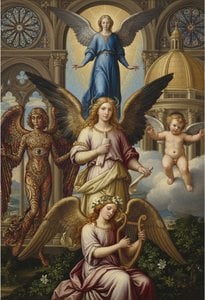
Explore the profound beauty of angelic figures in art history. From Renaissance masterpieces to celestial symbolism, our expert guide offers a sophisticated journey through the divine imagery of the Old Masters for discerning collectors and art enthusiasts.

 实景预览
实景预览
 分享
分享 分享
分享
 详情
详情 指南
指南

 下载作品
下载作品
 相似作品
相似作品 X射线
X射线 幻灯片播放
幻灯片播放 问答
问答
 统计数据
统计数据
 展开全文
展开全文









 玻璃选项仅适用于110厘米以下的尺寸。


