
博物馆级艺术微喷或帆布版画,制作高效,并提供多种饰面选择。 ( 购买手绘画作 切换至数字图像销售渠道)





























从与原作比例一致的预设尺寸中进行选择。

您可以输入自定义尺寸,以适配特定的画框或空间。如果您选择的尺寸与原图比例不符,我们将对作品进行裁剪,或通过镜像填充/纯色填充边缘的方式来扩展图像。在开始制作之前,我们会向您发送一份数字效果图供您确认。
请注意,屏幕上的预览并不能反映实际的裁剪或扩展效果。只有效果图才能准确展示最终的构图。
虽然我们提供定制尺寸,但为了保持原图比例,我们建议您从预设列表中选择尺寸。

Study for Water Serpents01
复制品尺寸
Gustav Klimt's "Study for Water Serpents," created in 1904, is not merely a sketch; it’s a poignant distillation of the artist’s evolving style and a window into his complex emotional landscape. This particular work, often considered a preparatory study for the larger “Water Serpents” mural that adorned the University Hospital in Vienna, offers a remarkably intimate glimpse into Klimt's creative process – a raw, unvarnished exploration of form, gesture, and the quiet sorrow inherent within the human figure.
The image immediately draws the viewer in with its monochromatic palette. A single pencil, wielding remarkable control, dominates the page, creating a world of subtle gradations and delicate lines. The subject is a woman lying prone, her body elegantly curved and draped in what appears to be flowing fabric. Her posture suggests both vulnerability and a certain resignation; she’s not actively struggling, but neither is she entirely at peace. The loose, gestural strokes employed by Klimt imbue the figure with an immediate sense of movement and life – as if captured mid-dream or caught in a moment of profound introspection. The simplification of detail, characteristic of Klimt's mature style, allows the viewer to focus on the essential qualities of the form: the curve of her spine, the delicate suggestion of her hands, the downward tilt of her head.
Klimt’s artistic journey during this period was marked by a shift away from the rigid conventions of academic art. He was deeply influenced by Japanese prints – particularly their flattened perspectives and emphasis on decorative patterns – as well as the burgeoning field of psychoanalysis, which explored the subconscious mind. “Study for Water Serpents” embodies these influences. The reclining figure can be interpreted as representing the female psyche, a realm of hidden emotions and suppressed desires. The ‘water serpents’ alluded to in the title likely represent both danger and transformation – potent symbols that Klimt frequently employed to explore themes of sexuality, death, and rebirth.
Furthermore, the work foreshadows Klimt's later embrace of Art Nouveau, with its flowing lines, decorative motifs, and sensual imagery. The careful attention paid to texture through varying line weights—the heavier strokes delineating the folds of her garment, the lighter ones suggesting the smoothness of her skin—anticipates the opulent use of gold leaf that would become synonymous with his mature style. The muted tones also reflect a growing interest in exploring emotional depth and psychological states, moving beyond purely representational concerns.
Klimt’s technique here is deceptively simple yet remarkably sophisticated. He masterfully utilizes the limitations of pencil to create a sense of volume and atmosphere. The subtle shading and hatching suggest both light and shadow, lending depth to the figure without resorting to precise rendering. The choice of paper – likely a textured surface – further enhances the tactile quality of the drawing, adding another layer of visual interest. It’s important to note that this is not a finished artwork; it's a study, a preliminary exploration of ideas and composition. The imperfections—the slight smudging, the visible pencil marks—only serve to emphasize its immediacy and authenticity.
The drawing’s scale – likely small, perhaps sketchbook size – contributes to its intimacy. It invites close examination, encouraging the viewer to linger over the details and contemplate the figure's enigmatic expression. The artist’s hand is clearly visible in every stroke, conveying a sense of personal connection and emotional investment.
Ultimately, “Study for Water Serpents” transcends its status as a preparatory sketch. It’s a powerful meditation on themes of vulnerability, isolation, and the complexities of human emotion. The woman's downward gaze and slightly downturned mouth suggest a quiet sadness, a sense of introspection that resonates deeply with viewers. The work speaks to the universal experience of feeling lost or adrift, of grappling with inner turmoil and seeking solace in solitude. It’s a testament to Klimt’s ability to capture not just the outward appearance of his subjects but also their innermost thoughts and feelings – making it a profoundly moving and enduring masterpiece.


1862 - 1918 , 奥地利
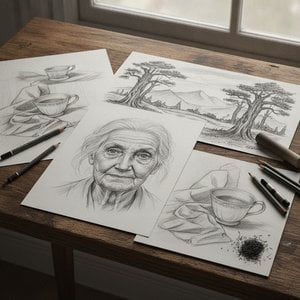
Explore the profound elegance of pencil and charcoal sketching. Discover how masters use line, shadow, and chiaroscuro to capture light and texture, bridging the gap between preparatory studies and timeless fine art masterpieces.

Embark on a visual journey through Claude Monet's most iconic water lily masterpieces. Discover the profound beauty of Impressionism, explore the evolution of Giverny's light, and learn how to bring these serene, museum-quality landscapes into your private collection.

Explore the profound impact of the Vienna Secession movement. Discover how visionaries like Gustav Klimt revolutionized modern art through symbolism, gold leaf, and bold ornamentation in this deep dive into the aesthetic revolution that redefined the visual landscape of Europe.

Explore the profound artistry of graphite drawing. Discover professional techniques for mastering depth, texture, and detail through a lens of art history, from classical sketches to modern masterpieces. Elevate your understanding of the pencil medium with our expert guide.

Embark on a sophisticated journey through the splendor of Austrian art. From Gustav Klimt’s golden masterpieces to the elegance of the Viennese Secession, discover the history and symbolism behind Europe's most iconic works for the discerning collector.


 效果预览
效果预览
 分享
分享 分享
分享
 详情
详情

 下载
下载
 相似作品
相似作品 X射线
X射线 幻灯片播放
幻灯片播放 统计数据
统计数据

 展开详情
展开详情









 玻璃选项仅适用于110厘米以下的尺寸。


