
由我们的艺术家按需定制,为您提供您所选尺寸及画框的布面手工油画。 ( 切换至版画销售渠道 切换至数字图像销售渠道)





























从与原作比例一致的预设尺寸中进行选择。

您可以输入自定义尺寸,以适配特定的画框或空间。如果所选尺寸与原图比例不符,我们将通过裁剪作品或添加手绘元素来扩展画面。数字样稿将在制作开始前发送给您确认。
请注意,屏幕预览无法准确反映实际的裁剪或扩展效果,只有样稿才能真实呈现最终的构图。
虽然我们提供定制尺寸服务,但为了保留原作比例,建议您从预设列表中选择尺寸。

Emilie Flöge, Aged 17
复制品尺寸
Gustav Klimt’s “Emilie Flöge, Aged 17,” painted in 1891, is more than just a portrait; it's an exquisitely rendered meditation on youth, beauty, and the burgeoning currents of Symbolism within Viennese art. The painting immediately captivates with its stark monochrome palette – a deliberate choice that elevates the subject beyond mere representation, lending her image a timeless quality reminiscent of ancient statuary or illuminated manuscripts. Emilie Flöge herself, a young woman from a prominent Viennese family, is presented in a pose of quiet contemplation, her gaze directed directly at the viewer, creating an intimate and almost unsettling connection.
Klimt’s technical mastery is evident in every meticulously applied brushstroke. He employs a technique that blends elements of realism with expressive distortion, particularly noticeable in the rendering of Emilie's face. Her features are idealized, possessing a delicate symmetry and an almost otherworldly serenity. Yet, there’s also a subtle hint of melancholy beneath the surface – a suggestion of the complexities inherent in young womanhood. The blurred background serves not as mere decorative filler but rather to emphasize the subject’s centrality, drawing our focus entirely onto her expression and form. The use of light and shadow is masterful, sculpting her face with an almost sculptural precision.
As a student at the Vienna Kunstgewerbeschule, Klimt’s early training in architectural painting instilled within him a deep appreciation for decorative elements. This influence manifests powerfully in “Emilie Flöge.” While this particular work doesn't feature the lavish gold leaf that would become synonymous with his later "Golden Phase," we can discern echoes of those techniques in the careful layering and textural variations within the portrait’s surface. The subtle gradations of tone, achieved through meticulous blending, create a sense of depth and richness, akin to the shimmering surfaces he would later explore. The composition itself feels deliberately ornate, reminiscent of Byzantine mosaics or medieval illuminated manuscripts – a deliberate nod to the artistic traditions that informed his aesthetic.
Furthermore, Emilie’s crown, a simple yet elegant adornment, subtly references royalty and nobility, reflecting her family's social standing. It also speaks to the broader Symbolist preoccupation with archetypes and mythic figures – elevating Emilie beyond a mere likeness to something approaching an icon.
“Emilie Flöge, Aged 17” is deeply rooted in the artistic and intellectual climate of late 19th-century Vienna. The Symbolist movement, with its emphasis on subjective experience, dream imagery, and the exploration of hidden meanings, was gaining momentum. Klimt’s portrait captures this spirit perfectly, moving beyond a straightforward depiction of beauty to suggest something more profound – a sense of longing, introspection, and perhaps even a premonition of the challenges that lay ahead for young women in a rapidly changing society. The image can be interpreted as a poignant representation of a generation grappling with questions of identity, tradition, and modernity.
The painting’s enduring appeal lies not only in its technical brilliance but also in its ability to evoke a powerful emotional response. It is a portrait that invites contemplation, prompting us to consider the complexities of youth, beauty, and the timeless mysteries of the human spirit. A reproduction of this exquisite work offers a unique opportunity to bring this evocative image into your home or office – a testament to Klimt’s genius and a window into a fascinating period of artistic innovation.


1862 - 1918 , 奥地利
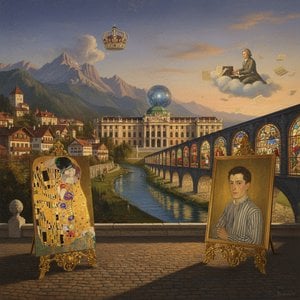
Embark on a sophisticated journey through Austrian art history. Explore the golden brilliance of Gustav Klimt and the elegance of the Vienna Secession through an expert lens, celebrating the enduring soul of Central European masterpieces.

Embark on a sophisticated journey through the splendor of Austrian art. From Gustav Klimt’s golden masterpieces to the elegance of the Viennese Secession, discover the history and symbolism behind Europe's most iconic works for the discerning collector.

Explore the profound impact of the Vienna Secession movement. Discover how visionaries like Gustav Klimt revolutionized modern art through symbolism, gold leaf, and bold ornamentation in this deep dive into the aesthetic revolution that redefined the visual landscape of Europe.

Discover the exquisite world of Art Nouveau. Explore the elegant fusion of nature and design through architectural masterpieces, organic forms, and the legendary masters of the Belle Époque. Immerse yourself in a journey of timeless sophistication and ornamental beauty.

Discover the enchanting world of Art Nouveau. Explore the flowing lines of Alphonse Mucha and learn how to integrate these timeless, organic masterpieces into your collection with expert guidance on fine art appreciation and preservation.


 效果预览
效果预览
 分享
分享 分享
分享
 详情
详情 指南
指南

 下载
下载
 相似作品
相似作品 X射线
X射线 幻灯片播放
幻灯片播放 统计数据
统计数据

 展开详情
展开详情









 玻璃选项仅适用于110厘米以下的尺寸。


