
由我们的艺术家按需定制,为您提供您所选尺寸及画框的布面手工油画。 ( 切换至版画销售渠道 切换至数字图像销售渠道)





























从与原作比例一致的预设尺寸中进行选择。

您可以输入自定义尺寸,以适配特定的画框或空间。如果所选尺寸与原图比例不符,我们将通过裁剪作品或添加手绘元素来扩展画面。数字样稿将在制作开始前发送给您确认。
请注意,屏幕预览无法准确反映实际的裁剪或扩展效果,只有样稿才能真实呈现最终的构图。
虽然我们提供定制尺寸服务,但为了保留原作比例,建议您从预设列表中选择尺寸。

Untitled, Mobile, Alabama
复制品尺寸
Gordon Parks’s “Untitled, Mobile, Alabama,” a black and white photograph from 1956, isn't merely a depiction of a porch scene; it’s a carefully constructed window into the heart of rural America during a period defined by segregation and quiet dignity. The image captures three individuals – a man, a woman, and a young girl – seated on the weathered steps of a modest house in Mobile, Alabama. Their relaxed postures, their direct gaze towards the camera, speak volumes about resilience and an understated strength that belies the constraints of their time.
The composition is masterfully balanced, drawing the eye to the subjects while simultaneously grounding them within the context of their environment – a backdrop of other houses, trees, and a hazy sky. The diagonal line created by the porch railing subtly guides the viewer’s attention, mirroring the quiet rhythm of daily life unfolding before us. Parks doesn't offer grand pronouncements or dramatic gestures; instead, he presents an intimate tableau of ordinary people engaged in what appears to be a simple moment – perhaps conversation, contemplation, or simply enjoying the shade.
Parks’s work is inextricably linked to the broader context of his career as a documentary photographer. He began his journey documenting the realities of African American life in Chicago during the 1940s, working for the Farm Security Administration and later Life magazine. This early experience instilled within him a profound commitment to portraying marginalized communities with honesty and empathy – a dedication that shines through in “Untitled, Mobile, Alabama.” The photograph aligns closely with Parks’s broader approach, mirroring the style of Gordon Parks' known focus on social issues and everyday life in marginalized communities.
The image is reminiscent of the work of photographers like Walker Evans and Dorothea Lange, who similarly sought to capture the essence of American life during the Great Depression. However, Parks’s approach is distinguished by a remarkable sensitivity to his subjects' humanity. He avoids sensationalism or judgment, instead offering a nuanced portrait that invites viewers to contemplate the complexities of race, class, and community in the Jim Crow South.
Technically, the photograph is executed with remarkable precision. The use of black and white film lends a timeless quality to the image, emphasizing textures and forms while stripping away distractions. The lighting – soft and diffused, suggesting an overcast day – casts gentle shadows that reveal details in the subjects’ faces and clothing. Parks's choice of a large format camera is evident in the sharp focus and rich tonal range.
Notice the subtle details: the rough grain of the porch wood, the folds of the woman’s dress, the worn appearance of the house – each element contributes to a sense of authenticity and immediacy. The inclusion of laundry hanging on a line adds a domestic touch, reinforcing the image's connection to everyday life. Even the seemingly insignificant detail of the fallen strap of a slip hints at the subtle injustices that permeated Southern society.
“Untitled, Mobile, Alabama” transcends its simple subject matter to become a powerful meditation on resilience and dignity in the face of adversity. It’s a poignant reminder of a time when segregation was law, yet the spirit of the people remained unbroken. Parks's photograph serves as a testament to his ability to capture not just images, but also emotions – a quiet sense of hope amidst hardship. It is a piece that continues to resonate today, prompting reflection on issues of race, justice, and the enduring strength of the human spirit.

作为一名自学成才的艺术家,帕克斯从摄影师起步,并最终成为首位受雇于《生活》杂志(Life)和《时尚》(Vogue)杂志的非裔美国人。他在20世纪40年代为联邦政府项目拍摄的一系列关于美国贫困人口的经典照片,不仅展现了他卓越的艺术技巧,更体现了他对社会现实的深刻关怀与奉献精神。
戈登·帕克斯的遗产远不止于他那令人震撼的作品集,他为后世非裔美国艺术家开辟了道路。他在新闻摄影、电影制作和音乐领域的贡献,至今仍在激励并影响着全球的艺术家。

1912 - 2006 , 美国
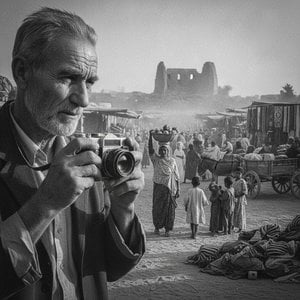
Explore the profound evolution of documentary photography through a cultural lens. From early social realism to modern visual narratives, discover how photographers have captured history, labor, and the human condition to redefine fine art.

Explore the profound evolution of contemporary photography through a connoisseur's lens. From monochrome mastery to digital innovation, discover how modern photographic works shape fine art collections and define our cultural legacy.

Explore the profound emotional depth of documentary photography art. Discover how collectors curate powerful historical narratives through museum-quality black and white prints and fine art reproductions that preserve humanity's most resilient moments.

Explore the profound artistry of black and white photography. From historical mastery to the interplay of light and shadow, discover how monochrome captures timeless emotion and form through a sophisticated lens of art history.


 效果预览
效果预览
 分享
分享 分享
分享
 详情
详情 指南
指南

 下载
下载
 相似作品
相似作品 X射线
X射线 幻灯片播放
幻灯片播放 统计数据
统计数据


 展开详情
展开详情









 玻璃选项仅适用于110厘米以下的尺寸。


