
 Oil On CanvasWallArtMannerist Painting
 1522
1522 37.0 x 30.0 cm
 国家美术馆
国家美术馆博物馆级艺术微喷或帆布版画,制作高效,并提供多种饰面选择。 ( 订购此收藏品的纯手工复刻画作 切换至数字图像销售渠道)





























您可以从与原作比例一致的预设尺寸中进行选择。

您可以输入自定义尺寸,以适配特定的画框或空间。如果您选择的尺寸与原图比例不符,我们将对作品进行裁剪,或通过镜像填充/纯色填充边缘的方式来扩展图像。在开始制作之前,我们会向您发送一份数字效果图供您确认。
请注意,屏幕上的预览并不能反映实际的裁剪或扩展效果。只有效果图才能准确展示最终的构图。
虽然我们提供定制尺寸,但为了保持原图比例,我们建议您从预设列表中选择尺寸。

Madonna and Child
复刻品尺寸说明
Giulio Romano's Madonna and Child, a captivating work housed within the esteemed collection of The Walters Art Museum in Baltimore, offers a profound glimpse into the heart of the Italian Renaissance. More than simply a depiction of the Virgin Mary cradling her infant son, this painting is a testament to Romano’s evolving artistic vision – a synthesis of Raphael's influence and his own burgeoning Mannerist style, reflecting a pivotal moment in art history. Completed around 1522-23 during his time in Mantua, it embodies a delicate balance between idealized beauty and subtly unsettling psychological depth.
The painting’s composition immediately draws the eye to the central figures: Mary, rendered with an exquisite blend of serenity and vulnerability, holds her child close. The infant Jesus, depicted not as a fully grown figure but as a miniature adult, gazes directly at the viewer – a deliberate choice that fosters a powerful sense of intimacy and connection. His pose, reminiscent of classical sculptures, subtly hints at his future role as the Lamb of God, foreshadowing his sacrifice. The surrounding architectural setting, a simplified yet evocative interior space, is not merely decorative; it serves to frame the scene and imbue it with a quiet dignity. The parapet at the bottom of the painting, a feature uncommon in earlier Italian works, creates an illusion of depth, drawing the viewer into the intimate world of the Madonna and Child.
Giulio Romano’s artistic journey is inextricably linked to that of his master, Raphael. He apprenticed under the great painter in Rome, absorbing not only technical skills but also a deep appreciation for classical ideals and harmonious composition. However, Romano quickly began to diverge from Raphael's High Renaissance style, embracing the principles of Mannerism – a movement characterized by elongated figures, distorted perspective, and an emphasis on emotional expression over strict realism. This shift is particularly evident in Madonna and Child, where the figures possess a heightened sense of elegance and dynamism compared to the more balanced compositions favored by Raphael.
The influence of Leonardo da Vinci is also palpable. Romano’s use of sfumato – a technique involving subtle gradations of tone to create a hazy, atmospheric effect – contributes to the painting's ethereal quality. Furthermore, the careful attention to detail in rendering fabrics and textures, combined with the delicate modeling of the figures, demonstrates Romano’s mastery of oil paint—a medium he skillfully employed to achieve remarkable luminosity and depth.
Beyond its aesthetic beauty, Madonna and Child is rich in symbolic meaning. The presence of St. John the Baptist, depicted as a young boy gazing at Christ with reverence, underscores the narrative arc of salvation – from innocence to sacrifice. The Lamb, held by Jesus, is a potent symbol of his future role as the sacrificial lamb, offering redemption for humanity. The muted color palette—primarily blues and browns—evokes a sense of solemnity and contemplation, inviting viewers to reflect on themes of faith, love, and mortality.
The choice of a domestic setting, rather than a grand landscape, further enhances the painting’s emotional impact. It suggests that the Madonna and Child are not distant figures but intimately connected members of a family—a powerful reminder of the nurturing role of Mary in the Christian faith. The overall effect is one of profound tenderness and spiritual resonance, inviting viewers to connect with the timeless themes explored within this masterpiece.
Giulio Romano’s Madonna and Child stands as a pivotal work in the transition from High Renaissance to Mannerism. It showcases his evolving artistic style—a synthesis of Raphael's influence and his own innovative approach to composition, form, and color. The painting’s enduring appeal lies not only in its technical brilliance but also in its profound emotional depth and symbolic richness. It remains a testament to Romano’s genius and a captivating example of the transformative power of art.


1499 - 1546 , 意大利
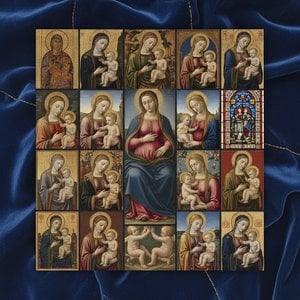
Embark on a sophisticated journey through art history with our curated guide to the most iconic Madonna and Child masterpieces. Discover the profound beauty, theological depth, and enduring legacy of these sacred Renaissance treasures.


 实景预览
实景预览
 发送
发送 分享
分享
 详情
详情 指南
指南

 下载图片
下载图片
 相似作品
相似作品 X射线
X射线 幻灯片播放
幻灯片播放 统计数据
统计数据 阅读全文
阅读全文









 玻璃选项仅适用于110厘米以下的尺寸。


